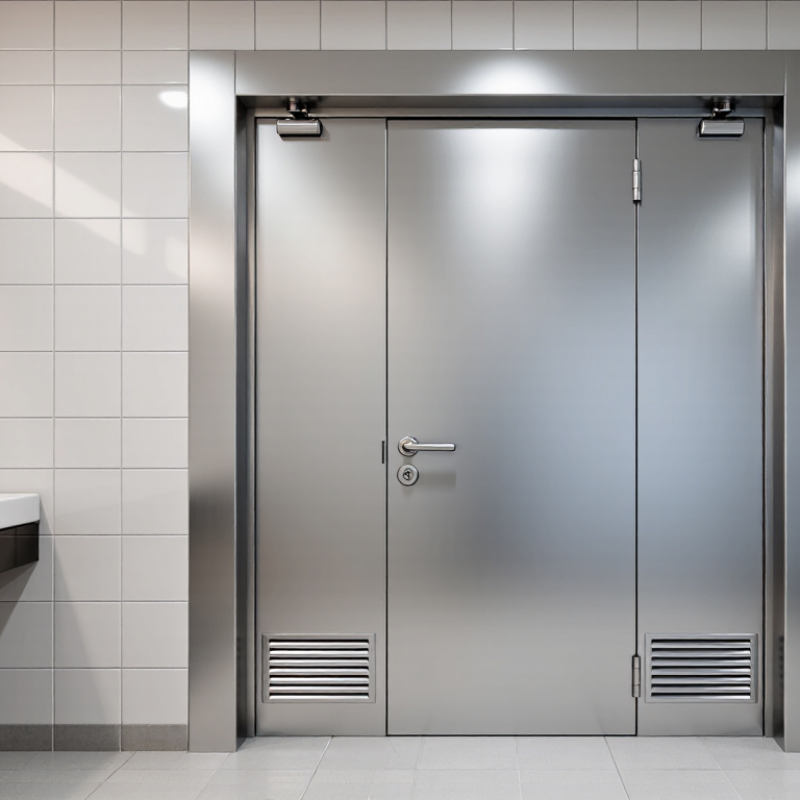
Choosing an Aluminium Washroom Door involves more than comparing prices or selecting a finish. The door must suit the room’s layout, daily traffic, and exposure to moisture. A compact staff washroom may need a different design from a busy public facility. Small details matter.
Begin with the opening dimensions and available clearance. Measure the width, height, and depth of the frame, then check whether nearby fixtures could obstruct the door. A door that looks suitable in a product photo may feel awkward beside a basin or narrow corridor. I would not rely on a rough visual estimate; accurate measurements reduce avoidable fitting problems.
Material quality is another practical consideration. Ask about the aluminium profile, surface treatment, panel construction, and hardware specifications. These details can affect durability, cleaning, and how the door performs with frequent use. Hinges, locks, and handles deserve attention too. They are handled every day, yet are easy to overlook.
Moisture resistance alone does not tell the whole story. Ventilation, cleaning routines, installation quality, and the surrounding frame also influence long-term performance. Compare product information carefully, and request clarification when specifications are vague. A low price can be appealing, but replacement parts and maintenance may change the real cost. That is worth checking.
This guide explains how to assess door types, finishes, hardware, sizing, and installation needs. It also considers accessibility, privacy, and upkeep, so the choice fits the actual washroom rather than a showroom image. There may not be one perfect option. A well-chosen Aluminium Washroom Door balances practical performance, appearance, and budget for its intended setting.
Understand the Main Types of Aluminium Washroom Doors
How to Choose the Best Aluminium Washroom Door?
Aluminium washroom doors come in several practical types. Framed swing doors offer strong support and suit busy public facilities. Their visible frame can improve stability, but it may collect dust around the edges. Frameless doors create a cleaner, lighter appearance. They work well in modern interiors, though careful installation becomes more important. A small alignment error can cause rubbing or uneven gaps.
Sliding aluminium doors save space in compact washrooms. They need reliable rollers and enough wall clearance for smooth movement. Louvered doors improve airflow and reduce trapped moisture. However, their openings may provide less privacy than solid panels. In humid areas, powder-coated or anodised aluminium usually performs better than untreated metal. Hardware should also resist corrosion, especially near showers or coastal air.
Tips: Measure the opening twice. Check wall strength, floor level, privacy gaps, and ventilation before ordering. Choose hinges and locks for frequent use, not just attractive appearance. I have found that low-cost hardware often creates the first maintenance problem. Also, do not assume every aluminium finish looks identical under strong lighting. Request a physical sample when appearance matters.
| Door Type | Typical Construction | Key Advantages | Considerations | Common Applications |
|---|---|---|---|---|
| Aluminium-Framed Compact Laminate Door | Aluminium frame with a compact laminate (HPL) panel. | Compact laminate is dense and non-porous, and is commonly selected for humid, frequently used washroom settings. | Panel edges, hardware, and installation details still need appropriate cleaning and maintenance. Confirm the panel specification for the intended use. | Public washrooms in offices, schools, shopping centres, and leisure facilities. |
| Aluminium-Framed PVC or HDPE Door | Aluminium frame with a PVC or high-density polyethylene (HDPE) infill panel. | Plastic panels are moisture-resistant and easy to wipe clean; HDPE is also used for wet-area partitions. | Appearance, rigidity, and resistance to scratches vary by material and panel design. Check the supplier’s product data. | Changing areas, gyms, schools, and other washrooms where easy-clean surfaces are useful. |
| Aluminium-Framed Obscure Glass Door | Aluminium frame with frosted, patterned, or otherwise obscured glass. | Allows light through while reducing visibility, and provides a smooth surface that is straightforward to clean. | Specify safety glass suitable for the location and consider privacy, impact risk, and glass-cleaning requirements. | Contemporary washrooms, en-suite areas, and spaces where borrowed light is desirable. |
| Aluminium Panel Door | Door leaf made primarily from aluminium sheet or aluminium panel construction. | Aluminium does not rust like ordinary carbon steel and can be specified for lightweight door applications. | Panel construction and finish affect dent resistance, insulation, and appearance. Confirm that the complete door assembly suits the environment. | Utility washrooms, service areas, and projects seeking a metal-panel appearance. |
| Louvred Aluminium Door | Aluminium door or frame incorporating fixed or adjustable louvres. | Can support airflow where ventilation through the door is part of the design. | Louvres reduce visual privacy and may not be suitable where sound control or a fully enclosed appearance is required. | Ventilated service washrooms and designated utility spaces. |
FAQS
Measure the doorway, room, and approach area. Mark the door swing on the floor. A basin or towel rail may block the route.
It can save swing space, but it needs clear wall space. Check that its track will be easy to clean. Small trade-offs matter.
Use accessibility guidance as a planning check. One common reference specifies at least 32 inches of clear width with the door open 90 degrees. Measure the usable opening, not just the frame.
Not always. Bright light behind the panel can reveal movement. For a shared washroom, consider an opaque panel, close-fitting seals, and a simple latch.
Solid aluminium can feel sturdy, but may cost more and transfer sound. Compact laminate or moisture-resistant panels can balance privacy and durability. Check the complete door assembly.
Anodized aluminium has a metallic appearance, while powder coating offers more colour choices. Matte finishes hide fingerprints better. Grime can still settle in textured surfaces.
Look for corrosion-resistant hinges, a dependable latch, and a handle that is easy to grip with wet hands. Test a sample if possible. Paper specifications are not the whole story.
The frame alone will not provide sound privacy. Stand outside the closed door and listen. The result may surprise you.
Conclusion
Choosing the best Aluminium Washroom Door requires more than selecting an attractive design. Start by understanding the main door types, such as hinged, sliding, folding, or cubicle-style options, and consider which one suits your available space. Evaluate the washroom’s size, layout, traffic flow, and required level of privacy before deciding on the opening style and panel arrangement. These factors help ensure the door is practical, comfortable, and suitable for everyday use.
Next, compare aluminium grades, surface finishes, colours, frames, locks, hinges, and handles to find a combination that matches your needs. The door should resist moisture, corrosion, and frequent cleaning, while suitable ventilation can help reduce condensation and unpleasant odours. Also consider how easy the materials and hardware are to maintain over time. Finally, review your budget, wall conditions, doorway measurements, and installation requirements so the selected Aluminium Washroom Door can be fitted efficiently without unexpected costs.