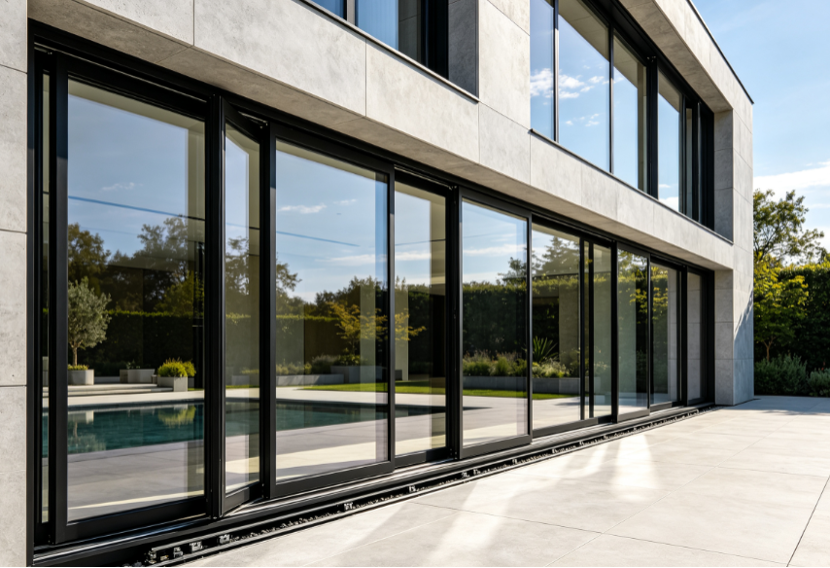
Engineering Breakdown: Frame Extrusion & Thermal Barrier
Aluminum is naturally highly conductive (thermal conductivity of ~160-200 W/m·K). Without a thermal break, glass structures suffer massive heat transfer, leading to high HVAC energy expenses and interior moisture buildup. A true Thermal Break Sliding Window utilizes a precision-engineered structural polyamide bar (PA66 GF25 - 25% glass fiber reinforced polyamide) inserted between the interior and exterior aluminum profiles.
This barrier reduces profile thermal conductivity to under 0.3 W/m·K, creating a thermal bridge that blocks heat conduction while maintaining high torsional strength and structural rigidity under heavy glass loads.
Acoustic Gasket Systems & Water-Tightness Engineering
Unlike basic sliding windows that rely solely on brush seals, Karon Window & Door Co., Ltd. incorporates continuous EPDM (Ethylene Propylene Diene Monomer) weatherstripping alongside multi-stage drainage tracks. Stepped sill profiles with hidden directional drainage valves guarantee zero water ingress under driving rain conditions (tested up to 600 Pa water pressure resistance).

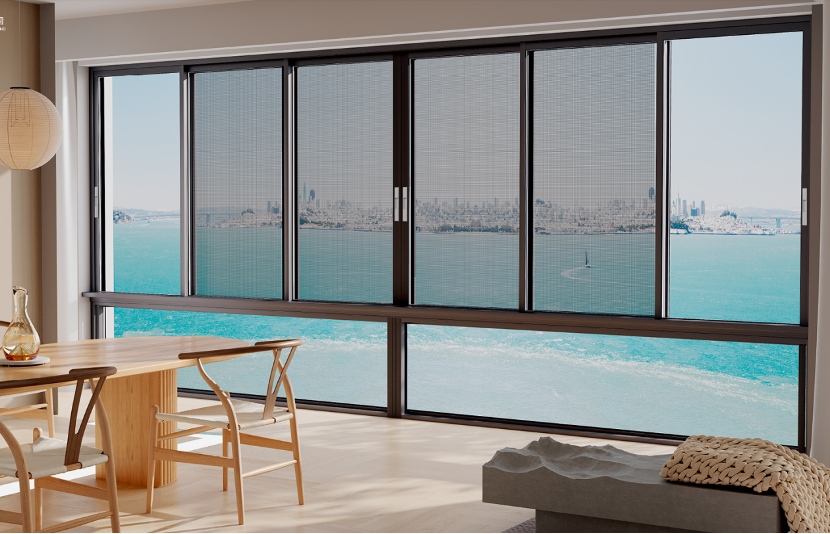 Flagship Series