Choosing the right Aluminum Door can shape a room’s comfort, security, and everyday appearance. A well-made door should open smoothly, seal firmly, and suit the building’s use. Yet product descriptions rarely show how a frame feels after years of daily handling. Small details matter. Look closely at the frame, hinges, seals, glazing, and finish before comparing prices.
This guide introduces ten practical points to consider, from material quality and thermal performance to installation and maintenance. Start with the opening itself: measure its width and height, check the wall condition, and note which way the door should swing. A beautiful door may still disappoint if it clashes with the space or lets drafts reach the hallway. That happens more often than brochures suggest. Ask suppliers for clear specifications, warranty terms, and care instructions, then compare like with like. If the door faces a busy street, sound control may deserve extra attention; for a shaded interior, other features may matter more. No single choice suits every project. Priorities change with climate, building design, budget, and how often the door will be used. Even careful research cannot replace accurate measurements or skilled fitting. The following tips are meant to help you ask better questions and spot trade-offs early, not promise a perfect purchase. One missed measurement can undo a good decision.
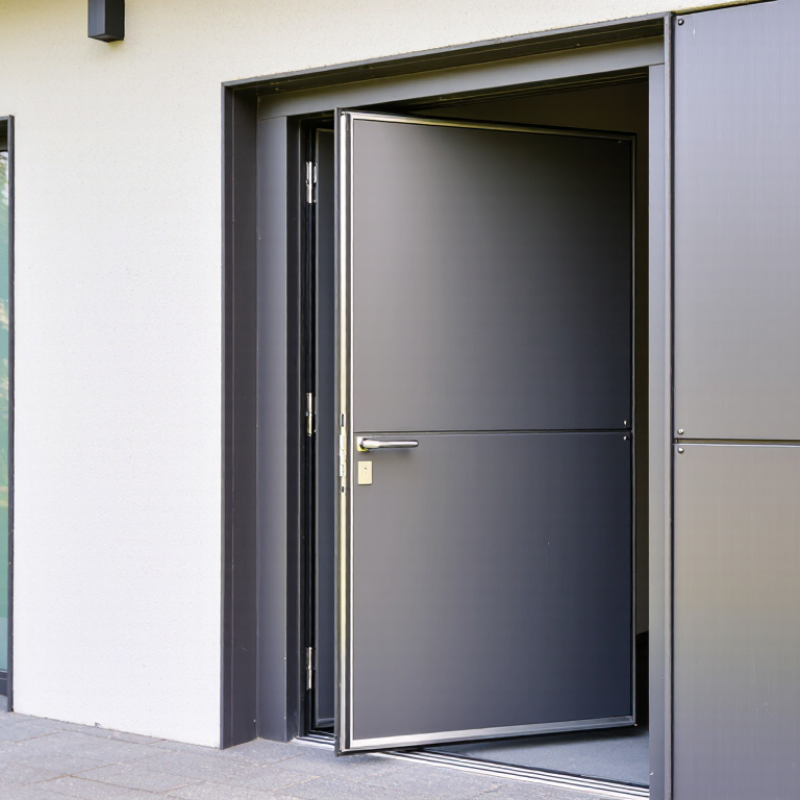
Before comparing aluminum door finishes, pin down where the door will go and what it must do. An exterior entry door needs weather seals, secure hardware, and a frame suited to wind and rain. A door between a garage and living space has different safety and fire-rating requirements, so check local building rules. An interior partition may need little insulation, but sound control or privacy could matter more. Measure the opening at several points; older walls are rarely perfectly square. Annoying, but useful.
Size affects comfort as well as fit. The U.S. Energy Information Administration’s 2020 Residential Energy Consumption Survey reports that space heating accounted for about 42% of household energy use, while air conditioning accounted for about 9%. Those figures describe whole homes, not doors, but they underline why an exterior door’s fit and sealing deserve attention. Ask for the door’s tested thermal performance and check that the rating applies to the complete door assembly, including its frame. Measure width, height, and depth, and note the swing direction and nearby furniture. A tape measure can still mislead if the opening is irregular; have an installer verify dimensions before ordering.
Aluminum doors come in several styles, and the right choice depends on the room, view, and available wall space. Hinged doors suit entryways and smaller openings; they need clear floor space to swing. Sliding doors move along a track, making them useful beside patios or furniture. They save room, but usually only part of the opening slides clear. Folding doors can create a wide opening, though their stacked panels need somewhere to sit. Compare frame sightlines, too: slimmer frames can admit more daylight, while wider ones may feel more substantial.
Tip: Measure the opening and nearby furniture before choosing a configuration. Check which way a hinged door will swing, and allow space for its handle. For sliders, inspect the track area and ask how many panels actually move. A wide opening looks appealing. It may not be practical every day.
Consider how each style handles your routine. A frequently used kitchen door should open smoothly without blocking a walkway. For a bedroom or office, check the latch, seals, and glass options for privacy and comfort. Ask an installer to confirm the opening is square and the surrounding structure can support the selected system. Measurements can be off, especially in older homes. That detail is easy to overlook. Request drawings showing panel positions when open, since the finished arrangement may differ from what a showroom display suggests.
A strong aluminum door begins with a rigid, accurately joined frame. Check corner connections, wall thickness, fasteners, and the quality of the thermal break. Poor alignment can create uneven gaps and early hardware wear.
Tip 1: Ask for test reports, not attractive sample photos.
The U.S. Department of Energy estimates that heat gain and loss through windows account for about 25–30% of residential heating and cooling energy use. Doors also affect this envelope. Choose products with tested U-factor and air-leakage ratings. Lower U-factor usually means better insulation. However, the lowest number may not suit every climate or installation.
Thermal performance needs context.
The 2023 International Energy Agency Global Status Report for Buildings and Construction links buildings to about 30% of global energy demand and 26% of energy-related emissions. A thermally broken frame, insulated panel, and well-sealed threshold can reduce cold interior surfaces.
Tip 2: Compare U-factor, solar heat gain coefficient, and air leakage together. One rating never tells the whole story.
Installation still matters. Even an excellent door can underperform when the opening is poorly prepared. That is an uncomfortable detail, but it is often overlooked.
Weather resistance requires evidence against wind-driven rain, pressure, and repeated movement. Look for testing based on ASTM E283 for air leakage and ASTM E331 for water penetration.
Tip 3: Confirm the tested pressure matches your site exposure.
Coastal, high-rise, and storm-prone locations need stricter specifications. Inspect drainage paths and compression seals. I would not rely on a showroom display alone. Real buildings shift, seals age, and maintenance is sometimes imperfect.
10 Tips for Choosing the Best Aluminum Door
Security starts with the frame, not the finish. Choose a reinforced frame, multi-point locking system, and laminated or tempered safety glass. EN 1627 classifies door resistance from RC1 to RC6; higher classes require stronger tools and longer attack resistance. Ask for tested performance, not vague phrases such as “high security.” The FBI’s 2023 Crime Data Explorer recorded over 800,000 burglary offenses in the United States. A secure entry still needs correct installation.
Inspect the hardware closely. Hinges should resist tampering, and screws should anchor into solid framing. A narrow gap around the latch often signals poor fitting. I have seen attractive doors fail because the strike plate was attached only to thin trim. That detail matters. Check whether replacement rollers, seals, and cylinders remain available locally. Otherwise, a small fault can become an expensive delay.
Maintenance requirements deserve equal attention. Powder-coated aluminum usually needs gentle washing, while coastal homes need more frequent inspections for salt deposits and fastener corrosion. The U.S. Department of Energy reports that air leakage can account for 5–30% of household heating and cooling energy use. Replace cracked weatherstripping promptly. Check drainage holes after heavy rain. Review the warranty’s cleaning limits, finish coverage, and hardware exclusions. Read the fine print. A door that looks perfect on installation day may demand more care than expected.
Suggested evaluation weights for security features, hardware quality, maintenance, and everyday performance
Use these practical priorities when comparing aluminum doors. Security features and hardware should receive the greatest attention, while maintenance, weather resistance, energy performance, installation quality, and design help determine long-term value. Confirm that locks, hinges, frames, seals, and finishes are suitable for the door’s location and expected use.
10 Tips for Choosing the Best Aluminum Door
Confirm Installation Standards, Warranty, and Total Cost
A well-made aluminum door can still fail when installation is careless. Check local building requirements, wind-load ratings, drainage details, and insulation standards before ordering. Ask the installer how the frame will be anchored to your wall type. Measure twice. Small errors can cause drafts, water entry, or uneven closing.
Request a written installation scope, including removal of the old door, flashing, sealing, threshold preparation, and interior repairs. An experienced installer should explain each step clearly and provide project references. I once underestimated threshold preparation, and the final adjustment took longer than expected. That mistake reminded me to inspect the opening, not just the product.
Read every clause. A warranty should state its duration, coverage, service process, and exclusions for glass, hardware, finishes, and installation labor. Confirm who handles defects and how quickly repairs are normally arranged. Compare the total cost, not only the door price. Include delivery, permits, disposal, accessories, maintenance, and possible structural corrections. A cheaper quote may exclude essential sealing or finishing work. Ask for an itemized estimate, then leave room for reasonable site-related changes.
A practical evaluation table for comparing aluminum doors without relying on brand names
| No. | Evaluation Dimension | Recommended Standard or Target | What to Confirm | Risk Level | Priority |
|---|---|---|---|---|---|
| 1 | Aluminum Alloy and Frame Strength | Choose corrosion-resistant aluminum profiles with adequate wall thickness and reinforcement for the door size and operating frequency. | Request the alloy designation, profile drawings, section dimensions, maximum panel size, and recommended hardware load. | Medium | High |
| 2 | Thermal Performance | For conditioned spaces, consider thermally broken frames and insulated glazing to reduce heat transfer and condensation risk. | Check the whole-door U-value or U-factor, glazing specification, thermal-break design, and applicable local energy requirements. | Medium | High |
| 3 | Weather Resistance | Use tested seals, drainage paths, and compatible thresholds suited to the site’s wind, rain, humidity, and exposure conditions. | Ask for air leakage, water penetration, and wind-load test results where required by the project location. | High | High |
| 4 | Glass and Safety | Select safety glazing in locations where impact, human contact, or local building regulations require it. | Confirm whether the glass is tempered or laminated, review thickness and marking, and verify safety-glazing requirements. | High | High |
| 5 | Hardware and Security | Use hardware rated for the door’s weight and cycle frequency, with secure locking points and replaceable wear components. | Verify hinge load capacity, lock type, cylinder compatibility, multipoint engagement, and availability of replacement parts. | High | High |
| 6 | Installation Standards | Installation should follow approved drawings, manufacturer instructions, local building codes, and proper sill, flashing, anchoring, and sealing practices. | Confirm who measures the opening, who installs the door, how the frame is anchored, and whether a completion inspection is included. | High | Critical |
| 7 | Finish and Corrosion Protection | Choose a finish appropriate to interior or exterior exposure, with documented pretreatment and coating requirements. | Check coating type, color tolerance, surface warranty, cleaning instructions, and suitability for coastal or high-humidity locations. | Medium | Medium |
| 8 | Warranty Coverage | The written warranty should clearly separate coverage for frames, finish, glass, hardware, seals, labor, and installation defects. | Record warranty duration, exclusions, claim procedure, response time, geographic limits, and whether unauthorized installation voids coverage. | High | Critical |
| 9 | Total Cost of Ownership | Compare the complete installed cost, not only the door price, including delivery, removal, preparation, labor, taxes, and future maintenance. | Obtain an itemized quotation and identify exclusions such as structural repairs, disposal, scaffolding, electrical work, or permit fees. | High | Critical |
| 10 | Maintenance and Serviceability | Prefer accessible drainage, adjustable hardware, replaceable seals, and clearly defined cleaning and lubrication intervals. | Confirm routine maintenance tasks, recommended cleaning agents, spare-part availability, service fees, and expected component replacement intervals. | Medium | Medium |
Hinged doors suit smaller openings, but they need clear space to swing. Check nearby furniture and handle clearance.
Not always. Usually, only some panels slide aside, so ask how much of the opening clears.
Check where the folded panels will stack. They can create a wide opening, but need space beside it.
Slimmer frames may admit more daylight. Wider frames can look more substantial, though the visual difference may be subtle.
Measure the opening, nearby furniture, and track or swing space. Older homes can have uneven openings. Easy to miss.
Check the latch, seals, and glass options for privacy and comfort. Consider how often the door will be used.
Ask how the frame will be anchored and whether the opening is square. Confirm drainage, sealing, flashing, and threshold preparation.
It should list removal, sealing, threshold work, interior repairs, delivery, and disposal. Ask about possible structural corrections, too.
Check its duration, coverage, exclusions, and repair process. Glass, hardware, finishes, and labor may have different terms.
The door price may exclude essential work. Request an itemized estimate and allow some room for site-related changes.
Choosing the right Aluminum Door starts with understanding where it will be installed, what it needs to do, and the dimensions of the opening. Consider how people will use the space and compare suitable styles and opening configurations, such as hinged or sliding designs. The right choice should fit both the room’s layout and your everyday needs.
Next, assess the frame’s construction, thermal performance, and ability to withstand local weather. Review locking options, hardware quality, and the maintenance each design may require. Before making a decision, confirm that the door and its installation meet appropriate standards, understand the warranty terms, and compare the full cost, including fitting and future upkeep. Weighing these factors together can help you select a durable, secure, and practical door that offers lasting value.