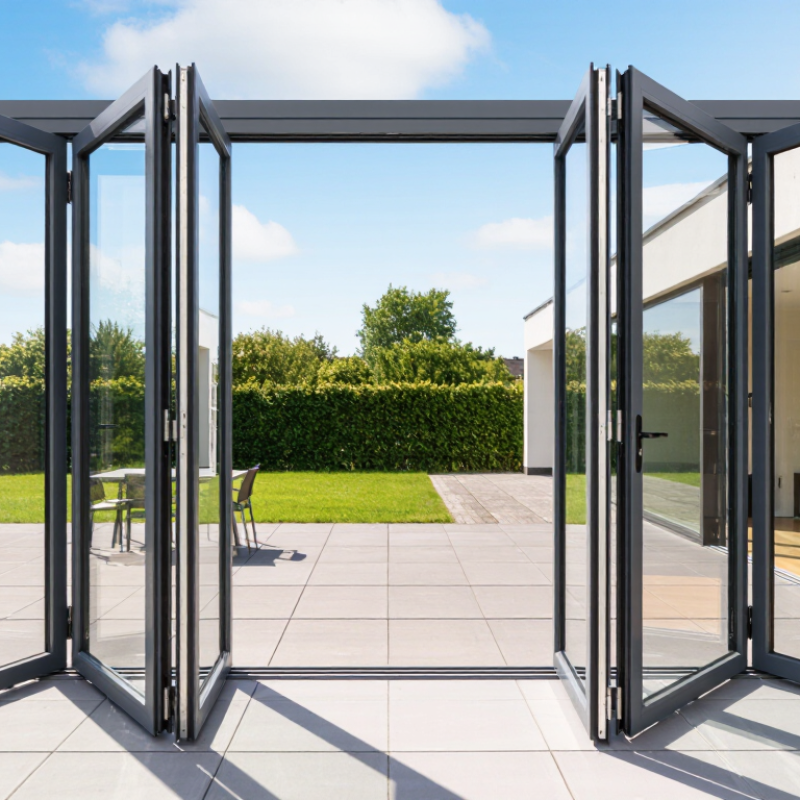
Aluminium Bifold Doors bring broad openings into everyday spaces, folding panels neatly beside a patio, garden, or balcony. Their appeal is visible. So are the details that matter: smooth-running hinges, secure locking points, weather seals, and frames that resist flexing. A wide glass opening can brighten a room, but poor installation may leave drafts or uneven panel gaps.
The Global Alliance for Buildings and Construction’s 2023 Global Status Report estimates that buildings account for 34% of global energy demand and 37% of energy- and process-related carbon emissions. These figures cover the wider building sector, not bifold doors alone. Still, they underline why thermal breaks, glazing specifications, and careful installation deserve attention. This guide introduces ten manufacturers worldwide, comparing product ranges, design flexibility, technical information, and support for projects. Specifications vary by configuration and climate. A catalogue value is not a guarantee of real-world performance. Ask what testing supports the figures, and check how local installers handle drainage, alignment, and maintenance. Brand reputation helps, but it cannot replace project-specific checks. No single manufacturer suits every opening, budget, or building style. That is worth remembering.
How Aluminium Bifold Doors Are Designed and Manufactured
Top 10 Aluminium Bifold Door Manufacturers Worldwide
How Aluminium Bifold Doors Are Designed and Manufactured
A dependable bifold door begins with measurements, not a catalogue image. Designers check the opening width, floor level, wind exposure, and where the panels will stack. These details guide panel sizes, hinge positions, track selection, and drainage routes. Aluminium profiles are usually extruded, then cut and machined for locks, rollers, and corner joints. Thermal breaks separate inner and outer sections to reduce heat transfer. Fit matters.
Manufacturing continues with frame assembly, surface finishing, glazing, and hardware installation. Coatings must cover exposed edges evenly, while seals need consistent compression around the frame. Glass thickness and panel weight affect roller capacity and ease of operation. The International Aluminium Institute reports that recycling aluminium uses about 5% of the energy required for primary production. This industry figure supports careful material selection, though it does not measure the footprint of any single door. One detail is often underestimated: poor installation can undo precise factory work.
Tips: Ask for documented air, water, and wind-resistance test results for the complete door system, not just its profile. Check that the specification matches your opening and local exposure. During inspection, slide each panel slowly and look for uneven gaps or scraping. Small gaps matter. Even a well-engineered system can perform poorly if the threshold, drainage, or installation tolerances are overlooked.
FAQS
Check frame depth, glazing, finishes, panel limits, locking systems, and stated insulation figures. Looks can mislead.
Request drawings for the exact opening. Compare the clear width, folded panel stack, and threshold height. Measure carefully.
Ask about tested weather performance, wind-driven rain, drainage, and exposure to salt or dust. Site conditions change everything.
Not reliably. Cooler areas may prioritize thermal breaks and airtight seals, while dense cities may favor slim frames. These are tendencies, not rules.
A recessed track affects the floor transition, while adjustable rollers may help maintain smooth movement. Ask how adjustments work.
It can reveal stiff handles or noisy movement. One display cannot prove long-term durability, though.
Broad choices may suit unusual openings; limited options can simplify fabrication and lead times. Neither approach guarantees a better result.
Get written specifications, installation guidance, warranty terms, and details about replacement rollers and locks. Discuss drainage with the installer.
Conclusion
Aluminium Bifold Doors combine slim, durable frames with folding panels that open wide to connect indoor and outdoor spaces. Their design and manufacture involve selecting suitable aluminium profiles, engineering hinges and tracks for smooth movement, applying protective finishes, and assembling components to meet performance and appearance requirements. Leading manufacturers can be assessed by factors such as product quality, design flexibility, testing, available configurations, and the clarity of their technical support.
This overview examines ten major manufacturers without focusing on brand names, comparing their product ranges, certifications, and international reach. It also considers how regional climates, building styles, installation conditions, and buyer priorities can influence purchasing decisions. By understanding these factors, buyers can more confidently evaluate options for durability, energy performance, security, maintenance, and value, while choosing a system suited to their project and local requirements.