0%

Choosing the right Aluminium Door With Window supplier is no longer only a question of appearance or price. Buyers now examine thermal performance, frame strength, glass specifications, drainage design, factory control, and after-sales support. A slim black frame may look attractive in a showroom. It may still perform poorly under wind, rain, or intense sunlight.

The building sector makes this decision more important. The 2024 Global Status Report for Buildings and Construction reported that buildings consumed about 32% of global energy and produced approximately 34% of global carbon emissions in 2023. Better doors and windows can reduce unwanted heat transfer, although results depend on installation quality and local climate. The International Aluminium Institute also states that recycled aluminium requires about 5% of the energy used for primary aluminium production. That makes recycled content worth checking, not merely advertising.

“A building is a system,” building-science expert Joseph Lstiburek often reminds professionals. His point applies directly here. An Aluminium Door With Window must work with insulation, seals, glass, ventilation, and the surrounding wall. One component cannot repair a badly designed façade.

This guide compares leading suppliers through practical criteria. These include aluminium alloy, profile depth, thermal breaks, glazing options, hardware, testing, certifications, production capacity, and export experience. Supplier rankings are never perfect. Project conditions differ. A coastal villa needs different protection from an inland office. Buyers should request test reports, sample corners, warranty terms, and installation details before signing a contract. That small step can prevent a costly, elegant mistake.
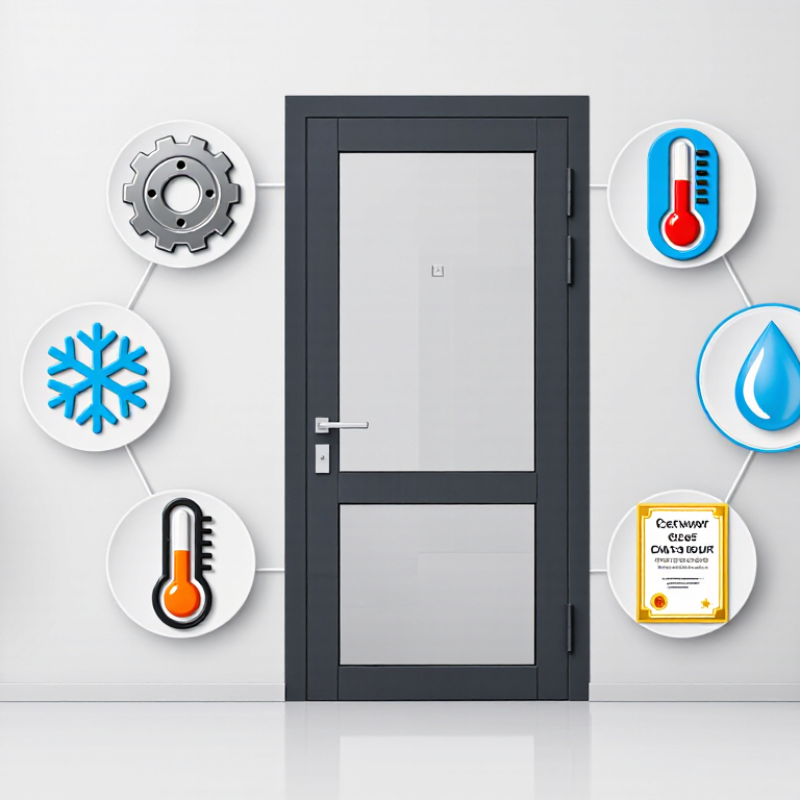
China Top Aluminium Door With Window Suppliers?

China’s Aluminium Door and Window Market: 41.59 Mt Primary Output in 2023

China’s Aluminium Door and Window Market: 41.59 Mt Primary Output in 2023

China’s primary aluminium output reached 41.59 million tonnes in 2023, according to widely reported industry statistics. This figure shows the market’s enormous raw-material foundation. However, primary aluminium is not the same as finished doors or windows. It must pass through extrusion, heat treatment, surface finishing, cutting, and assembly.

That distinction matters when selecting top aluminium door and window suppliers in China. A reliable supplier should explain alloy grades, profile thickness, thermal-break design, and drainage details. Ask for test reports, production samples, and inspection records. I have found that a neat sample can hide weak corner joints or uneven powder coating. Site audits remain useful.

Check the details closely.

A practical evaluation should include air leakage, water resistance, wind-load performance, glass specifications, and hardware compatibility. Suppliers with stable production control usually provide clear drawings and repeatable dimensions. They should also identify the source of aluminium billets and describe quality checks during extrusion. One concern deserves attention: a large national output does not guarantee consistent product quality. Capacity can be impressive, yet smaller workshops may still change materials without clear notice. Buyers should compare several batches, not one polished showroom sample. Scrap rates, packaging damage, and response time after delivery also reveal operational discipline.

Supplier Qualification: GB/T 8478-2020, ISO 9001, and 6063-T5 Profiles

China Top Aluminium Door With Window Suppliers?

A qualified supplier should show more than polished showroom photos. GB/T 8478-2020 provides a practical reference for aluminium doors and windows, including design, installation, and performance requirements. Request recent laboratory reports for air permeability, water tightness, wind-load resistance, and operating durability. The report should match the proposed profile, glazing, hardware, and fabrication method. A generic certificate is weak evidence.

ISO 9001 is useful, but its scope matters. The ISO Survey 2022 recorded more than 1.26 million ISO 9001 certificates worldwide. That number shows broad adoption, not automatic product quality. Check the certificate number, validity, manufacturing address, and certified activities. Ask how the factory controls extrusion dimensions, coating thickness, corner joints, and final inspection records. A site audit can reveal more than a PDF. Sometimes the paperwork looks better than the workshop.

6063-T5 profiles deserve specific verification. Ask for mill certificates showing alloy grade, temper, batch number, and mechanical properties. The supplier should explain wall thickness and reinforcement for each opening size. The International Aluminium Institute reported about 70.6 million tonnes of primary aluminium production in 2023, yet raw material volume says little about window performance. I would inspect sample corners, drainage paths, gaskets, and surface consistency by hand. One overlooked detail remains common: test samples may not represent the final production design. That deserves a second check.

China Top Aluminium Door With Window Suppliers? - Supplier Qualification: GB/T 8478-2020, ISO 9001, and 6063-T5 Profiles

Qualification Area Evaluation Dimension Technical Benchmark or Requirement Recommended Verification Evidence Qualification Result
Product Standard GB/T 8478-2020 compliance Aluminium alloy doors and windows should be designed, manufactured, inspected, marked, packaged, transported, and stored in accordance with the applicable provisions of GB/T 8478-2020. Current product technical documentation, inspection records, test reports, product drawings, and traceable batch records. Required
Quality Management ISO 9001 certification A valid ISO 9001 certificate should cover the relevant scope, such as the design, manufacture, processing, or supply of aluminium doors, windows, and related components. Certificate number, certification scope, validity period, issuing certification body, and verification through the certification body’s public registry where available. Required
Aluminium Profiles 6063-T5 alloy and temper 6063-T5 indicates an aluminium alloy profile cooled from an elevated-temperature shaping process and artificially aged. The applicable product standard should be used to confirm chemical composition, mechanical properties, dimensions, and tolerances. Mill test certificate, alloy and temper designation, chemical composition report, mechanical-property report, extrusion batch number, and material traceability. Required
Profile Quality Dimensional accuracy Profile dimensions, wall thickness, straightness, twist, angle accuracy, and other tolerances should conform to the applicable aluminium extrusion and project specifications. Approved profile drawings, inspection gauges, dimensional inspection reports, sampling plan, and calibration records for measuring equipment. Verify
Surface Finish Coating or anodizing consistency Surface treatment should be suitable for the intended exposure environment. Colour, gloss, coating thickness, adhesion, and visible defects should be controlled against approved samples and project requirements. Surface-treatment specification, approved colour sample, coating or anodizing test results, batch identification, and appearance inspection records. Verify
Fabrication Cutting, machining, and assembly accuracy Fabrication processes should maintain correct frame geometry, joint alignment, corner strength, drainage paths, gasket placement, and hardware installation. Process flow chart, work instructions, first-article inspection, corner-joint test records, assembly checklists, and nonconformance reports. Required
Performance Air permeability, watertightness, and wind resistance Complete window and door units should be tested against the performance classes or project criteria applicable to the installation location and building design. Test report identifying specimen configuration, dimensions, glazing, hardware, test pressure, test method, and result classification. Project-Based
Thermal Performance Thermal insulation configuration Where thermal performance is required, the supplier should define the frame system, thermal breaks, glazing build-up, spacer type, and calculated or tested U-value for the complete assembly. Section drawings, thermal-break material data, glazing specification, calculation report, and test report for the complete window or door system. Project-Based
Glazing Glass specification and installation Glass type, thickness, safety classification, edge clearance, setting blocks, sealants, and compatibility with the frame system should be defined before production. Glass manufacturer’s declaration, glass processing records, approved shop drawings, sealant compatibility data, and installation inspection records. Required
Hardware Hardware load and corrosion suitability Hinges, rollers, locks, handles, restrictors, and fasteners should be selected according to sash weight, operating cycle, security needs, and environmental exposure. Hardware schedule, load calculations, cycle-test data where applicable, corrosion-resistance information, and incoming inspection records. Verify
Factory Control Production traceability Raw materials, profiles, glass, hardware, finished units, and corrective actions should be traceable from purchase through final inspection and shipment. ERP or batch records, barcode or label samples, incoming inspection reports, production logs, final inspection reports, and packing lists. Required
Testing Capability Internal and third-party testing The supplier should have access to suitable facilities or qualified laboratories for dimensional, surface, mechanical, air, water, wind, thermal, and hardware-related testing as required by the project. Laboratory equipment list, calibration certificates, laboratory qualification documents, test procedures, and recent representative reports. Verify
Documentation Technical submittal completeness Submittals should clearly identify profile sections, alloy and temper, wall thickness, surface finish, glazing, hardware, gaskets, sealants, performance data, and installation requirements. Product catalogue, technical data sheet, shop drawings, material schedule, installation manual, maintenance instructions, and change-control records. Required
Supply Capability Capacity and delivery control Production capacity should be assessed against the required quantity, profile complexity, finish type, glazing scope, packaging method, and delivery schedule without compromising inspection controls. Capacity statement, production plan, equipment list, staffing plan, sample lead-time record, and shipment performance history with confidential details removed. Verify
After-Sales Support Warranty and corrective action The supplier should define warranty coverage, exclusions, response time, spare-part support, complaint handling, root-cause analysis, and corrective-action procedures. Warranty terms, service workflow, complaint log template, corrective-action report template, spare-parts list, and escalation contacts. Required
Assessment note: GB/T 8478-2020, ISO 9001 certification, and 6063-T5 profile documentation are qualification references rather than a ranking system. Final acceptance should be based on the applicable project specifications, approved samples, verified test reports, and factory or third-party inspection results.

Performance Metrics: U-Value ≤1.5 W/m²K, Air Leakage, and Wind Load

China Top Aluminium Door With Window Suppliers?

A serious supplier should treat U-value as a whole-window result, not a glass-only claim. NFRC 100 evaluates complete fenestration products, including frames, spacers, and glazing. A target of ≤1.5 W/m²K is practical for thermally broken aluminium systems with low-emissivity double glazing. However, site installation can weaken laboratory performance. Poor shimming or compressed gaskets may create cold edges and visible condensation.

Air leakage deserves equal attention. The U.S. Department of Energy reports that windows can influence 25–30% of residential heating and cooling energy use. Request test results under ASTM E283 or EN 1026 conditions. A common high-performance benchmark is 0.3 cfm/ft² at 1.57 psf, roughly 1.5 L/s·m². Check whether the result applies to the complete door, not only a sample sash. Small differences matter.

Wind load must match the project location. ASTM E330 and EN 12211 assess structural pressure, but neither gives one universal pass value. Coastal towers, exposed rural sites, and sheltered low-rise homes need different design pressures. Suppliers should provide pressure-deflection records, air-water tests, alloy specifications, and accredited laboratory evidence. Factory experience helps, yet paperwork can still hide weak installation assumptions. I would also inspect corner joints and drainage paths, because elegant profiles sometimes perform poorly after repeated opening cycles.

China Top Aluminium Door With Window Suppliers? Performance Benchmark

Anonymous reference configurations are compared against practical performance criteria: U-value ≤ 1.5 W/m²K, air leakage ≤ 1.0 m³/(h·m²) at 100 Pa, and wind-load resistance ≥ 1,200 Pa. The chart displays a normalized performance index, where 100 represents the selected benchmark.

Anonymous Configuration U-Value
W/m²K
Air Leakage
m³/(h·m²) at 100 Pa
Wind Load
Pa
Configuration A 1.20 0.70 1,600
Configuration B 1.35 0.90 1,200
Configuration C 1.50 1.00 1,600
Configuration D 1.10 0.50 2,000

U-value and air-leakage scores are calculated inversely because lower values indicate better insulation and tighter sealing. Wind-load scores are calculated directly because a higher pressure rating indicates greater resistance. Final acceptance should be verified through project-specific testing under EN 14351-1, EN 12207, EN 12210, and applicable local building requirements.

Factory Comparison: Extrusion, Powder Coating Thickness, and MOQ

Choosing China’s top aluminium door and window supplier requires more than comparing quotations. Extrusion quality comes first. EN 755-9 requires suppliers to declare dimensional tolerances for aluminium profiles. Ask for the tolerance class, straightness records, and a sample cut from current production. A profile may look smooth, yet a 0.5 mm twist can cause visible sash gaps during installation. European Aluminium guidance also stresses recycled-content and traceability. The International Aluminium Institute reports that recycling aluminium uses about 95% less energy than primary production. That figure supports asking for alloy certificates and recycled-content evidence.

Powder coating thickness needs measurable proof. The 2024 Qualicoat specifications commonly set a 60-micrometre minimum average thickness for standard architectural powder coating, with a 48-micrometre local minimum. Request readings from corners, edges, and flat surfaces, not one convenient spot. ISO 2360-style non-destructive testing can record dry-film thickness without damaging the frame. Colour matching matters too. A factory should provide gloss, adhesion, and weathering results. Some suppliers quote “thick coating” without showing test conditions. That wording is weak.

MOQ changes the real factory cost. A low MOQ may reduce inventory, but it can increase die charges, colour-change waste, and per-unit packaging costs. A higher MOQ may secure stable extrusion batches and consistent coating. Compare MOQ by profile, finish, glass option, and delivery batch. Do not compare only by container quantity. A practical request is one small pilot order with five to ten frames, including corner samples. It may expose assembly problems early. I would still question any report based on one batch; factory performance can drift.

Procurement Checks: EN 14351-1 Testing, Warranty Terms, and Lead Times

China Top Aluminium Door With Window Suppliers?

For procurement, EN 14351-1 evidence matters more than polished catalogues. The standard covers external windows and pedestrian doorsets. Ask for test reports matching your exact profile, glass, hardware, and dimensions.

Air permeability, watertightness, wind resistance, thermal transmittance, and acoustic performance should be clearly identified. A report for a smaller sample may not represent a 2.4-metre sliding unit. This is often missed.

Warranty terms need equal attention. Request separate coverage for aluminium profiles, powder coating, glass, seals, hardware, and installation defects.

Check exclusions for coastal salt, condensation, colour variation, and unauthorised adjustments. The AAMA and FGIA technical guidance also stresses that installation influences real performance.

A supplier promising ten years should explain the remedy, response time, and spare-part availability. “Warranty provided” is not enough.

Tips:

Build a procurement sheet before requesting prices. Record test standard, laboratory date, sample size, U-value, delivery point, and production lead time.

UNCTAD’s Review of Maritime Transport reports that shipping carries over 80% of global merchandise trade by volume, so sea freight can disrupt schedules. The World Bank’s 2023 Logistics Performance Index gave China a 3.7 score, showing strong logistics but not guaranteed project timing.

Separate fabrication, inspection, packing, customs, and sailing days. Add a realistic buffer.

I would still request a sample corner, coating certificate, and weekly production photos; small omissions become expensive corrections.

FAQS

Does China’s primary aluminium output equal finished door and window production?

No. The 2023 output reached 41.59 million tonnes, but raw aluminium still needs extrusion, finishing, cutting, and assembly.

What should buyers ask aluminium door and window suppliers?

Request alloy grades, profile thickness, thermal-break details, drainage drawings, test reports, and inspection records. Ask for current production samples.

Why is one showroom sample not enough?

A polished sample may hide weak corner joints, uneven coating, or inaccurate dimensions. Compare several batches. Looks can mislead.

How can buyers evaluate extrusion quality?

Ask for tolerance classes, straightness records, and a cut sample from active production. Even a 0.5 millimetre twist can create sash gaps.

What powder coating checks are important?

Measure coating at corners, edges, and flat surfaces. Standard architectural coating commonly uses a 60-micrometre average minimum and 48-micrometre local minimum.

Which coating test results should suppliers provide?

Request thickness, gloss, adhesion, colour matching, and weathering results. Non-destructive thickness testing can protect the finished frame.

How does the minimum order quantity affect costs?

A low quantity may reduce inventory, but die charges and colour-change waste can increase unit costs. Compare quantities by profile, finish, glass, and delivery batch.

What should a practical pilot order include?

Order five to ten frames with corner samples. Check assembly, packaging damage, dimensions, and response time before approving larger shipments. I would still review later batches.

Conclusion

China’s aluminium door and window industry continues to offer extensive manufacturing capacity, supported by approximately 41.59 Mt of primary aluminium output in 2023. When selecting an Aluminium Door With Window supplier, buyers should verify compliance with GB/T 8478-2020, ISO 9001 quality management, and the use of suitable 6063-T5 aluminium profiles. Key performance indicators include a U-value of no more than 1.5 W/m²K, reliable air-tightness, and resistance to specified wind loads.

A practical factory comparison should examine extrusion capabilities, profile dimensional accuracy, powder-coating thickness, color consistency, minimum order quantities, and production flexibility. Procurement teams should also request EN 14351-1 test documentation where applicable, clearly review warranty coverage, and confirm realistic lead times for samples, mass production, and shipment. These checks help ensure that the selected supplier can deliver durable, energy-efficient, and consistently manufactured products for the intended project requirements.

Oliver

Oliver

Oliver is a dedicated marketing professional with a strong understanding of the company’s products, customers, and industry landscape. With a practical, research-driven approach, he transforms complex product information into clear, valuable insights that help readers make informed decisions.......