Architectural Whitepaper: Structural & Thermal Engineering of Black Aluminium Doors
In modern architectural design, the demand for CE certified aluminium black doors has escalated beyond mere visual minimalism. Today’s architectural specifications mandate rigorous structural resilience, high-performance thermal insulation (low U-values), exceptional air-tightness, and guaranteed surface finish longevity under aggressive atmospheric conditions. As a leading manufacturer based in Foshan, China—the world’s premiere aluminium extrusion hub—KARON (Karon Window & Door Co., Ltd.) engineers advanced fenestration solutions that merge refined industrial design with certified global compliance.
This technical whitepaper provides B2B buyers, architectural consultants, structural engineers, and international procurement managers with an in-depth analysis of extrudable alloys, polyamide thermal breaks, anodized and fluoropolymer powder coatings, structural loading mechanics, and trade compliance standards required for overseas markets.
10,000 m²
Standardized Factory Plant
15+ Years
Global OEM/ODM Experience
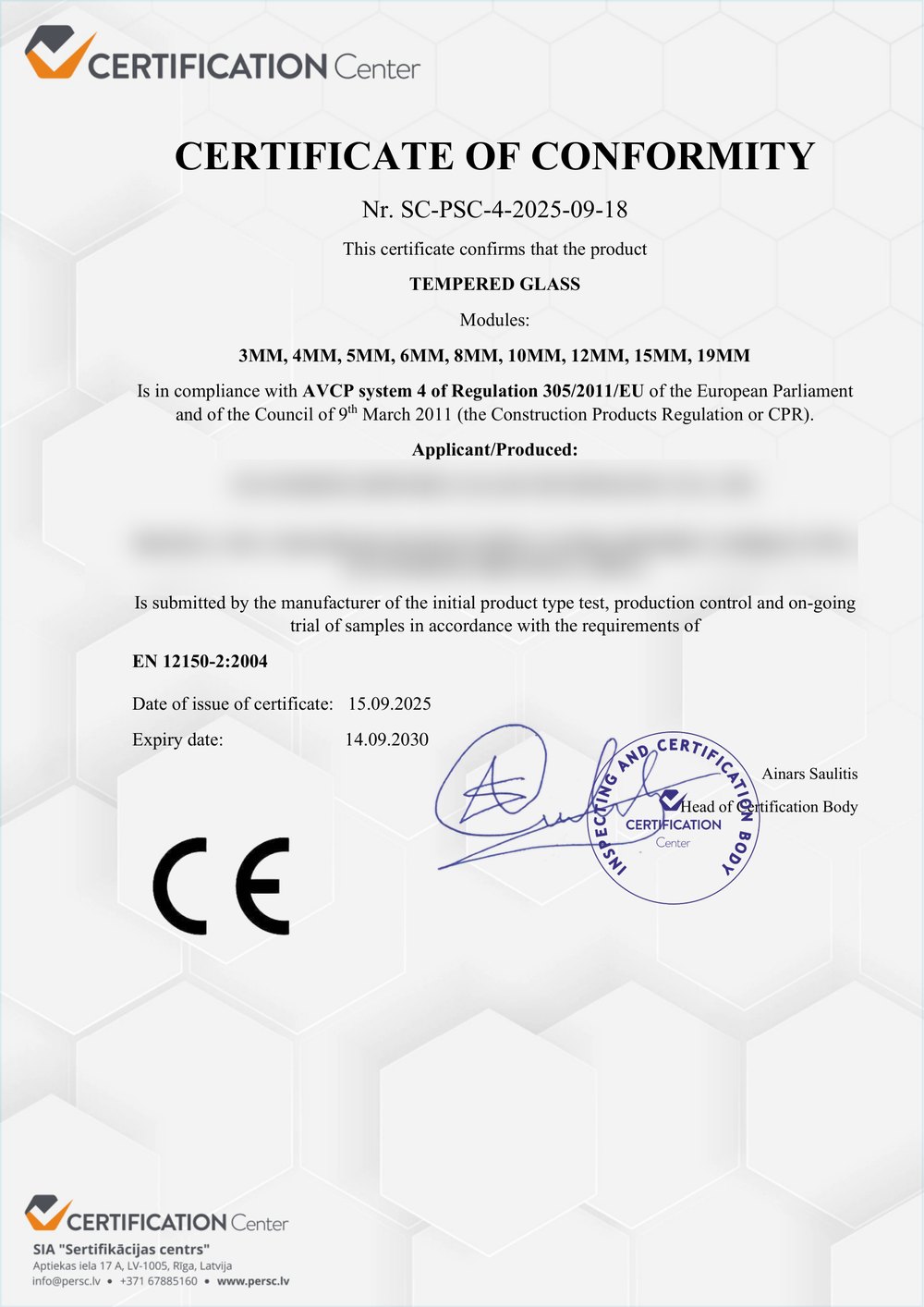
CE EN 12150
Mandatory EU Safety Standard
Uw ≤ 1.1
W/m²K Thermal Insulation Value
1. Metallurgical Profiles & Black Surface Finishing Science
The foundation of structural integrity in high-end black door systems lies in the choice of raw aluminum alloy billets and precision extrusion processes. Standard commercial doors often suffer from frame distortion under thermal stress or structural sag over large spans. At KARON, we utilize primary-grade 6063-T5 and 6060-T66 architectural aluminium alloys, optimized for high tensile strength, precise corner crimping tolerances, and superior anodizing quality.
Qualicoat Class 2 & 3 Powder Coatings
Black profiles absorb significantly more solar radiation than lighter shades, driving frame surface temperatures up to 80°C. To prevent chalking, color fading, or micro-cracking, our matte black finishes employ Qualicoat-certified architectural fluoropolymer (PVDF) and super-durable polyester powders tested against 3,000+ hours of accelerated salt spray and UV exposure.
Electro-Anodized Matte Black (20-25μm)
For high-salinity coastal areas or intense UV zones, electro-anodizing forms an integral aluminum oxide layer deeply saturated with organic black dyes. With a film thickness exceeding 20 microns, the profile achieves an unyielding surface hardness resistant to scratch damage and chemical weathering.
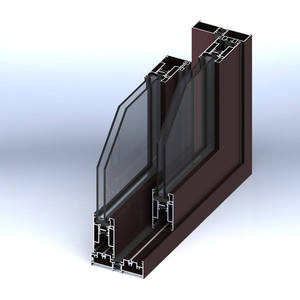
PA66-GF25 Polyamide Thermal Break
To mitigate the bi-metal effect—where outer black profiles expand under solar radiation while inner profiles remain cool—our thermal break systems incorporate 25% glass-fiber reinforced Polyamide 66 (PA66-GF25) strips. This ensures high structural shear strength and prevents frame bowing.
Engineering Parameter Specification Matrix
| Technical Indicator | Standard Commercial Door | KARON CE Certified Architectural System | Testing Standard & Compliance |
|---|---|---|---|
| Alloy Grade & Temper | Recycled 6063-T5 | Primary Virgin Billet 6063-T5 / 6060-T66 | GB/T 5237.1 / EN 755-2 |
| Thermal Break Strip | PVC or Low-Grade Nylon (14.8mm) | PA66-GF25 High-Precision Polyamide (24mm - 34mm) | EN 14024 Structural Test |
| Air Tightness (Infiltration) | Class 2 (300 Pa) | Class 4 (600 Pa) — Ultra-Airtight Compression Seal | EN 12207 / ASTM E283 |
| Water Tightness | Class 5A (200 Pa) | Class E1050 (1050 Pa Static Pressure) | EN 12208 / ASTM E331 |
| Wind Load Resistance | Class C3 (1200 Pa) | Class C5 / P3 (3000+ Pa Structural Capacity) | EN 12210 / AS 2047 / TAS 202 |
| Overall Thermal Transmittance (Uw) | ≥ 2.8 W/m²K | 0.85 – 1.3 W/m²K (Triple Glazed Low-E) | ISO 10077-2 / EN 673 |
2. Future Procurement Trends for Black Aluminium Doors (2025–2030)
The global architectural fenestration market is undergoing a rapid paradigm shift driven by stringent carbon neutrality mandates, energy performance directives, and evolving architectural intent. B2B importers, commercial developers, and project engineers must align their procurement strategies with four key emerging industry trends:
Key Insight: The Shift Toward Low-Carbon & Ultra-Slim Thermal Fenestration
By 2026, the European Union's Energy Performance of Buildings Directive (EPBD) will mandate near-zero energy building (NZEB) standards for all major renovations and new builds. Procuring non-thermal break profiles for exterior applications will effectively cease in major markets. Importers must prioritize supplier facilities capable of integrating multi-cavity insulation zones and low-carbon extruded aluminium billets (carbon intensity < 4.0 kg CO2/kg Al).
1. Ultra-Narrow Interlock Sightlines with Structural Glass Bonding: Contemporary minimalist trends demand sightlines under 20mm for large patio sliding systems. Achieving this requires structural silicone glazing (SSG) techniques where high-modulus structural sealant bonds the glass unit directly to the aluminium frame, transferring lateral wind force directly to the glass substrate.
2. Smart System Integration & Automated Drive Mechanics: Commercial residential developments increasingly require concealed electric motorization, multi-point electronic locking latches compatible with smart home protocols (Zigbee, Matter, KNX), and automated sensor-driven micro-ventilation modes.
3. Advanced Acoustic Decoupling for Urban High-Rises: Urban noise pollution requires specialized laminated glass builds (e.g., 6mm Clear + 1.52mm Acoustic PVB + 6mm Clear) paired with dual-component EPDM weather stripping. Modern procurement bids strictly specify sound transmission class ratings (STC ≥ 42 dB / Rw ≥ 40 dB).
3. System Architecture Analysis across Key Product Categories
A comprehensive architectural door catalog must cater to diverse environmental loads and opening geometries. Below is an engineering breakdown of KARON’s core export configurations:
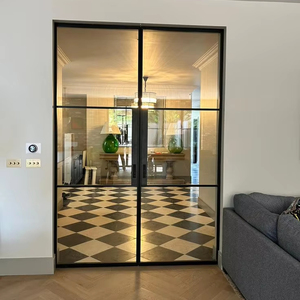
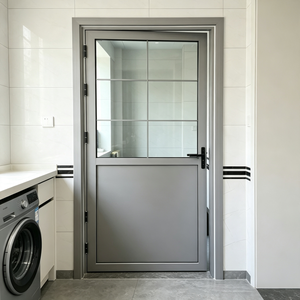
Interior Steel-Look French Doors & Slim Partitions
Emulating traditional industrial steel windows without the penalty of heavy weight or corrosion risk. Utilizing ultra-narrow 15mm-25mm aluminium profiles with internal grids (muntin bars), these systems provide elegant interior space division for luxury residential apartments and boutique hospitality projects.
Tempered Glass
Magnetic Latching
Concealed Hinges
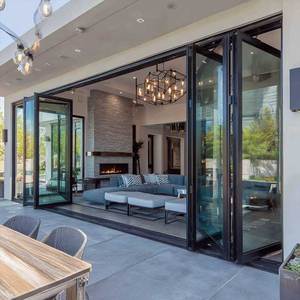
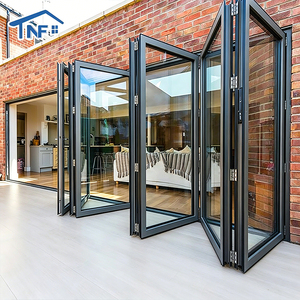
Heavy-Duty Exterior Bi-Fold & Lift-Slide Doors
Designed for expansive openings up to 12 meters in width. Heavy-duty top-hung roller systems or stainless steel bottom track runners support individual sash weights up to 400 kg. Features multipoint shoot-bolt locks and flush threshold track options for barrier-free access compliant with ADA / mobility standards.
Stainless Steel Track
400kg Sash Load
Drainage Channel
4. Enterprise Manufacturing & Global Compliance Framework
Establishing authority and trustworthiness (E-E-A-T) in international trade demands absolute transparency in manufacturing capabilities, raw material traceability, and third-party laboratory certification. KARON operates a 10,000 m² modern manufacturing complex in Nanhai District, Foshan, strictly governed by ISO 9001 quality management procedures.
Unlike trading intermediaries, our factory maintains complete in-house control over key fabrication processes: automated double-head precision cutting, CNC profile milling for hardware pockets, mechanical corner crimping with two-component structural glue injection, and automated insulating glass unit (IGU) assembly.
International Certification Matrix for Global Market Access
Every shipment exported from our Foshan facility is backed by verified test reports and certificate credentials issued by accredited notified bodies:
European Union: CE Marking (EN 12150 Safety Glass & EN 14351-1 Windows/Doors)
United States: SGCC (Safety Glazing Certification Council - ANSI Z97.1 / CPSC 16 CFR 1201)
Australia: AS 2208 / AS 2047 StandardsMark License
New Zealand: AS/NZS 2208 CSi PAS-Mark for Single & Laminated Toughened Glass
Thailand: TISI 965-2560 & TISI 1231-2560 Industrial Standards
Malaysia: CIDB PPS Certification Compliance
5. Frequently Asked Questions (FAQ) for B2B Procurement
Address common technical, shipping, and customization inquiries when sourcing CE-certified black aluminium doors directly from China.
Q1: How do you prevent frame distortion and thermal bowing on black exterior doors exposed to direct sun?
Black profiles absorb higher solar radiation, causing temperature differentials between outer and inner frame faces. We mitigate this using PA66-GF25 polyamide thermal break strips with engineered anti-bi-metal sliding threads. This mechanical decoupling allows exterior and interior aluminium profiles to expand independently without bending the sash.
Q2: What third-party CE certifications do you supply for European project approvals?
Our door systems are certified under EN 14351-1 (External pedestrian doorsets) and EN 12150 (Thermallly toughened soda lime silicate safety glass). We issue complete Factory Production Control (FPC) documentation, Declaration of Performance (DoP), and CE compliance labels affixed to every unit.
Q3: What hardware brands do you integrate into your black aluminium doors?
We offer standard premium hardware options depending on project budget and specification: German-engineered brands such as Siegenia, HOPPE, GU, and Roto for heavy-duty commercial applications, alongside top-tier customized concealed hardware lines tested to 50,000+ opening cycles.
Q4: Can KARON manufacture custom door sizes based on architectural CAD/BIM drawings?
Yes. 100% of our production is customized to client schedule specifications. Our engineering team reviews your architectural DWG/BIM drawings, structural wind-load requirements, and wall detail openings, providing detailed shop drawings for formal approval prior to profile extrusion and glass cutting.
Q5: What export packaging protection is used to prevent surface scratches during ocean freight?
Every black profile is protected by a peelable 80-micron UV-resistant protective film. Complete door units are wrapped in multi-layer PE foam, corner-protected with heavy cardboard, and packed inside fully enclosed fumigation-free plywood crates or steel-framed A-frames for safe container loading.
Request Engineering Shop Drawings & Factory Price Quotes
Send your project window/door schedules, specifications, or architectural drawings directly to our Foshan engineering team for immediate review and competitive B2B factory pricing.