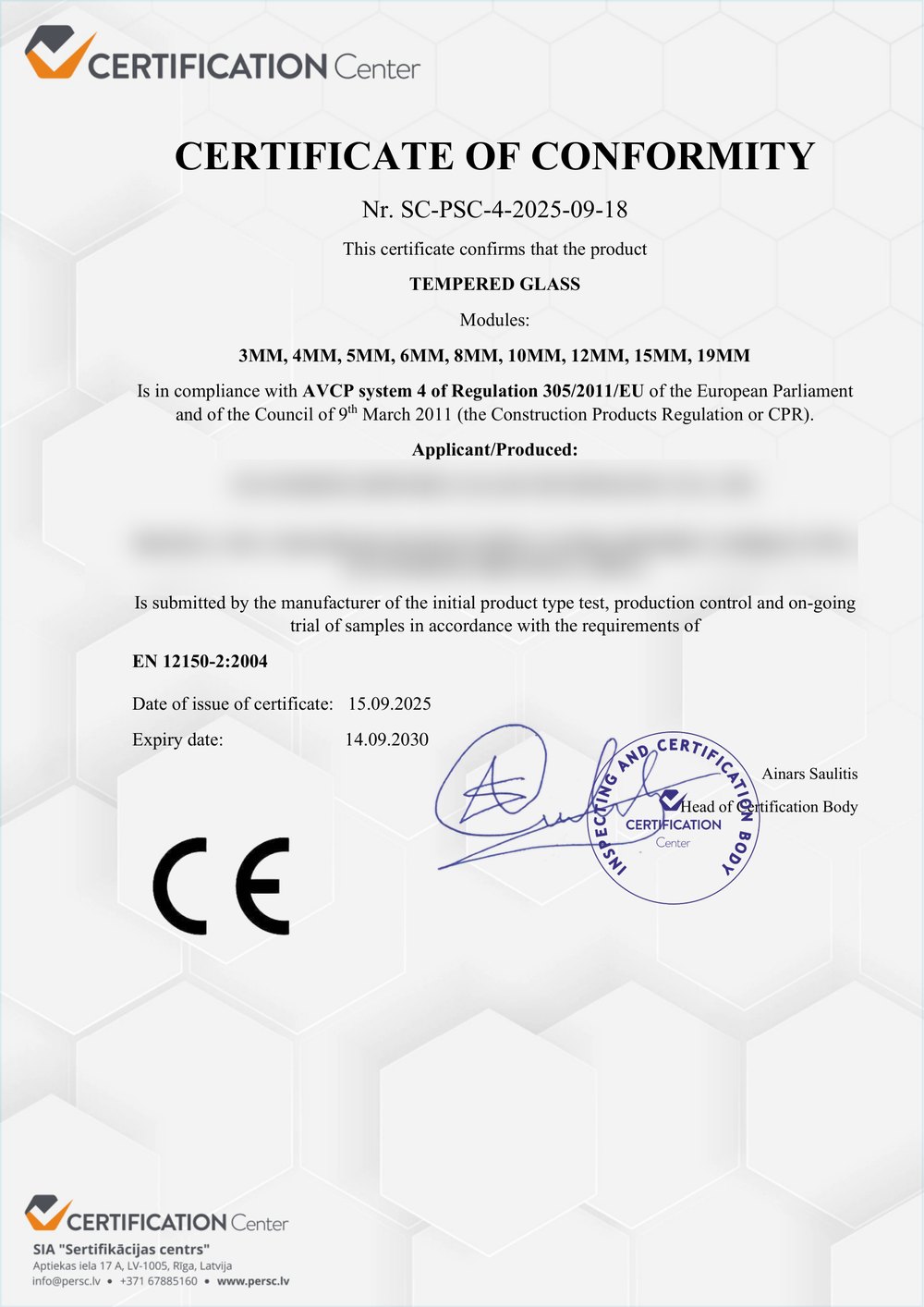
Recommended CE-Certified Aluminium Crittall Style Door Systems
Engineered to rigorous international standards (CE EN 14351-1, SGCC, AS 2208). Designed for ultra-narrow sightlines, high thermal performance, and architectural acoustic control.
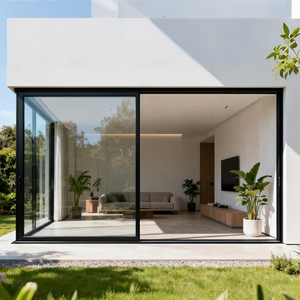
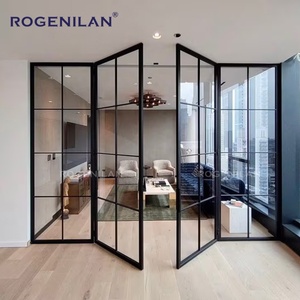
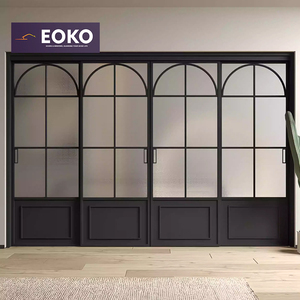
Architectural Whitepaper: The Evolution, Engineering, and Global Sourcing of Aluminium Crittall Style Doors
A technical analysis for architectural specifiers, facade consultants, commercial developers, and international importers evaluating high-performance metal-framed door systems.
1. Executive Summary & Historical Paradigm Shift
The iconic visual identity of steel glazing systems—pioneered in the late 19th century by Francis Crittall—remains a cornerstone of modern architectural design. Characterized by slim, minimalist sightlines, industrial grid geometries, and expansive glass panels, "Crittall style" doors have transcended their historic heritage to become essential elements in contemporary residential lofts, boutique hotel interiors, high-end office partitions, and commercial facades.
However, legacy hot-rolled steel Crittall systems present significant engineering challenges in modern construction: high material density leads to excessive frame weight, steel extrusions suffer from thermal bridging resulting in condensation and thermal inefficiency, and raw steel is prone to atmospheric oxidation unless treated with expensive maintenance regimes. The modern fenestration industry has undergone a technological transition toward extruded aluminium alloy thermal break Crittall style doors.
By leveraging high-tensile 6063-T5/T6 structural aluminium extrusions integrated with polyamide (PA66GF25) thermal barriers, modern factories achieve the signature ultra-slim sightlines of classic steel doors while delivering superior thermal transmittance values (U-values), enhanced acoustic attenuation, lightweight structural integrity, and total maintenance-free durability against marine and humid environments.
Key Information Gain: Structural Superiority of Thermal Break Aluminium vs. Steel
While traditional hot-rolled steel doors achieve frame sightlines of 25mm–35mm, non-thermal steel exhibits high thermal conductivity (K ≈ 50 W/mK). Modern high-precision aluminium extrusions engineered with glass-fiber reinforced polyamide strips achieve profile sightlines as slim as 15mm–30mm while reducing thermal conductivity to K < 1.5 W/mK. Furthermore, aluminium door sashes reduce dead load weight on hinges and structural lintels by up to 60%, expanding permissible leaf sizes for expansive architectural spans.
2. Structural Performance, CE Certification & International Standards Verification
For international buyers, real estate developers, and facade contractors, compliance with stringent regulatory frameworks is paramount. Export-oriented manufacturers based in Foshan, China—the world's premier extrusion and fenestration manufacturing hub—must adhere to rigorous quality verification protocols. The European CE Mark (under EN 14351-1 for external windows and doors, and EN 12150 for tempered safety glass) serves as the primary technical baseline for market entry across the European Economic Area (EEA), the UK (UKCA standard compliance), North America (NFRC/SGCC), and Australasia (AS 2208 / AS/NZS 2208).
| Performance Characteristic | Test Standard / Regulatory Benchmark | Aluminium Crittall Specification | Architectural Impact |
|---|---|---|---|
| Thermal Transmittance (U-Value) | EN ISO 10077-2 / NFRC 100 | 1.2 – 1.8 W/m²K (Double/Triple Glazed Low-E) | Meets EU Near-Zero Energy Building (NZEB) and US Title 24 codes. |
| Air Permeability | EN 12207 / ASTM E283 | Class 4 (600 Pa test pressure) | Prevents draft infiltration; ensures airtight interior climate control. |
| Watertightness | EN 12208 / ASTM E331 | Class 9A (600 Pa continuous water spray) | Guarantees leak-free performance in coastal storm and high-rise exposure. |
| Wind Load Resistance | EN 12210 / ASTM E330 | Class C5 (2000 Pa design wind pressure) | High structural rigidity prevents frame deflection under typhoon loads. |
| Acoustic Insulation (Rw) | EN ISO 717-1 / ASTM E90 | 35 dB – 42 dB (Acoustic PVB Laminated Glass) | Dampens ambient urban and industrial noise for hospitality and luxury residential. |
| Safety Glazing Certification | EN 12150 / SGCC / AS 2208 / TISI | Fully Tempered / Laminated Safety Glass | High impact strength; disintegrates into blunt fragments to prevent injury. |
3. Material Engineering & Profile Typologies
Aluminium Crittall style doors are available in several tailored profile configurations depending on the mechanical and environmental requirements of the project building envelope:
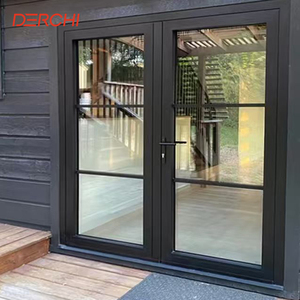
- Exterior Thermal Break Swing & French Doors: Engineered with a multi-chamber extrusion profile featuring dual EPDM continuous weatherstripping gaskets, multi-point locking mechanisms (CMECH or Hoppe hardware), and polyamide insulating struts. Designed for main entranceways, terrace openings, and patio access.
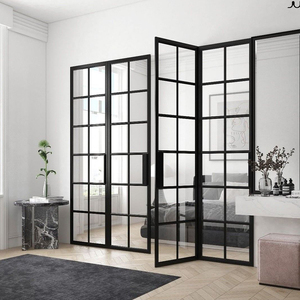
- Interior Minimalist Glazing Partitions: Designed with non-thermal narrow-frame extrusions (sightlines starting from 15mm) to maximize interior natural light transmission (VLT). Ideal for dividing office spaces, living/dining zones, and hotel suite bathrooms without creating visual barriers.
- Ultra-Slim Sliding & Lift-Sliding Systems: Featuring concealed bottom rollers, flush floor threshold designs (ADA compliant), and heavy-duty stainless steel tracks capable of supporting glass panel weights up to 400kg while maintaining effortless manual operation or motorized smart control integration.
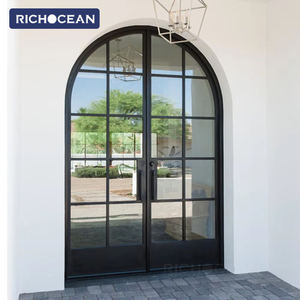
- Bespoke Architectural Arched Top & Grid Geometries: Precision CNC bent top frames combined with surface-mounted or structural aluminum glazing bars (muntins) allowing custom geometric mullion layouts (4-panel grids, diamond lattices, or custom heritage layouts).
Alloy & Temper Selection
Utilizes primary grade 6063-T5/T6 billet aluminum extruded under strict dimensional tolerances (GB/T 5237 / EN 755), ensuring high tensile yield strength and superior surface flatness for premium powder coating.
Qualicoat Powder Coating
Surface treatments feature Qualicoat Class 2 fluorocarbon (PVDF) electrostatic powder spraying, providing 25+ years of resistance against UV radiation, color fading, salt spray corrosion, and chemical abrasion.
Hermetic Glazing Seals
Equipped with silicone-compatible continuous EPDM weather gaskets and argon gas-filled Low-E insulated glass units (IGU), eliminating internal fogging, moisture ingress, and thermal leakage.
Future Procurement & Manufacturing Trends (2025–2030)
Understanding how evolving architectural standards, environmental regulations, and automation technologies are reshaping global window and door procurement.
1. Carbon Neutrality & Recycled Aluminium Billets
With stringent EU carbon border adjustment mechanisms (CBAM) coming into effect, leading Chinese manufacturers are adopting low-carbon recycled aluminium billets powered by hydroelectric and solar energy sources. Sourcing doors manufactured with certified low-carbon aluminium reduces embodied carbon scores in BREEAM and LEED certified green building projects.
2. Ultra-Narrow Sightlines & Concealed Hardware
Architectural demand is moving rapidly from traditional visible hinges and bulky lockboxes toward fully concealed 3D adjustable pivot hinges, multi-point hidden locking bars, and flush magnetic latch systems. The aim is to create uninterrupted visual continuity between interior and exterior living environments.
3. Smart Electrochromic & PDLC Glass Integration
Modern Crittall style doors are increasingly retrofitted with Switchable Polymer Dispersed Liquid Crystal (PDLC) privacy glass or electrochromic dynamic tinting. At the click of a remote or integration into smart home automation (Zigbee/Matter protocols), clear glass partitions transition into opaque privacy screens within milliseconds.
4. BIM Integration & Modular CAD Standardization
Top-tier exporters provide direct Building Information Modeling (BIM) Revit family files and 3D CAD block libraries to international architectural firms. This digital integration eliminates on-site dimensional mismatches and significantly accelerates project approval schedules for commercial developers.
Enterprise Factory Infrastructure & Technical Capabilities
Leveraging Foshan's premier architectural window and door manufacturing ecosystem to deliver end-to-end custom solutions.
10,000㎡ Standardized Plant
Equipped with automated double-head precision cutting saws, 4-axis CNC machining centers, hydraulic corner crimping machines, and automated silicone double-glazing lines operating under ISO 9001 quality management.
100% Full-Process Quality Inspection
Every door assembly undergoes systematic quality control checkpoints: aluminum profile film thickness testing, hardware cycle testing, glass thermal stress verification, air/water chamber pressure testing, and trial assembly before packaging.
Export-Grade Packaging & Logistics
Protective blue PE film coating, foam corner protectors, customized heavy-duty fully enclosed fumigated plywood crates, and container loading optimization ensuring zero glass breakage upon site arrival.
Work Directly with China's Premier Door Engineers
Submit your architectural CAD drawings, elevation drawings, or window schedule for immediate review, structural wind-load calculation, and competitive factory-direct wholesale pricing.
Frequently Asked Questions by Overseas Buyers & Contractors
Addressing technical, logistical, and commercial inquiries for global procurement of aluminium Crittall doors.
What is the minimum order quantity (MOQ) and lead time for custom aluminium Crittall doors?
How do aluminium Crittall doors perform in cold climates compared to steel doors?
Can the glazing bars (muntins) be customized to match historic or specific architectural patterns?
What international testing certificates are provided with export shipments?
How are doors packed to prevent frame scratches and glass breakage during sea freight transport?
What is the process for reviewing architectural shop drawings before production?
Ready to Elevate Your Project with CE Certified Aluminium Crittall Doors?
Connect with our international engineering desk for direct factory quotes, technical consultation, sample box kits, and detailed shop drawings.
Get a Quote