Certified Product Lineup
Featured CE & NFRC Certified Glazed Door & Window Systems
Precision-engineered thermal break profiles, hurricane-impact glazing, and architectural entrance solutions manufactured for international building codes.
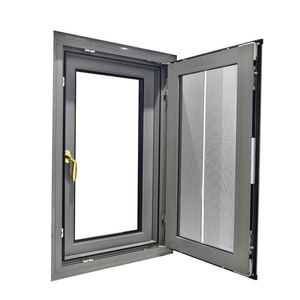
Aluminium Thermally Broken Triple Glazed Soundproof Swing Window with Stainless Screen
Inquire Now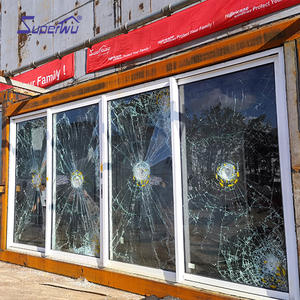
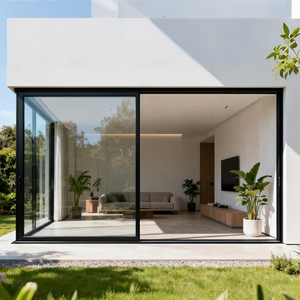
American Certified NFRC NOA Hurricane Impact Glass Aluminium Sliding Door System
Inquire Now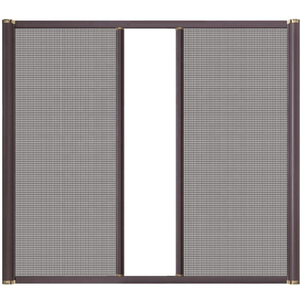
Modern Aluminum Alloy Retractable Insect Screen Doors for Luxury Hotel & Resort Use
Inquire Now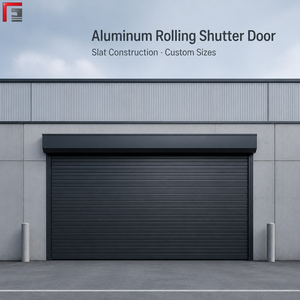
Aluminum Automatic Roller Shutter Door Modern Residential Roll Up Door for Villa & Garage
Inquire Now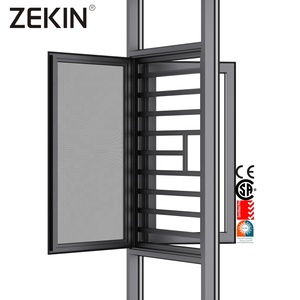
Florida Hurricane Impact Certified Thermal Break Aluminum Casement Engineering Window
Inquire Now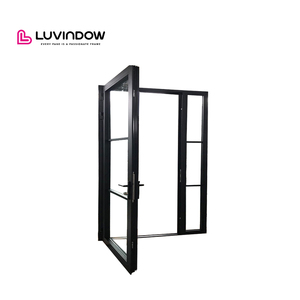
Thermal Broken Soundproof Customized Aluminum Swing Doors for North American Builders
Inquire Now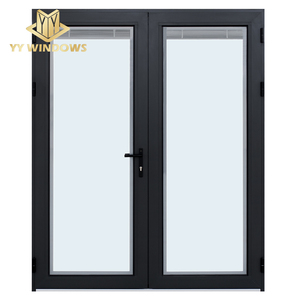
California Title 24 Double Glass Industrial Aluminum Exterior French Doors with Integrated Screen
Inquire Now15+
Years Architectural Experience
10,000㎡
Foshan Production Base
6+
Global Regulatory Credentials
100%
Pre-Shipment QA Inspection
Engineering Intelligence
CE Certified Aluminium Glazed Door Manufacturing: Standards, Structural Dynamics & Procurement Verification
In contemporary architectural design, selecting high-performance exterior door assemblies requires rigorous evaluation of material physics, thermal dynamics, structural integrity, and regulatory compliance. As premier CE certified aluminium glazed door manufacturers, Karon Window & Door Co., Ltd. operates at the intersection of precision Chinese metallurgical fabrication and stringent Western architectural requirements. Operating out of Songxia Industrial Park, Nanhai District, Foshan—the world’s foremost hub for architectural aluminium profile extrusion—our 10,000 m² facility engineers fenestration solutions that mitigate thermal bridging, endure dynamic wind loads up to cyclic hurricane forces, and fulfill strict carbon-neutral building requirements globally.
1. Deciphering CE Marking Compliance for Glazed Door Assemblies (EN 14351-1 & EN 12150)
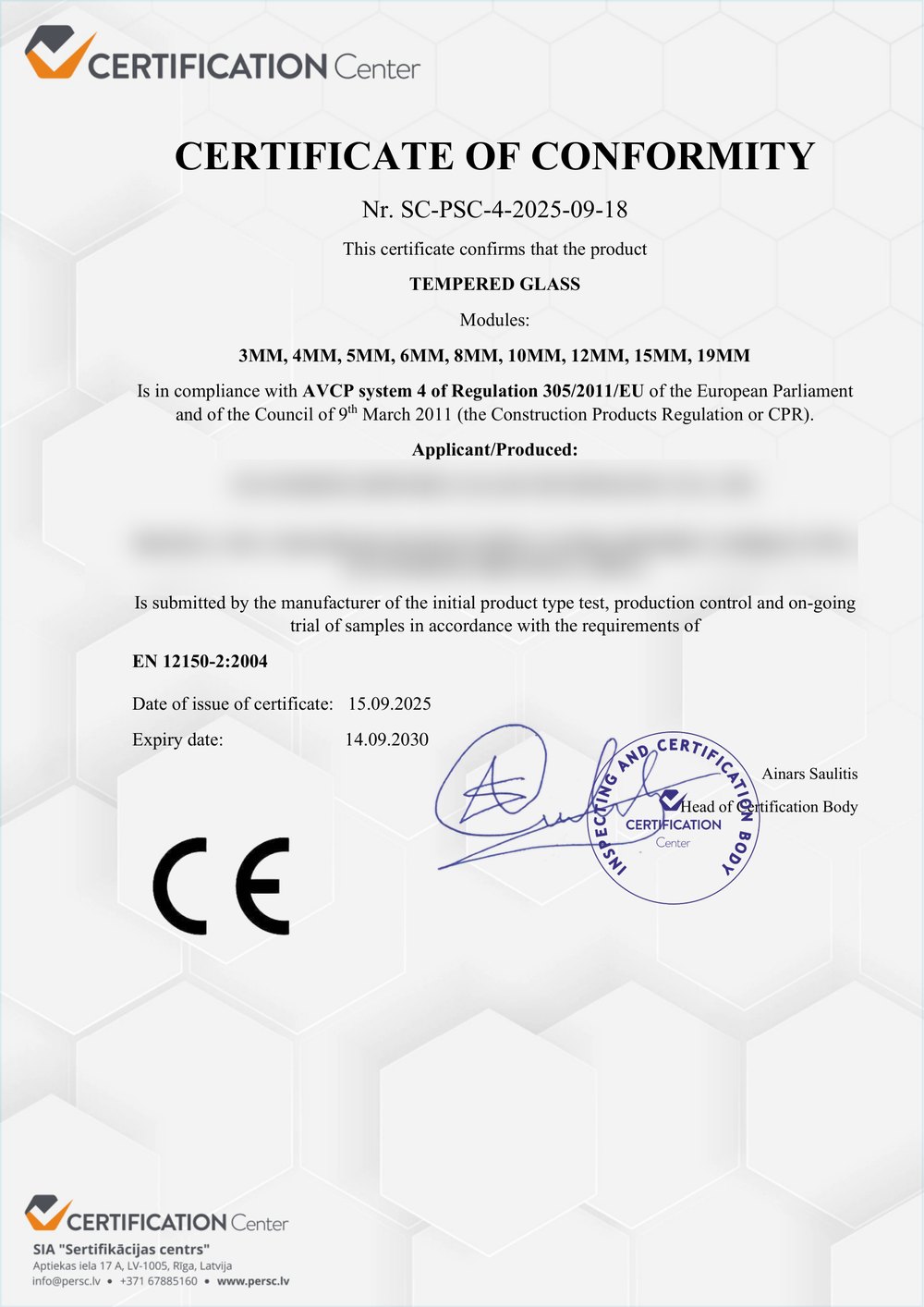
The European Conformity (CE) mark is not merely a trading permit; it represents verified compliance with the EU Construction Products Regulation (CPR 305/2011). For glazed aluminium door manufacturers, achieving CE compliance mandates strict adherence to EN 14351-1 (Windows and external pedestrian doorsets) and EN 12150-1 (Thermally toughened soda lime silicate safety glass).
When sourcing CE certified aluminium glazed doors, procurement directors must audit three critical Initial Type Testing (ITT) parameters:
- Air Permeability (EN 12207): Premium door systems must achieve Class 4 ratings, ensuring air leakage rates below 3 m³/h/m² under 600 Pa test pressure differential, preventing drafts and HVAC thermal leakage.
- Watertightness (EN 12208): Achieving Class E900 or Class 9A means zero uncontained water penetration under static and dynamic pressure up to 900 Pascals (simulating torrential wind-driven rains).
- Resistance to Wind Load (EN 12210): Structurally reinforced profiles must maintain structural deflection thresholds under Class C5 load parameters (relative frontal deflection lower than L/300 under 2000 Pa wind pressures).
2. Thermal Break Mechanics: PA66 GF25 Polyamide vs. Standard Aluminum Profiles
Aluminum retains high thermal conductivity ($k \approx 200 \text{ W/m}\cdot\text{K}$). Uninsulated aluminum framing creates severe thermal bridging, leading to interior heat loss in winter, heat gain in summer, and damaging interior condensation. Premium CE certified doors incorporate PA66 GF25 (Polyamide 66 reinforced with 25% structural glass fiber) insulating bars. These structural thermal breaks decrease the overall frame thermal transmittance ($U_f$) to below $1.6 \text{ W/m}^2\cdot\text{K}$.
| Performance Parameter | Standard Non-Thermal Break Door | PA66 GF25 Thermal Break Door | Triple Glazed Hurricane-Impact System |
|---|---|---|---|
| Thermal Transmittance ($U_w$) | $\ge 4.5 \text{ W/m}^2\cdot\text{K}$ | $1.4 - 1.8 \text{ W/m}^2\cdot\text{K}$ | $\le 0.95 \text{ W/m}^2\cdot\text{K}$ (Passive House Grade) |
| Acoustic Insulation ($R_w / \text{STC}$) | $25 - 28 \text{ dB}$ | $35 - 40 \text{ dB}$ | $42 - 48 \text{ dB}$ (Acoustic Laminated) |
| Condensation Resistance ($I_CR$) | Low ($< 35$) | High ($> 68$) | Superior ($> 82$) |
| Target Regions | Tropical / Interior Partitions | EU, North America, Coastal Asia | Cyclonic Coastal & Extreme Cold Zones |
| Regulatory Fit | Basic Commercial Codes | CE EN 14351-1 / US Title 24 | Florida NOA / SGCC / AS2208 / TISI |
Enterprise Edge
Why Top Global Contractors Partner with KARON
Architectural Shop Drawings
In-house structural engineers convert architectural CAD drawings and window schedules into fully detailed shop drawings with precise U-value, wind-load, and mullion load-bearing calculations.
Verified Lab Certifications
Fully backed by real, non-expired test certificates including CE (EN 12150), US SGCC, Australia AS 2208, NZ AS/NZS 2208, Thai TISI 965-2560, and Malaysian CIDB PPS schemes.
Whole-House System Sync
Unified profile alloy finishes (Anodized, Powder Coated, Fluorocarbon PVDF, Wood Grain) across casement windows, sliding doors, sunrooms, glass railings, and shower screens.
Market Forecast
Procurement & Architectural Development Trends in Glazed Aluminum Doors
1. Transition to Ultra-Slim Sightlines with Multi-Point Heavy Hardware
Architectural aesthetics are leaning decisively toward minimalist, ultra-narrow sightlines that maximize natural daylight. Modern B2B procurement focuses on slim-frame aluminum sliding doors with interlock widths under 20mm. Achieving this visual lightness without compromising structural wind resistance requires high-tensile 6063-T6 aluminum alloys and concealed continuous multi-point locking systems capable of holding panels weighing up to 400kg.
2. Integration of Smart Automation & Motorized Heavy Lift-Slide Systems
Driven by high-end villa and hospitality developments, demand for motorized heavy-duty lift-and-slide doors equipped with brushless DC motors, obstacle-detection sensors, and smart home automation integration (Zigbee/RS485) has risen by 45% year-over-year. Future-proof procurement schedules prioritize built-in cable channels and hidden motor pockets inside the top head tracks.
3. Strict Carbon Border Regulations & Recycled Low-Carbon Aluminum
With the European Union’s Carbon Border Adjustment Mechanism (CBAM) coming into full force, global buyers are increasingly evaluating the embodied carbon footprint of extruded aluminum profiles. Leading manufacturers are integrating secondary recycled aluminum billets (utilizing scrap ratios exceeding 75%), drastically lowering carbon emissions per kilogram of profile while maintaining EN AW-6063 mechanical properties.
4. Growth in Extreme Weather Impact Glazing (NFRC & NOA Hurricane Ratings)
Climate volatility has caused building authorities in coastal North America, Australia, and Southeast Asia to mandate impact-resistant laminated glazing. Incorporating SentryGlas® (SGP) ionoplast interlayers between toughened glass panes prevents penetration by windborne debris during Category 5 hurricanes, transforming exterior doors into structural hurricane barriers.
Proven Field Execution
Global Project Delivery Track Record
From luxury commercial resorts in Thailand to private structural villa builds in Texas, France, and Greece.
Resort Hotel
Kora Beach Resort, Phuket
Scope: 672 Units across 9 low-rise hotel buildings.
Systems: Heavy-duty thermal break sliding doors and soundproof casement windows.
Private Villa
Texas Luxury Estate, USA
Scope: Whole-house custom glazing package.
Systems: NFRC & Florida NOA impact sliding doors and motorized roll-up garage systems.
Residential Complex
Azure Blue Residence, Greece
Scope: Coastal multi-family residential development.
Systems: CE EN 14351-1 certified thermal break swing doors with marine-grade PVDF coating.
Direct Answers
Frequently Asked Questions by B2B Procurement Directors
How does KARON verify CE certification compliance for custom order sizes?
Every window and door profile series engineered in our plant undergoes Initial Type Testing (ITT) in accordance with EN 14351-1. We issue a official Declaration of Performance (DoP) referencing our EN 12150 safety glass certificates and profile thermal performance metrics so your local European building control officer can sign off on site delivery without delay.
What is the turnaround time from shop drawing sign-off to container loading?
Once architectural CAD shop drawings and material schedules are formally signed, standard production cycles require 25 to 35 working days. This includes profile extrusion, thermal break assembly, PVDF/powder surface finishing, glass tempering/assembly, hardware fitting, and 100% pre-shipment trial-assembly testing.
What is the difference between thermal break vs non-thermal break aluminium profiles?
Thermal break profiles feature an engineered polyamide (PA66 GF25) strip connecting outer and inner aluminum extruded sections. This structural break reduces heat conduction by up to 60%, preventing cold drafts, energy loss, and interior frame sweating. Non-thermal break profiles lack this strip and are typically specified for internal partition doors or tropical regions without significant heating/cooling requirements.
Can product finishes withstand severe coastal salt-spray environments?
Yes. For coastal projects within 3 kilometers of the sea (e.g., Greece, Florida, Phuket), we apply a minimum 3-coat Fluorocarbon (PVDF) coating meeting AAMA 2605 specifications or Qualanod-certified anodized finishes ($\ge 25\mu\text{m}$). This prevents salt-mist oxidation, pitting, and color degradation under intense UV exposure.
How are fragile glass and large frame units protected for ocean shipping?
All door assemblies undergo protective film application, corner guards, protective foam wrapping, and are sealed inside fully enclosed fumigated plywood crates with steel strapping. Glass panels are equipped with rubber spacers and silica desiccant packs inside sealed shipping containers to eliminate moisture accumulation during ocean transit.
Request Engineering Consultation & Factory Quote
Send your architectural CAD drawings, project schedules, or spec sheets. Our structural engineering team will provide system recommendations, certified test reports, and factory-direct pricing within 24 hours.