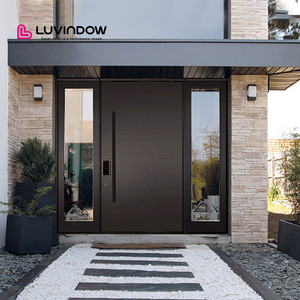
Modern Design Villa Black Aluminium Front Entry Pivot Door
Heavy-duty structural pivot entry door with hydraulic floor springs, multipoint locking mechanism, and thermal-break profiles.
Inquire NowExplore our certified fenestration portfolio engineered for ultra-low thermal transmittance, severe wind-load resistance, and modern luxury aesthetics.
Heavy-duty structural pivot entry door with hydraulic floor springs, multipoint locking mechanism, and thermal-break profiles.
Inquire Now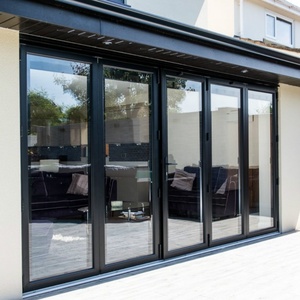
Precision outward/inward opening casement system featuring EPDM double compression seals and acoustic laminated glass insulation.
Inquire Now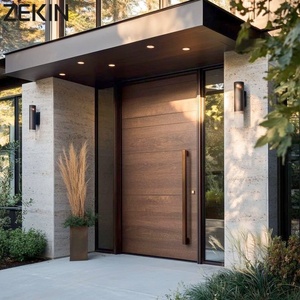
Architectural grand entrance door incorporating PA66 thermal barriers, fire-retardant cores, and customizable metallic anodized finishes.
Inquire Now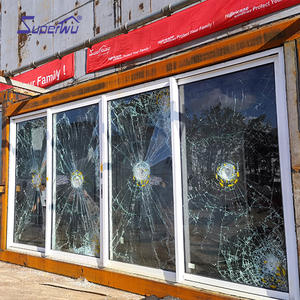
Coastal-grade impact sliding door engineered to withstand high wind loads, missile impact resistance, and severe weather intrusion.
Inquire Now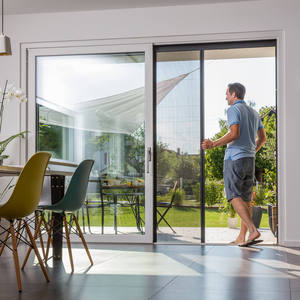
Slimline retractable insect protection screen integrated with smooth trackless sliding mechanisms for expansive outdoor access.
Inquire Now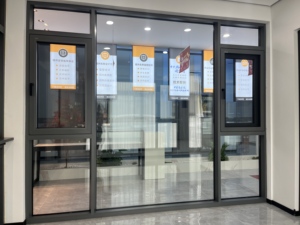
European style dual-sash window design featuring fixed top transom glazing and removable stainless steel security insect screen.
Inquire Now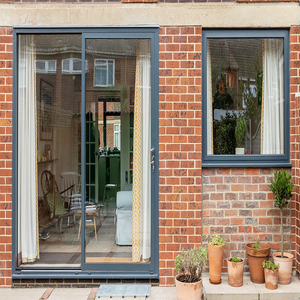
Multi-panel folding door system equipped with heavy stainless steel bottom rollers, thermal break profiles, and flush threshold options.
Inquire Now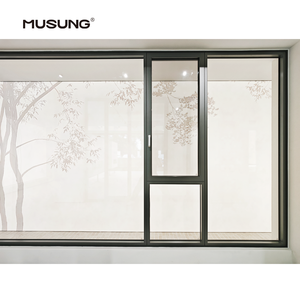
Dual-action European tilt-turn window delivering superior weatherproofing, top-ventilation modes, and minimalist narrow sightlines.
Inquire NowKaron Window & Door Co., Ltd. operates as a premier industrial manufacturer based in the global aluminum hub of Foshan, Guangdong, specializing in customized high-performance fenestration systems.
Operating from Songxia Industrial Park, Nanhai District, Foshan, our plant integrates automated CNC extrusion machining, hydraulic corner-crimping, double-bevel glass assembly lines, and rigorous ISO 9001 certified quality control processes.
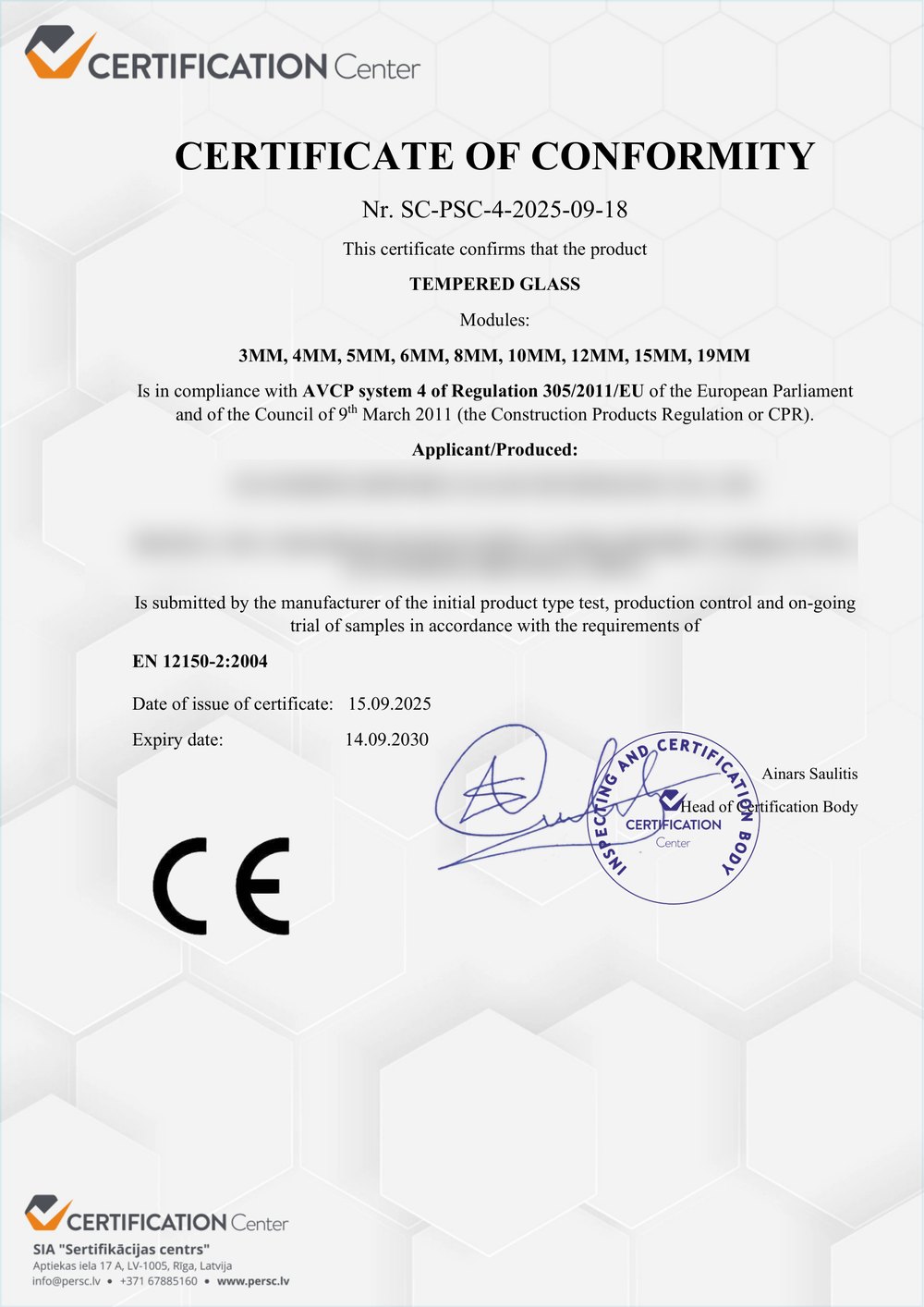
Our window and door assemblies are engineered to fulfill stringent international compliance mandates, including European CE (EN 12150), US SGCC Safety Glazing, Australia AS 2208, New Zealand AS/NZS 2208, Thailand TISI, and Malaysia CIDB PPS certification.
We work directly from architectural blueprints and window schedules. Every profile alloy composition (6063-T5/T6), glass build-up, polyamide thermal break, and hardware system (Siegenia, Hoppe, Monticelli) is fully customizable to structural specifications.
In modern architectural engineering, exterior fenestration systems are no longer passive light apertures; they are critical thermal and structural envelopes responsible for building operational energy efficiency, acoustic isolation, and weather resistance. Selecting CE-certified aluminium glazed windows requires a granular understanding of profile extrusion alloys, thermal break polymer mechanics, gas-filled insulated glass units (IGUs), and mechanical sealing physics.
Architectural aluminium windows manufactured at the KARON facility utilize high-purity 6063-T5 and 6063-T6 architectural grade aluminum alloys. The alloy heat treatment process increases tensile yield strength while maintaining ductile fracture resistance required under extreme wind pressures. For high-rise commercial structures and coastal villa developments, wall thicknesses are engineered between 1.4mm to 3.0mm, achieving optimal structural inertia to prevent frame deflection under peak wind pressures exceeding 5000 Pa.
Finishes are applied using advanced electrostatic fluorocarbon (PVDF) powder coating or anodic oxidation techniques. This guarantees surface resistance against salt spray corrosion (exceeding 2,000 hours in ASTM B117 testing), ultraviolet degradation, and mechanical abrasion, rendering our systems ideal for humid tropical and corrosive marine environments.
Raw aluminium possesses a high thermal conductivity rate ($k \approx 200 \text{ W/m}\cdot\text{K}$), which makes uninsulated frames prone to severe thermal bridging and interior condensation. KARON integrates Polyamide PA66 reinforced with 25% fiberglass (PA66 GF25) thermal barrier strips. This structural polymer bridge effectively separates the exterior aluminum extrusion from the interior profile, lowering the overall frame U-factor ($U_f$) down to $1.2 - 1.8 \text{ W/m}^2\cdot\text{K}$.
The matrix below outlines the performance benchmarks verified across our CE and international certification test protocols:
| Performance Indicator | Standard Test Protocol | Technical Rating / Value | Engineering Significance |
|---|---|---|---|
| Thermal Transmittance (Uw) | EN ISO 10077-2 / NFRC 100 | 0.8 – 1.4 W/m²·K | Reduces HVAC thermal loss, compliant with EU Passivhaus energy codes. |
| Acoustic Insulation (Rw) | EN ISO 140-3 / ASTM E90 | 38 dB – 48 dB | Decouples low-frequency urban traffic & airport noise. |
| Air Permeability | EN 12207 / ASTM E283 | Class 4 (Highest Grade) | Prevents forced air leakage under severe pressure differentials. |
| Water Tightness | EN 12208 / ASTM E331 | Class E1050 (1050 Pa) | Zero water penetration during hurricane-force driving rain storms. |
| Wind Load Resistance | EN 12210 / ASTM E330 | Class C5 (> 3000 Pa) | Maintains structural deflection integrity within L/175 limits. |
| Impact Resistance | EN 12600 / US TAS 201/203 | Large Missile Impact Pass | Safety tempered/laminated glass resists severe hurricane debris. |
Analysis of evolving global building mandates, decarbonization standards, and modern architectural preferences shaping B2B sourcing strategies.
Modern architectural luxury favors maximum glass surface areas with ultra-slim outer frame profiles (down to 18mm visible sightlines). Sourcing trends demonstrate massive growth in slim-frame sliding doors and dynamic motorized tilt-turn windows that maximize daylight harvest without sacrificing wind pressure resistance.
With strict carbon-border adjustment mechanisms (such as EU CBAM), global commercial buyers prioritize suppliers using hydro-powered low-carbon primary aluminium billets or scrap-recycled alloys. Implementing green aluminum reduces embodied carbon footprints by up to 70% per square meter of window frame.
Energy conservation codes in North America and Northern Europe are accelerating the transition from standard double-pane glazing to Argon gas-filled triple Low-E units and vacuum insulated glass (VIG). These units achieve thermal performance equivalent to solid brick masonry walls.
Commercial facade procurement increasingly demands integrated smart actuators, electric motorized lift-and-slide controls, rain sensors, and smart tinting electrochromic glazing compatible with central Building Management Systems (BMS) for automated climate balancing.
To lower on-site installation labor costs in Europe and Australia, developers are shifting procurement toward factory-assembled unitized window-wall packages, pre-fitted with perimeter sub-frames, EPDM sealing collars, and integrated sun-shading louvers.
Global developers require single-source suppliers capable of supplying multi-certified glass-metal assemblies (holding CE, SGCC, AS/NZS 2208 simultaneously) to simplify procurement logistics across diverse international property portfolios.
The manufacturing paradigm for architectural aluminium fenestration has evolved from manual assembly to precision automated manufacturing. Key technological developments driving the industry forward include:
Industrial 5-axis CNC machining centers execute complex lock-pocket routings, corner miter cuts, and drainage slot slotting with sub-millimeter tolerances (±0.1mm). This precision ensures airtight corner joint crimping and seamless gasket fitment.
Modern profile geometry has evolved from simple dual-cavity profiles to complex multi-cavity chambers filled with continuous polyolefin insulating foam insertions. This multi-stage thermal labyrinth effectively stifles internal convective heat currents.
Advanced structural silicones (Dow Corning / Tremco) combined with continuous co-extruded EPDM weather-stripping gaskets replace traditional wet putty. This provides elastomeric sealing that resists temperature extremes without cracking or shrinkage.
Clear, direct answers regarding factory capabilities, international standards, drawing approvals, and custom project manufacturing.
Consult directly with our Foshan engineering team. Send us your project drawings, architectural elevation schedules, or required performance parameters for an immediate technical evaluation and factory quote.
Inquire Now