Featured Engineering Aluminum Door & Window Systems
Explore our top-tier CE-certified brown aluminum door and window systems, custom-built for high-end luxury residential, villa, commercial facade, and resort developments.
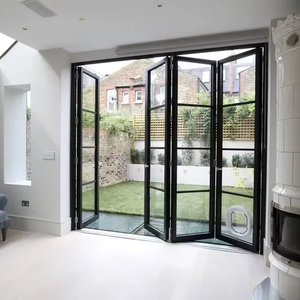
Villa French Design Aluminum Alloy Glass Door Double Glazed Narrow Frame
Ultra-narrow frame design with double-glazed tempered glass and waterproof sealing for interior kitchens and patio transitions.
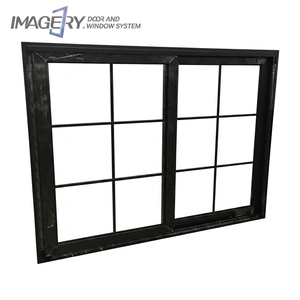
Factory Custom Aluminum Sliding Window with Grill Design Tempered Glass
Heavy-duty aluminum sliding window integrated with protective grill geometry, engineered for modern residential safety.
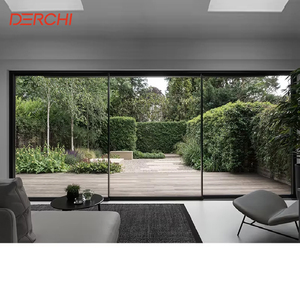
DERCHI Double Glazed Floor to Ceiling Sliding Doors & Windows
Panoramic floor-to-ceiling sliding aluminum system featuring soundproof double glazing for balcony terrace enclosures.
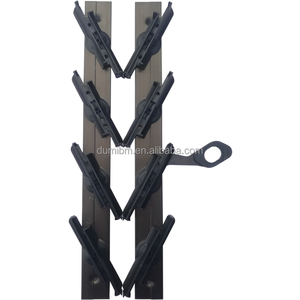
Removable Aluminium Shutter Frame Window Louver Jalouplus System
Tropical weather-resistant aluminum louver system designed for controlled airflow, privacy, and storm protection.
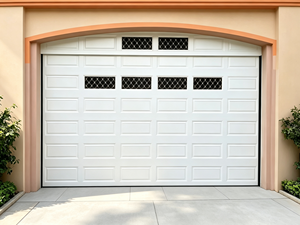
Automatic Sectional Insulated Windproof Exterior Garage Door
High-windload rated aluminum sectional garage door equipped with thermal polyurethane insulation core and automated drive.
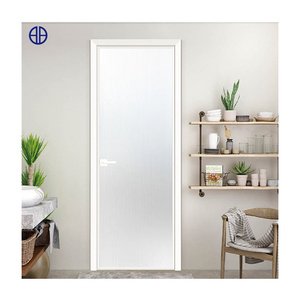
Modern Aluminium Interior Glass Slim Swing Casement Flush Door
Minimalist flush interior aluminum swing door featuring hidden hinges, acoustic glass, and premium architectural hardware.
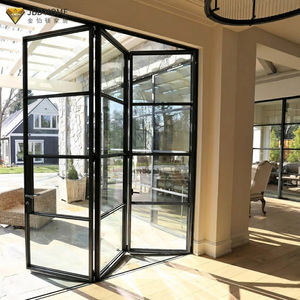
Custom Outdoor Patios Thermal Insulation Aluminum Folding Glass Door
Heavy-duty exterior bi-folding glass door system providing moisture-resistant seals and massive clear opening space.
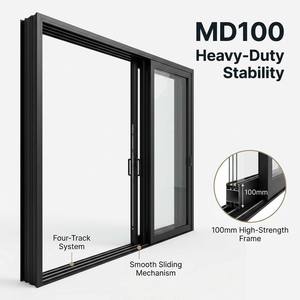
Triple Glazed Four-Panel Thermal Insulated Aluminum Sliding Door
Energy-efficient triple-glazed four-track sliding system designed for cold climates requiring ultra-low U-values.
Engineering Specifications & Structural Authority of Brown Aluminum Doors
In modern architectural design, brown aluminum doors—spanning shades from deep anodized dark bronze, chocolate brown (RAL 8017), chestnut brown (RAL 8015), to coffee metallic fluorocarbon finishes—serve as a cornerstone for contemporary facade aesthetics and historic restorations. However, specifying high-performance aluminum fenestration requires deep engineering analysis into profile metallurgy, thermal breaks, and surface longevity.
Primary Extrusion Billet Metallurgy
We utilize 100% primary 6063-T6 and 6060-T66 architectural aluminum alloys with wall thicknesses ranging from 1.6mm to 3.0mm according to EN 755-2. T6 heat treatment yields exceptional tensile strength (≥205 MPa) and yield strength (≥170 MPa), ensuring zero structural distortion under heavy windloads up to 5.0 kPa (ASTM E330 / EN 12210 Class C5).
PA66 GF25 Thermal Break Separation
Our CE-certified brown doors incorporate continuous 24mm to 34mm Polyamide (PA66) thermal barrier strips reinforced with 25% glass fiber. This breaks the thermal bridge between exterior and interior aluminum faces, achieving overall system U-values as low as 1.1 to 1.4 W/m²K (Uw) when paired with warm-edge triple glazing.
Qualicoat Class 2 & Anodizing Coatings
Brown surface finishes undergo rigorous chemical pre-treatment (Chromate-free conversion) followed by either Qualicoat Class 2 Superdurable Architectural Powder Coating or ISO 7599 Class 25 (25 micron) Hard Anodizing. Tested for 3,000+ hours of Accelerated Weathering (QUV) and Salt Spray (ASTM B117) with zero chalking or color shift.
Technical Performance Matrix: Brown Aluminum Door Series
| Performance Standard | Testing Parameter / Code | KARON Factory Specification | Compliance & Certification |
|---|---|---|---|
| Thermal Transmittance (U-Value) | EN ISO 10077-2 / NFRC 100 | Uw = 1.1 – 1.5 W/m²K (Triple/Double Glazed) | CE EN 14351-1 / Energy Star Compatible |
| Air Permeability | EN 12207 / ASTM E283 | Class 4 (600 Pa) / < 0.1 cfm/ft² | CE Certified / Window Energy Rating Scheme |
| Watertightness | EN 12208 / ASTM E331 | Class E900 (900 Pa Static Pressure) | High-Velocity Hurricane Zone (HVHZ) Ready |
| Wind Load Resistance | EN 12210 / ASTM E330 | Class C5 (2000 Pa Design / 3000 Pa Structural) | AS 2047 / AS 4055 Structural Benchmark |
| Safety Glazing Standards | EN 12150-2 / ANSI Z97.1 | Toughened / Laminated Low-E Argon Filled | CE, US SGCC, Australia AS 2208, NZ AS/NZS 2208 |
| Acoustic Insulation (Rw) | EN ISO 140-3 / ASTM E90 | Rw = 38 dB – 45 dB (with Acoustic PVB) | Sound Transmission Class (STC) 42+ Rated |
Why Global Procurement Officers Choose KARON
Headquartered in Foshan, Guangdong—the premier global hub for architectural aluminum processing—Karon Window & Door Co., Ltd. operates a 10,000 m² standardized manufacturing complex backed by over 15 years of international project engineering experience.
10,000 m² Advanced Production Infrastructure
Our facility houses 4 automated CNC double-head cutting saws, 6 high-precision corner crimping stations, automatic glue-injecting machines, and dedicated glass glazing lines. We produce over 150,000 m² of custom fenestration annually with strict dimensional tolerances within ±0.5mm.
Verified Multi-National Certification Portfolio
We hold verified certificates for seamless market compliance: CE Mark (EN 12150 glass / EN 14351 doors), US SGCC (Safety Glazing Certification Council), Australia AS 2208, New Zealand AS/NZS 2208, Thailand TISI 965-2560 & 1231-2560, and Malaysia CIDB PPS certification under ISO 9001 quality audit.
Project Engineering & CAD/BIM Support
Our in-house technical department collaborates directly with developers, facade consultants, and general contractors. We convert architectural elevation drawings into full shop-drawing submittals, glass calculation sheets, wind-load reports, and custom extrusion die developments.
Export-Grade Heavy Duty Packaging
Every brown aluminum profile is wrapped in anti-scratch protective film, corner-shielded with high-density EPE foam, and encased in fully sealed, steel-strapped fumigated plywood crates to ensure zero transit damage across maritime container shipping.
Procurement Trends & Innovations in Brown Aluminum Fenestration
As global energy regulations tighten and modern architecture shifts toward seamless indoor-outdoor connectivity, the manufacturing landscape for brown aluminum doors is evolving rapidly. Here are the key strategic procurement trends driving the 2025–2030 market.
1. Ultra-Slim Sightlines with Structural Glass Bonding
Architectural demand is moving away from bulky, traditional frame profiles toward ultra-narrow interlock stiles (as slim as 18mm to 25mm visible width). To achieve high wind resistance with minimal frame visibility, factories are adopting structural silicone structural glazing (SSG) techniques where the tempered glass pane acts as a primary load-bearing element of the door leaf. Brown anodized and matte brown finishes are favored because they blend visually with natural timber and stonework.
2. Decarbonized Low-Carbon Aluminum & Recycled Billets
With the implementation of the European Union's Carbon Border Adjustment Mechanism (CBAM) and stricter LEED v4.1 certifications globally, procurement officers are increasingly requiring Environmental Product Declarations (EPDs). Leading factories are utilizing hydro-powered low-carbon aluminum billets (< 4.0 kg CO2/kg Al) and recycled post-consumer aluminum scrap. Surface finishing lines are transitioning to VOC-free powder coatings and chrome-free pretreatment systems.
3. Smart Access Integration & Automated Lift-and-Slide Hardware
Large-format brown aluminum patio doors (weighing up to 400 kg per panel) are increasingly specified with integrated hidden motorized drives, electrochromic dynamic smart glass, and concealed magnetic sensors linked to home automation protocols (KNX, Zigbee, Matter). Hardware finishes are color-matched directly to the door frame using anodized brown or PVD bronze titanium coatings for aesthetic unity.
Frequently Asked Sourcing & Technical Questions
Key technical answers for architects, general contractors, developers, and commercial door importers sourcing CE-certified aluminum systems from China.
Why is CE Certification essential for importing aluminum brown doors into European and global markets?
CE Certification according to EN 14351-1 (for windows and exterior pedestrian doorsets) is mandatory legally for entering any European Union member state and accepted across many international jurisdictions. It confirms that the door system has passed independent Initial Type Testing (ITT) for air permeability, watertightness, wind resistance, and load-bearing capacity of safety devices. Furthermore, glass components must comply with EN 12150 (thermally toughened safety glass). Sourcing CE-marked brown aluminum doors ensures project compliance, avoids customs clearance rejections, and protects developers from structural failure liabilities.
What is the difference between Powder-Coated Brown (RAL 8019/8028) and Anodized Dark Bronze/Brown?
Powder Coating (Qualicoat Class 2): Involves electrostatically applying organic polymer powder onto the aluminum surface, then curing it at 200°C. It offers exact color consistency (e.g., RAL 8017 Chocolate, RAL 8019 Grey Brown, RAL 8028 Terra Brown) with high scratch resistance and matte, satin, or textured options.
Anodizing (ISO 7599 Class 25): An electrochemical process that converts the aluminum surface into a decorative, durable, corrosion-resistant anodic oxide layer. Anodized brown/bronze preserves the metallic, natural grain of the aluminum. It cannot peel, chip, or flake, making it the supreme choice for extreme coastal regions subject to severe salt spray.
How do thermal break aluminum brown doors compare to non-thermal break profiles in HVAC energy savings?
Aluminum is a natural thermal conductor. Non-thermal break doors allow heat to transfer rapidly across the profile frame, leading to interior condensation, high AC loads in summer, and heat loss in winter. Thermal break doors insert structural PA66 GF25 polyamide insulation strips between the outer and inner aluminum sections. This reduces the frame's heat conductivity by over 500 times, lowering overall building energy consumption by 25% to 40% and meeting stringent building energy codes such as EU EPBD, US ASHRAE 90.1, and Australia NCC Section J.
Can KARON manufacture custom aluminum doors according to our architectural drawings and schedule?
Yes. 100% of our production is engineered to order. We fabricate custom window and door schedules based on your CAD drawings, BIM models, or architectural elevations. Our engineering team reviews opening dimensions, glass specifications, mullion reinforcements, structural wind loads, drain channels, and hardware placement. We submit detailed shop drawings for formal engineering sign-off before raw profile extrusion and CNC machining commence.
What international certifications do KARON products carry for global export compliance?
KARON products carry comprehensive international safety, quality, and structural certifications, including:
- Europe: CE Mark (EN 14351-1 fenestration & EN 12150 toughened safety glass)
- United States: SGCC (Safety Glazing Certification Council - ANSI Z97.1 / CPSC 16 CFR 1201)
- Australia & New Zealand: AS 2208, AS/NZS 2208, and AS 2047 fenestration benchmarks
- Southeast Asia: Thailand TISI 965-2560 & 1231-2560, Malaysia CIDB PPS Certificate
- Quality Management: ISO 9001:2015 certified production plant operation
What is the standard lead time for a custom container order of aluminum doors from Foshan factory?
Our standard manufacturing lead time for container-load orders (20ft / 40ft HQ) is 25 to 35 calendar days following shop drawing approval and deposit receipt. For custom die profile extrusion development or specialized non-standard powder coating colors, an additional 10 to 14 days may be required for tooling and color match verification. Express production scheduling is available for urgent commercial construction deadlines.
Request an Engineering Quotation for Your Project
Send us your window & door schedules, architectural elevations, or opening sizes. Our engineering specialists will provide system recommendations, U-value calculations, and competitive direct factory pricing within 24 hours.