Curated Product Catalog
Featured Commercial & Residential Aluminium Glass Door Systems
Factory-direct fenestration systems certified for international building codes (CE, SGCC, AS2047, TISI, CIDB). Engineered in Foshan, China.
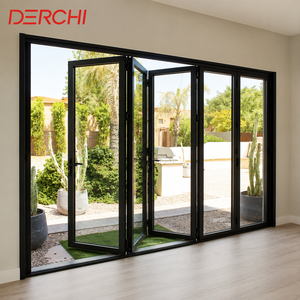
Modern High Aluminum Double Glass Accordion Large Big Bifold Long Bi Fold Sliding Exterior Main Entrance Patio Folding Door
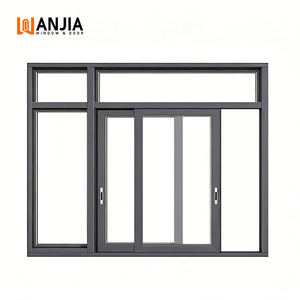
WANJIA Hurricane Impact Resistance Sliding Windows Aluminium Windows and Doors Others Sliding Window for House
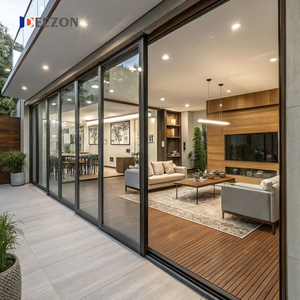
DEEZON AS2047 Double Glazed Glass Window Aluminum Sliding Door Soundproof Exterior Balcony & Interior Patio for Garden & Home
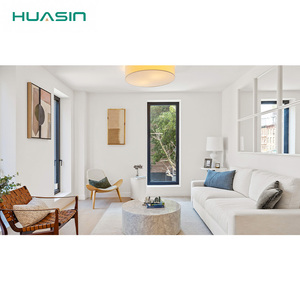
Huasin Aluminium Windows Tilt Turn Fly Screen Energy Efficient Triple Pane USA Double Glass Factory Home Window
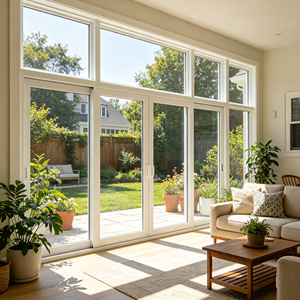
Thermal Break Aluminum Sunroom Panoramic Floor Window Double Glazed Glass Full View for American Residential Sunroom Projects
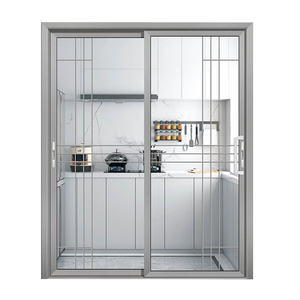
Customized Internal Aluminium Interior System Doors Sliding Glass Door for Living Room
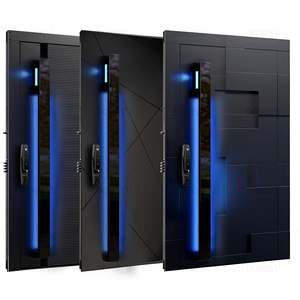
Luxury Custom Entry Series Villa Main Gate Design Smart Lock Entry Door Hurricane Impact Aluminum Security Doors
Executive Industry Whitepaper
The Strategic Positioning of China's Aluminium Glass Door Manufacturing Ecosystem
In contemporary architectural engineering, fenestration systems have evolved far beyond basic building envelope components. Today, high-performance aluminium glass door systems represent critical structural, thermal, and aesthetic infrastructure in modern luxury villas, commercial resorts, multi-family high-rises, and industrial logistics parks. As global building codes enforce increasingly stringent energy conservation (such as NFRC benchmarks in North America and CE EN 14351-1 mandates across Europe), sourcing from leading China top aluminium glass door manufacturers and suppliers has become a central strategy for international developers, main contractors, and architectural procurement agencies.
Foshan, located in Guangdong Province, stands as the global epicenter of precision aluminium extrusion, hardware manufacturing, and architectural glass processing. Leveraging an integrated supply chain cluster, top-tier Foshan manufacturers such as KARON (Karon Window & Door Co., Ltd.) combine advanced metallurgy (primarily 6063-T5 and high-tensile 6063-T6 primary aluminium billets) with automated European CNC machining and multi-stage surface treatment systems (AkzoNobel powder coating, fluorocarbon PVDF, and real-wood grain sublimation).
Engineering Insight: Primary vs. Recycled Aluminium Extrusions
Distinguishing top-tier manufacturers from low-cost suppliers requires auditing raw material purity. Elite manufacturers utilize 100% primary 6063-T5/T6 aluminium ingots with wall thicknesses meeting or exceeding 2.0mm to 3.0mm for heavy-duty structural doors. This ensures tensile strengths exceeding 160 MPa, preventing structural deflection under heavy gust wind pressure (P3 ≥ 4500 Pa) and avoiding micro-fissures during precision corner crimping.
To maintain absolute structural integrity and long-term operating durability, modern aluminium door fabrication relies on high-precision corner-crimping machines paired with dual-component structural adhesives. This engineering approach eliminates traditional mechanical screw loosening, guaranteeing watertight joint integrity even under dynamic structural movement and thermal contraction cycles.
Technology Roadmap
Key Product & Engineering Trends in Aluminium Glass Door Systems
Analysis of next-generation fenestration developments shaping global architectural sourcing for 2025–2030.
1. Ultra-Slim Sightline Minimalism
Architects demand maximum natural daylight and unobstructed sightlines. Modern slim-frame sliding doors feature interlockers as narrow as 16mm to 21mm, embedding the outer frame completely into walls, ceilings, and floors for a seamless, continuous indoor-outdoor transition.
2. High-Efficiency Thermal Breaks
The standard non-thermal profile is rapidly being replaced by multi-cavity thermal break extrusions integrated with techno-polymer Polyamide PA66-GF25 (25% fiberglass reinforced) thermal barrier strips. Combined with Low-E triple glazing and warm-edge spacers, overall thermal transmittance (U-factor) drops below 1.1 W/m²K.
3. Hurricane & Structural Resilience
Coastal and typhoon-prone developments (e.g., Florida USA, Australia, Caribbean, Southeast Asia) demand hurricane impact resilience. Doors must withstand heavy missile impact tests (ASTM E1886/E1996) using multi-layer SentryGlas (SGP) laminated safety glass and heavy-duty multi-point locking hardware.
4. Smart Automation & Concealed Hardware
Motorized heavy-lift-and-slide doors capable of driving panels up to 800 kg are becoming standard in presidential suites and luxury estates. Integrated with smart home networks (Zigbee, KNX, RS485), doors feature hidden drive units, automated rain sensors, and biometrics access controls.
Technical Benchmark
Aluminium Glass Door Performance & Engineering Specifications Matrix
Comparative analysis of structural door configurations engineered by tier-1 China manufacturers.
| Door System Type | Profile Wall Thickness | Thermal Transmittance (U-Value) | Acoustic Insulation (STC/Rw) | Wind Pressure Rating | Recommended Applications |
|---|---|---|---|---|---|
| Thermal Break Lift & Slide Door | 2.0mm – 3.0mm | 1.2 – 1.6 W/m²K | 38 dB – 44 dB | P3 ≥ 4500 Pa (Class 9) | Luxury Villa Terraces, Penthouse Balconies, High-End Oceanfront Resorts |
| Heavy-Duty Bi-Fold (Accordion) Door | 2.0mm – 2.5mm | 1.4 – 1.8 W/m²K | 35 dB – 40 dB | P3 ≥ 3500 Pa (Class 7) | Commercial Restaurants, Pool Houses, Garden Entrances, Event Venues |
| Ultra-Narrow Frame Sliding Door | 1.6mm – 2.0mm | 1.6 – 2.2 W/m²K | 32 dB – 38 dB | P3 ≥ 3000 Pa (Class 6) | Modern Living Room Balconies, Interior Room Dividers, Architectural Villas |
| Thermal Break Casement / Entrance Door | 2.0mm – 3.0mm | 1.1 – 1.5 W/m²K | 40 dB – 45 dB | P3 ≥ 5000 Pa (Class 10) | Main Entrances, Smart Villa Security Gates, Commercial Storefronts |
| Hurricane Impact Security Door | 2.5mm – 4.0mm | 1.3 – 1.7 W/m²K | 42 dB – 48 dB | ASTM E1996 Missile Level D/E | Coastal High-Velocity Hurricane Zones (HVHZ), Secure Villa Entrances |
Global Supply Chain Strategy
Future Procurement Trends: How International Buyers Sourcing from China Mitigate Project Risk
Sourcing architectural custom aluminium doors and windows across international borders requires a rigorous procurement methodology. Over the past five years, global developers, project engineers, and commercial buyers have shifted away from fragmented multi-vendor procurement toward **One-Stop Whole-House / Whole-Building System Integration**.
1. The Shift to Single-Source Accountability
Managing separate vendors for exterior sliding doors, curtain wall facades, aluminium sunrooms, frameless glass railings, and interior shower partitions routinely leads to color discrepancies, dimensional misalignment, hardware conflicts, and disputed warranty claims. Leading China manufacturers, exemplified by KARON, provide standardized whole-building solutions. By unifying extrusions, glass specifications, and surface treatments under one 10,000m² manufacturing facility, buyers secure uniform color anodizing/powder coating (matching RAL color codes precisely across all fenestration elements) and streamlined container logistics.
2. Mandatory International Certification Audits
Regulatory compliance is non-negotiable when importing into North America, Europe, Australia, and Southeast Asia. Experienced B2B procurement managers require third-party laboratory test reports verified against regional standards before signing supply contracts:
- North America: US SGCC (Safety Glazing Certification Council) certification adhering to ANSI Z97.1 and CPSC 16 CFR 1201 standards.
- Europe & UK: CE Mark under EN 14351-1 for windows/doors and EN 12150 for toughened safety glass.
- Australia & New Zealand: AS 2047 fenestration standards testing air infiltration, water penetration resistance, and ultimate strength, coupled with AS/NZS 2208 safety glass certification.
- Southeast Asia: Thailand TISI (TISI 965-2560 & 1231-2560) and Malaysia CIDB PPS certification.
3. CAD/BIM Co-Engineering & Pre-Shipment Mock-Up Assembly
The modern procurement workflow relies on early technical collaboration. Prior to mass profile extrusion, factory engineers produce detailed 2D CAD shop drawings and 3D BIM models detailing wall anchor points, thermal break alignments, drainage sill details, and glass rebate depths. Furthermore, tier-1 suppliers build full-scale prototype mock-ups in-factory to test mechanical cycling, multi-point lock alignment, and water tightness before final export packing into steel-framed plywood crates.
Manufacturer Profile & Credentials
Why Partner with KARON (Karon Window & Door Co., Ltd.)
Situated in Songxia Industrial Park, Nanhai District, Foshan, Karon Window & Door Co., Ltd. has spent over 15 years engineering and exporting custom architectural aluminium doors, windows, sunrooms, frameless glass balustrades, and interior partitions. Operating a 10,000 m² standardized production plant managed under ISO 9001 quality protocols, KARON bridges the gap between high-end European fenestration engineering and cost-competitive China manufacturing.
10,000㎡ Modern Production Base
Equipped with fully automated double-head cutting saws, multi-axis CNC machining centers, automatic corner crimpers, and pressurized water/air-tightness testing chambers.
Global Certification Suite
Fully certified under EU CE (EN 12150), US SGCC, Australia AS 2208, New Zealand AS/NZS 2208, Thailand TISI, and Malaysia CIDB PPS certification schemes.
Global Project Track Record
Delivered major developments including the 672-unit Kora Beach Resort in Phuket, luxury private residences in Texas USA, Mediterranean villas in Greece & France, and commercial logistics hubs.
Branded Hardware Integration
Partnering with world-leading hardware suppliers (German Siegenia, Hoppe, GU, and premier CMECH) guaranteeing multi-point locking security and over 100,000 mechanical operation cycles.
Buyer's Knowledge Base
Frequently Asked Questions (FAQ) for B2B Sourcing & Procurement
Expert insights addressing common engineering, compliance, and commercial questions from global importers.
Where is the KARON manufacturing facility located, and what is your primary product scope? +
Karon Window & Door Co., Ltd. operates a 10,000 m² standardized production base located in Songxia Industrial Park, Nanhai District, Foshan, Guangdong Province, China. We specialize in the custom engineering, fabrication, and export of thermal break aluminium windows and doors (casement, sliding, folding, lift-and-slide), structural glass sunrooms, frameless glass balustrade railing systems, and luxury interior shower enclosures for residential villas, hotels, and commercial developments.
What international quality certifications and test reports do your products carry? +
Our architectural glazing products hold comprehensive international accreditation for major export markets. These include European CE Certification (EN 12150 / EN 14351-1), United States SGCC (Safety Glazing Certification Council) certification, Australian AS 2208 & AS 2047 StandardsMark, New Zealand AS/NZS 2208 PAS-Mark (for single pane and laminated glass), Thailand TISI (TISI 965-2560 & 1231-2560), and Malaysia CIDB PPS Certification. Production runs strictly under an ISO 9001 quality management system.
Can KARON manufacture custom door and window systems to match structural CAD drawings and architectural schedules? +
Yes, absolutely. 100% of our production is custom-engineered tailored to architectural drawings, structural window schedules, opening dimensions, wind-load calculations, glass build-ups, hardware choices, and custom RAL powder-coating colors. Our senior engineering team reviews your drawings, conducts structural load checks, and issues formal 2D/3D shop drawings for client approval prior to cutting raw profiles.
What is the key engineering difference between Thermal Break and Non-Thermal Break aluminium doors? +
Thermal break profiles incorporate a continuous structural insulating strip—specifically Polyamide PA66-GF25—that mechanically connects the exterior and interior extruded aluminium frames. This non-conductive thermal barrier prevents heat energy from transferring through the aluminium frame, significantly reducing interior heating or cooling energy loss and eliminating interior frame condensation. Non-thermal break profiles lack this insulating strip and are primarily recommended for mild tropical climates, interior room dividers, or budget-driven internal applications.
How does KARON protect custom glass doors during ocean freight and container shipping? +
Export packaging is executed to rigid heavy-duty standards to prevent moisture ingress, frame scratches, or glass breakage. Profile frames are wrapped in protective anti-scratch film, corner guards are fitted, and panels are interleaved with EPE foam. Complete door units or glass assemblies are secured inside heavy-duty, fumigation-free, steel-reinforced wooden crates. Crates are engineered with dedicated forklift slots for safe loading and unloading at destination port sites.
What is the standard lead time from drawing confirmation to port dispatch? +
For standard profile systems and stock colors (e.g., Matt Black, Anthracite Grey), manufacturing lead time is typically 25 to 30 days after shop drawing approval and deposit receipt. For custom extrusion profiles, specialized PVDF coatings, or complex hurricane-rated laminated glass specifications, lead time ranges from 35 to 45 days. Accelerated production schedules can be arranged for time-sensitive commercial hotel or multi-unit project developments.