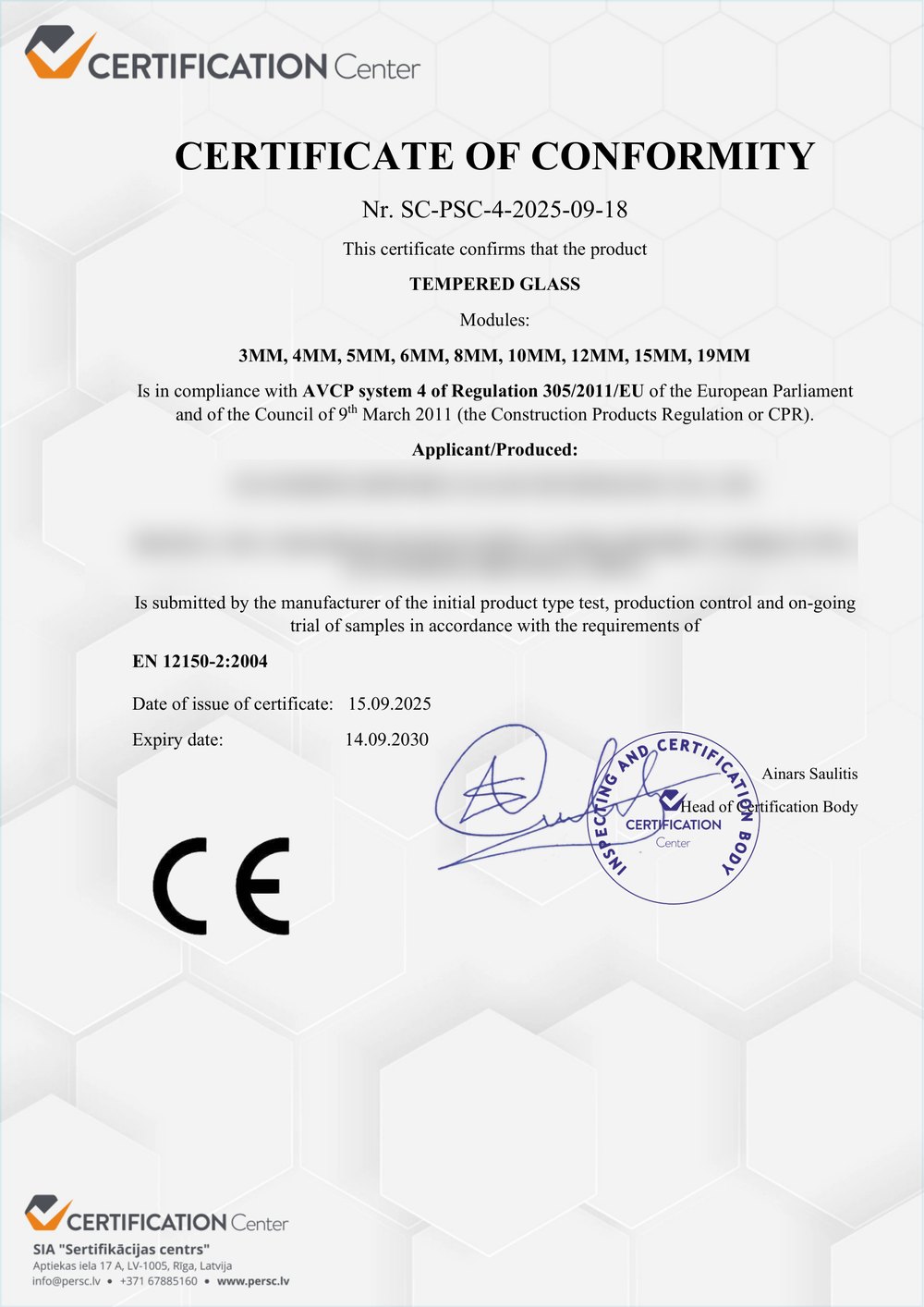
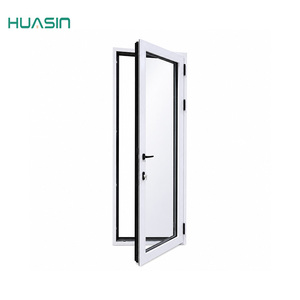
 Casement Door
Huasin Modern Low-E Sound & Heat Insulation Swing Casement Door
- Thermal Break: PA66GF25 Polyamide Strip
- Glassing: 6mm+12Ar+6mm Low-E Tempered
- Acoustic Rating: STC 42 dB Insulation
- Sizing: Standard 32"/36" x 80"/96" or Custom
Engineered to precise imperial dimensional specs (inches), thermal break insulation, and rigorous international safety standards including NFRC, CE, SGCC, and AS2208.
Casement Door
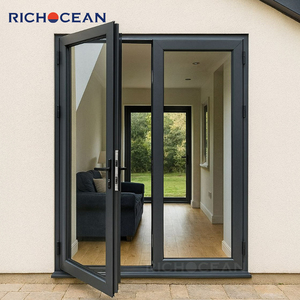 Hurricane Impact
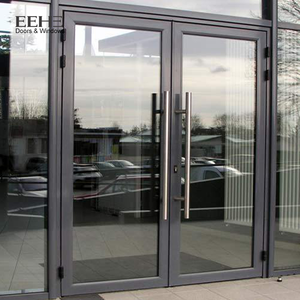 NFRC Certified
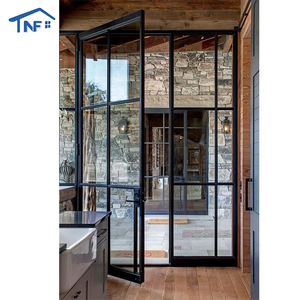 Euro Standard
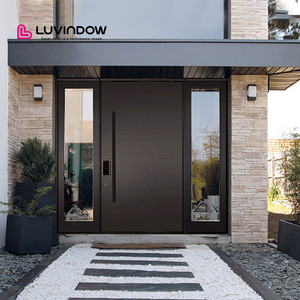 Pivot Door
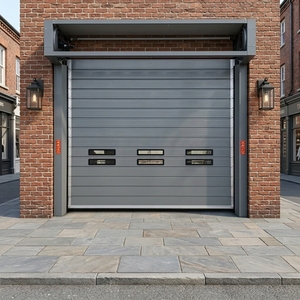 Industrial Fast Door
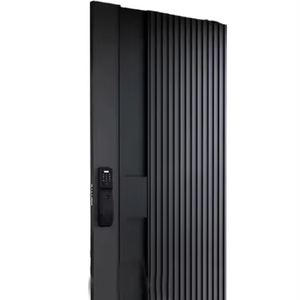 Security Entry
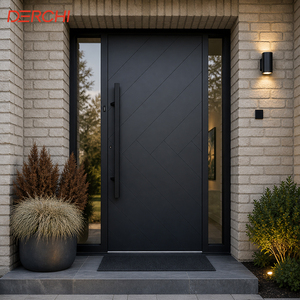 Thermal Break
Years Architectural Expertise
Foshan Factory Footprint
Global Certifications (CE/SGCC/AS2208)
Full Assembly Pre-Shipment Inspection
The global construction and architectural sector is undergoing a structural transition toward high-efficiency, corrosion-resistant, and structural-grade fenestration systems. When foreign developers, general contractors, and hardware importers evaluate China Top Aluminium Inch Door Manufacturers & Exporters, the critical purchasing matrix spans far beyond baseline unit pricing. It fundamentally requires dimensional precision in imperial standards (inches), rigorous thermal break engineering, verified structural wind-load tolerances, and international compliance certifications such as US SGCC, North American NFRC, European CE, Australian AS 2208, and Southeast Asian TISI / CIDB credentials.
Top-tier Chinese exporters utilize prime 6063-T5 and 6061-T6 aluminum alloys. 6063-T5 provides an optimal balance between smooth surface finishing for anodizing or PVDF powder coating and structural rigidity (tensile yield strength ≥ 110 MPa). For high-load commercial storefronts, heavy-duty pivot doors, and hurricane-rated French doors, 6061-T6 profiles offer elevated tensile strength (≥ 240 MPa), preserving structural frame stability under extreme wind pressures exceeding 5,000 Pascals (ASTM E330 testing standard).
Energy efficiency codes like IECC in North America and Part L in the UK demand low overall window and door U-factors. Modern aluminium inch doors bridge the high conductivity of raw metal by inserting structural polyamide strips. Leading Foshan manufacturers mandate Technoform PA66GF25 strips (Polyamide 66 reinforced with 25% glass fiber). This configuration resists high thermal distortion up to 250°C during powder-coating baking and yields composite U-values as low as 0.24 to 0.28 BTU/h·ft²·°F (1.3 to 1.6 W/m²K).
Prevents thermal bridging, eliminates interior condensation, and matches linear thermal expansion of aluminium profiles.
70% PVDF resin paint providing 20+ year weatherability against chalking, salt spray corrosion, and severe UV degradation.
Continuous synthetic rubber seals maintaining elasticity across -40°C to +120°C for exceptional air tightness.
As building energy regulations tighten globally and architectural trends lean toward expansive glass sightlines, B2B buyers must align their procurement strategies with four key evolutionary vectors:
Architectural designs are rapidly moving from traditional multi-pane hinged doors to floor-to-ceiling pivoting systems. Front entry pivoting doors measuring 60" to 72" in width and up to 144" in height require heavy-duty floor-concealed hydraulic pivots (e.g., FritsJurgens or German GU hardware) capable of supporting door sash weights exceeding 400 kg (880 lbs) with effortless finger-touch operation.
Commercial and high-end residential buyers increasingly demand factory-integrated electronic access controls. Leading Chinese exporters now pre-wire aluminium inch door sashes for concealed motorized multi-point locks (such as Winkhaus blueMotion or Siegenia Genius), incorporating facial recognition, fingerprint access, and smart home automation integration via dry contacts or Wi-Fi protocols.
Driven by European CBAM (Carbon Border Adjustment Mechanism) regulations and global corporate ESG goals, major developers prioritize suppliers using primary aluminium extruded from hydro-powered smelters (carbon footprint < 4.0 kg CO2/kg Al). Recycled aluminium billet content (End-of-Life scrap integration) is becoming a core qualifying metric in tender specifications.
Architectural benchmark parameters across primary door configurations for commercial, residential, and industrial applications.
| Door System Type | Profile Wall (Inch / mm) | Glass Configuration | Thermal U-Factor (W/m²K) | Acoustic Isolation (STC) | Max Wind Load (Pa) | Key Standard Compliance |
|---|---|---|---|---|---|---|
| Thermal Break Casement Door | 0.078" / 2.0 mm | 6mm Low-E + 12Ar + 6mm Clear | 1.4 - 1.6 | STC 38 - 42 dB | 4,500 Pa | CE EN 12150, NFRC, AS2208 |
| Hurricane Impact French Swing | 0.118" / 3.0 mm | 6mm Temp + 1.52PVB + 6mm Temp | 1.8 - 2.1 | STC 40 - 45 dB | 5,500 Pa | ASTM E1886/E1996, Florida Product Approval |
| Architectural Pivot Entry Door | 0.098" / 2.5 mm | 8mm Low-E + 14Ar + 8mm Temp | 1.5 - 1.7 | STC 36 - 40 dB | 3,800 Pa | SGCC, CE, ISO9001 |
| Commercial High-Speed Roll Up | 0.078" (Double Slat) | Solid Aluminium Insulated Slat | 2.2 - 2.5 | STC 28 - 32 dB | Class 12 (Hurricane) | TISI 965-2560, CIDB PPS |
| Slim-Frame Patio Sliding Door | 0.078" / 2.0 mm | 6mm Low-E + 16Ar + 6mm Temp | 1.3 - 1.5 | STC 37 - 41 dB | 4,000 Pa | AS/NZS 2208, NFRC Certified |
Situated in Songxia Industrial Park, Nanhai District, Foshan City, Guangdong Province, China's core architectural aluminium cluster accounts for over 30% of global premium extrusion output. Operating out of a standardized 10,000 m² production facility, our manufacturing engineering processes adhere to strict ISO 9001 Quality Management Systems.
Essential technical and commercial answers for developers, architects, and procurement managers.
Standard Chinese domestic doors are manufactured in metric system sizes (e.g., 900x2100 mm). However, markets in North America, the Caribbean, and parts of Oceania use rough openings based on inches (e.g., 36" x 80", 72" x 96"). Sourcing from a factory specialized in "Inch Doors" ensures frame depth, jamb width, sub-buck dimensions, and nail-fin offsets match regional construction framing practices perfectly, preventing expensive structural modifications on-site.
Our tempered and laminated glass units carry verified international certifications including US SGCC (Safety Glazing Certification Council), European CE (EN 12150 / EN 14449), Australian AS 2208 & AS/NZS 2208 (for both single pane and laminated glass), Thailand TISI (965-2560 and 1231-2560), and Malaysian CIDB PPS compliance. Test reports and factory certificates are provided with shop drawings for local building department approval.
Our standard production cycle is 25 to 35 calendar days following final shop drawing approval and deposit receipt. For standard profile colors (e.g., Matt Black, Architectural White, Anodized Silver), our MOQ starts at just 1 set for custom villa projects or sample evaluations. For custom RAL powder match or custom die extrusion profiles, MOQ is typically 500 kg of profile weight.
Every door assembly undergoes a rigorous export packaging process: First, profiles are wrapped with protective scratch-resistant film and corner guards. Sashes and glass units are encapsulated in PE bubble wrap, then secured inside fully enclosed, fumigation-free solid plywood crates. Desiccant packs and VCI (Vapor Corrosion Inhibitor) anti-corrosion sheets are included inside crates to safeguard hardware against salt-air oxidation during 30-45 day sea voyages.
Yes. Our in-house architectural engineering staff converts your project schedules, floor plans, and architectural elevation drawings into 2D AutoCAD shop drawings and 3D Revit BIM models. We detail frame sections, wall attachment anchors, glass build-ups, drainage weep holes, and hardware placement for your technical team's review and sign-off prior to cutting metal.
Send your window/door schedules, architectural CAD drawings, or project specifications directly to our engineering team. We deliver complete cost breakdowns, U-factor thermal calculations, and CAD shop drawings within 24 hours.
Contact Us