Industrial / Overhead
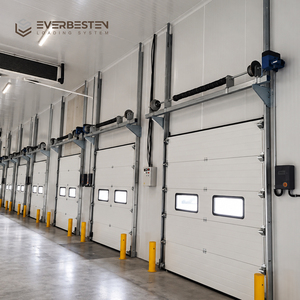
Engineered to international building standards (AS2047, NFRC, CE, SGCC) for commercial, residential villa, and hotel development projects.
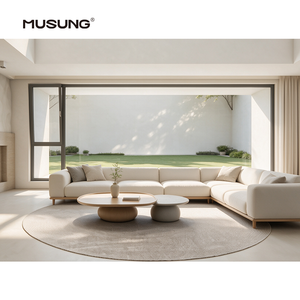
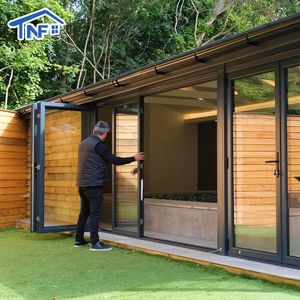
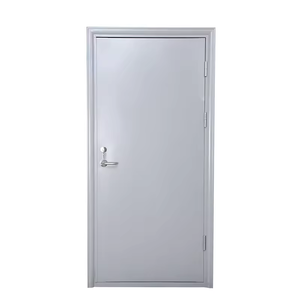
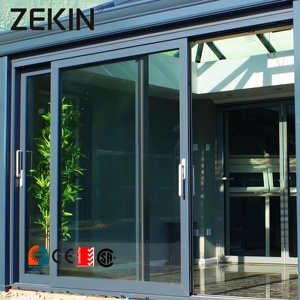
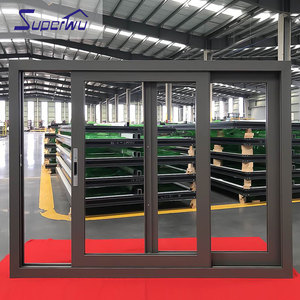
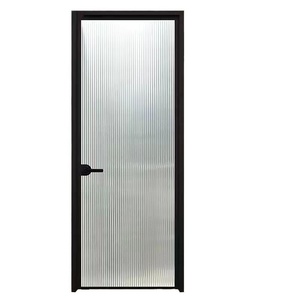
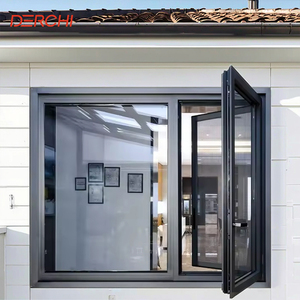
In modern architectural engineering, the perimeter envelope of luxury villas, multi-family construction, coastal resorts, and commercial hubs relies heavily on high-performance fenestration systems. Among these, aluminum storm doors and heavy-duty entrance systems serve as the first line of defense against severe atmospheric pressure, wind-driven rain, thermal bridges, and security breaches. As global building codes adopt stricter energy efficiency mandates (such as ASHRAE 90.1, Australia National Construction Code, and European EPBD standards), sourcing from a certified China aluminum storm doors exporter has transitioned from a pure cost-saving exercise to a strategic technological partnership.
Operating from Songxia Industrial Park, Nanhai District, Foshan City—the recognized epicenter of China's premium aluminum extrusion manufacturing—Karon Window & Door Co., Ltd. (KARON) exemplifies the highest tier of engineering competence, raw material traceability, and metallurgical innovation. With a 10,000 m² integrated production base, advanced CNC machining centers, precision corner-crimping equipment, and strict ISO 9001 quality management, KARON bridge the gap between complex architectural blueprints and structural execution.
Not all aluminum storm doors exported from Asia are created equal. True architectural-grade storm doors must utilize primary 6063-T5 or 6063-T6 structural aluminum alloys with minimum wall thicknesses ranging from 1.8mm to 3.0mm, combined with PA66-GF25 polyamide thermal barriers and certified safety glazing (SGCC / EN 12150 / AS 2208). Sourcing non-certified or secondary recycled extrusions risks frame deflection, air leakage, seal degradation, and code failure during site inspections.
A granular breakdown of core metallurgical components, thermal break physics, and structural reinforcement systems engineered by KARON.
Utilizing high-purity primary aluminum billets extruded under tight thermal parameters. Provides tensile strength exceeding 185 MPa, exceptional yield strength, and superior surface flatness required for architectural anodizing and AkzoNobel powder coating.
Engineered with 25% glass fiber reinforced polyamide strips inserted between inner and outer aluminum frames. Breaks thermal conduction bridges, lowering overall frame U-factors to under 1.6 W/m²K and stopping indoor condensation.
Specifically designed for storm zones and coastal regions subject to extreme wind pressure and debris impact. Heavy-duty internal structural steel gussets and multi-point security locking systems ensure resistance against cyclic loads up to 4500 Pa.
Utilizing co-extruded automotive-grade EPDM continuous sealing gaskets. Delivers superior resilience under extreme ambient temperature fluctuations (-40°C to +120°C), preserving airtightness (Class 4 EN 12207) and water tightness (Class E900 EN 12208).
Accommodating double and triple insulated glass units (IGUs), argon gas filling, warm-edge spacers, and PVB/SGP laminated safety glass combinations. Achieves sound insulation performance up to STC 42 dB / Rw 45 dB.
Equipped with high-tensile 304/316 stainless steel security mesh (0.8mm wire diameter), screen-door integrated sashes, digital smart lock compatibility, and heavy-duty 3D adjustable friction hinges capable of supporting 250kg sash weight.
| Performance Metrics | Architectural Aluminum Storm Doors | Standard Non-Break Aluminum Doors | uPVC / Vinyl Doors | Traditional Timber Doors |
|---|---|---|---|---|
| Structural Wind Load (Pa) | Extreme (> 4500 Pa / Dade County) | Moderate (1500 - 2500 Pa) | Low-Moderate (1200 - 2000 Pa) | Variable (Prone to structural warping) |
| Frame U-Factor (W/m²K) | 1.4 - 1.8 (Thermal Break + PA66) | 3.5 - 5.0 (High Thermal Conduction) | 1.6 - 2.2 | 1.8 - 2.5 (Poor weathering over time) |
| Corrosion & Weather Resistance | Superior (PVDF / Powder Coating 25+ Yrs) | High (Surface anodized) | Moderate (UV yellowing / embrittlement) | Low (Requires constant repainting & sealing) |
| Glazing Capability | Double / Triple Low-E Laminated Impact Glass | Single / Standard Double Glazing | Limited pane weight capacity | Limited glass frame integration |
| Lifecycle Expectancy | 35+ Years maintenance-free | 20-25 Years | 10-15 Years | 10-20 Years (Environment dependent) |
Key evolutionary directions driving specification shifts for international real estate developers, contractors, and fenestrated product importers.
Modern architectural design trends are overwhelmingly shifting toward minimalist aesthetic profiles with hidden frames and ultra-narrow sightlines (interlockers as slim as 20mm to 25mm). However, achieving hurricane impact certification and high wind resistance while reducing aluminum frame width requires advanced internal structural webbing and high-modulus structural silicone glazing. Leading exporters in China are leveraging advanced FEA (Finite Element Analysis) simulation to optimize profile geometry, delivering maximum glass-to-frame ratios without compromising structural rigidity.
The modern aluminum storm door is no longer a purely mechanical barrier. Future-ready procurement contracts increasingly specify integrated motorized concealed operators, rain sensor auto-closing mechanisms, magnetic levitation sliding technology, and multi-biometric smart access control (facial recognition, fingerprint, mobile app integration). Chinese manufacturers are leading this trend by pre-routing electrical conduit channels, installing magnetic contact sensors, and integrating concealed smart hardware natively into the extruded aluminum profile during factory fabrication.
Embodied carbon in building materials is becoming a mandatory evaluation factor under global green building rating systems such as LEED v4, BREEAM, and Green Star Australia. Procurement strategies are prioritizing aluminum door suppliers capable of providing EPDs (Environmental Product Declarations) and utilizing low-carbon aluminum billets refined using hydroelectric power. Furthermore, multi-chamber polyamide thermal break strips with recycled content are being specified to meet net-zero carbon building targets across Europe, North America, and Australia.
With global freight logistics costs fluctuating and job-site labor rates at historic highs, international buyers are requesting pre-machined, unitized modular window and storm door kits. Exporters are shifting toward precision CNC pre-drilling, pre-gasketed frames, and snap-together locking corner cleats that allow rapid on-site assembly with minimal specialized labor, saving up to 40% in container volume during ocean freight.
A proven manufacturing ecosystem combining advanced hardware integration, strict QA checkpoints, and custom architectural drawing support.
Located in Nanhai District, Foshan—China's top aluminum processing cluster. KARON leverages an unrivaled local supply chain of premium primary billets, AkzoNobel/KCC powder coatings, Siegenia/CMECH hardware, and SGCC-certified safety glass processors.
Equipped with modern double-head precision cutting saws, 4-axis CNC milling machines, automatic corner crimping, and automated glass handling equipment. Ensures precision manufacturing tolerances within ±0.5mm on all custom window and door frames.
Every commercial order or custom villa package is backed by dedicated structural engineers who review shop drawings, elevation details, wind-load calculations, structural anchors, and water-management weep-hole designs prior to extrusion cutting.
Production follows strict ISO 9001 quality management guidelines. Documented inspection checkpoints include incoming aluminum alloy wall thickness verification, powder coating micron depth checks, hardware action trials, and air/water tightness chamber testing.
To eliminate compliance risks for importers and general contractors, KARON maintains complete, independently verifiable test certificates for worldwide regional building codes:
Certified under EN 12150 safety glass and EN 14351-1 exterior door and window standards for European Union construction projects.
Safety Glazing Certification Council compliance for tempered, laminated, and insulated glass units distributed throughout North America.
SAI Global StandardsMark verified for safety glazing and structural acoustic performance under Australian building regulation standards.
CSi PAS-Mark certified for both single-pane toughened glass and high-security laminated glass systems.
Industrial Standard TISI 965-2560 and 1231-2560 approved for commercial and resort developments across Southeast Asia.
Official Construction Industry Development Board (CIDB) PPS certification for direct project importation.
Expert answers addressing technical specifications, factory capability, logistics, lead times, and custom engineering.
Partner directly with Foshan's leading architectural aluminum storm door exporter. Request technical product catalogs, CAD shop drawings, and factory-direct pricing for your project.
Get Catalog & Engineer Support