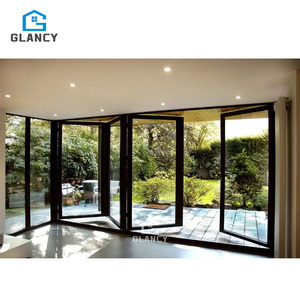
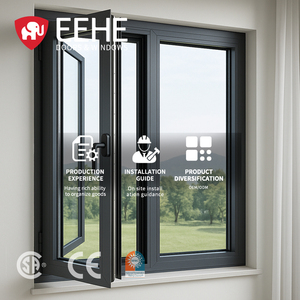
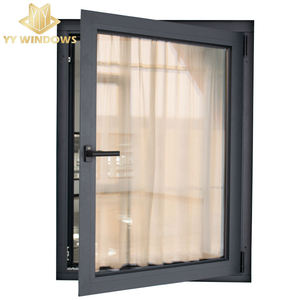
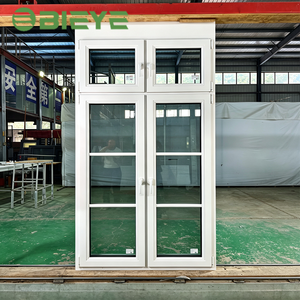
Engineering Excellence in Wholesale Aluminum Lower Window Manufacturing
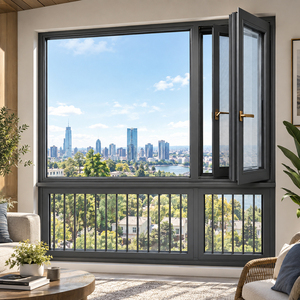
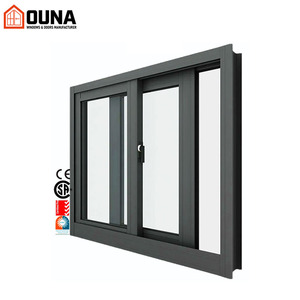
In modern architectural fenestration, lower windows—encompassing ground-level fixed frames, low-sill casement sub-structures, basement lightwell glazing, and subterranean ventilation apertures—represent one of the most critical elements of a building's envelope. Located at the primary intersection between structural foundations and ambient environmental stressors, lower windows are subject to severe hydraulic head pressures, localized moisture exposure, mechanical impact risks, and thermal loss gradients. For global real estate developers, facade engineers, and procurement directors, sourcing high-performance wholesale aluminum lower window systems from established China factories requires a granular understanding of metallurgical selection, structural water-tightness engineering, and thermal isolation mechanics.
Information Gain Key Takeaway for Specifiers
Unlike standard mid-wall upper story casements, lower windows demand elevated static water pressure ratings (up to 700 Pa under ASTM E331), reinforced lower jamb sill drain channels, multi-layer EPDM compression seals, and specialized safety glazing compliant with international impact standards (such as US SGCC and Australia AS 2208).
1. Metallurgical Profiles and Extrusion Alloy Engineering
The core structural integrity of any aluminum window assembly depends on the chemical composition and heat treatment temper of the extruded profile. Top-tier China manufacturers leverage high-purity aluminum billets, predominantly 6063-T5 and 6063-T6 architectural alloys. Alloy 6063 provides superior surface finish qualities essential for high-grade powder coating and anodizing, alongside excellent yield strength (minimum 170 MPa for T6 temper) necessary to withstand wind load pressure ($p_3 \ge 4.5 \text{ kPa}$).
| Aluminum Alloy & Temper |
Tensile Strength (MPa) |
Yield Strength (MPa) |
Corrosion Resistance |
Recommended Application |
| 6063-T5 |
≥ 185 |
≥ 145 |
Excellent |
Standard Villa Casements & Sliding Windows |
| 6063-T6 |
≥ 245 |
≥ 200 |
Superior |
Heavy-Duty Lower Storefronts & Sub-structure Frames |
| 6061-T6 |
≥ 290 |
≥ 240 |
High Structural |
Load-bearing Structural Facade Mullions |
2. Thermal Break Isolation Technology: Polyamide PA66 GF25
To eliminate heat bridging in lower window frames, leading Foshan factories integrate structural thermal barriers using Polyamide PA66 reinforced with 25% glass fiber (PA66 GF25). Non-thermal break profiles allow severe thermal conductive losses, resulting in internal frame condensation at ground level—a primary cause of indoor mold development. PA66 GF25 strips match the thermal expansion coefficient of aluminum ($\approx 2.3 \times 10^{-5} / \text{K}$), preventing delamination during extreme seasonal temperature swings while maintaining frame U-values under $1.6 \text{ W/m}^2\text{K}$.
Enterprise Advantage: KARON Window & Door Co., Ltd. (Foshan, China)
Located in the heart of China’s premier aluminum manufacturing cluster—Songxia Industrial Park, Nanhai District, Foshan, Guangdong—Karon Window & Door Co., Ltd. stands as a premier manufacturer specializing in project-grade custom aluminum windows, doors, sunrooms, glass railings, and modern fenestration systems. With over 15 years of dedicated industrial experience, our 10,000 square meter standardized production facility bridges the gap between complex architectural concepts and flawless site execution.
Unlike trading intermediaries, KARON controls every phase of production: from technical drawing engineering and aluminum profile precision CNC cutting to corner assembly, automated double-glazing unit insertion, and rigorous pre-shipment quality auditing. Our factory operates under an ISO 9001 quality management framework, ensuring that tolerances remain within sub-millimeter parameters across high-volume wholesale orders.
Global Accreditation and International Compliance Matrix
For overseas commercial contractors and importers, compliance verification is paramount. KARON's architectural product portfolio holds rigorous certification credentials independently audited by global authorities:
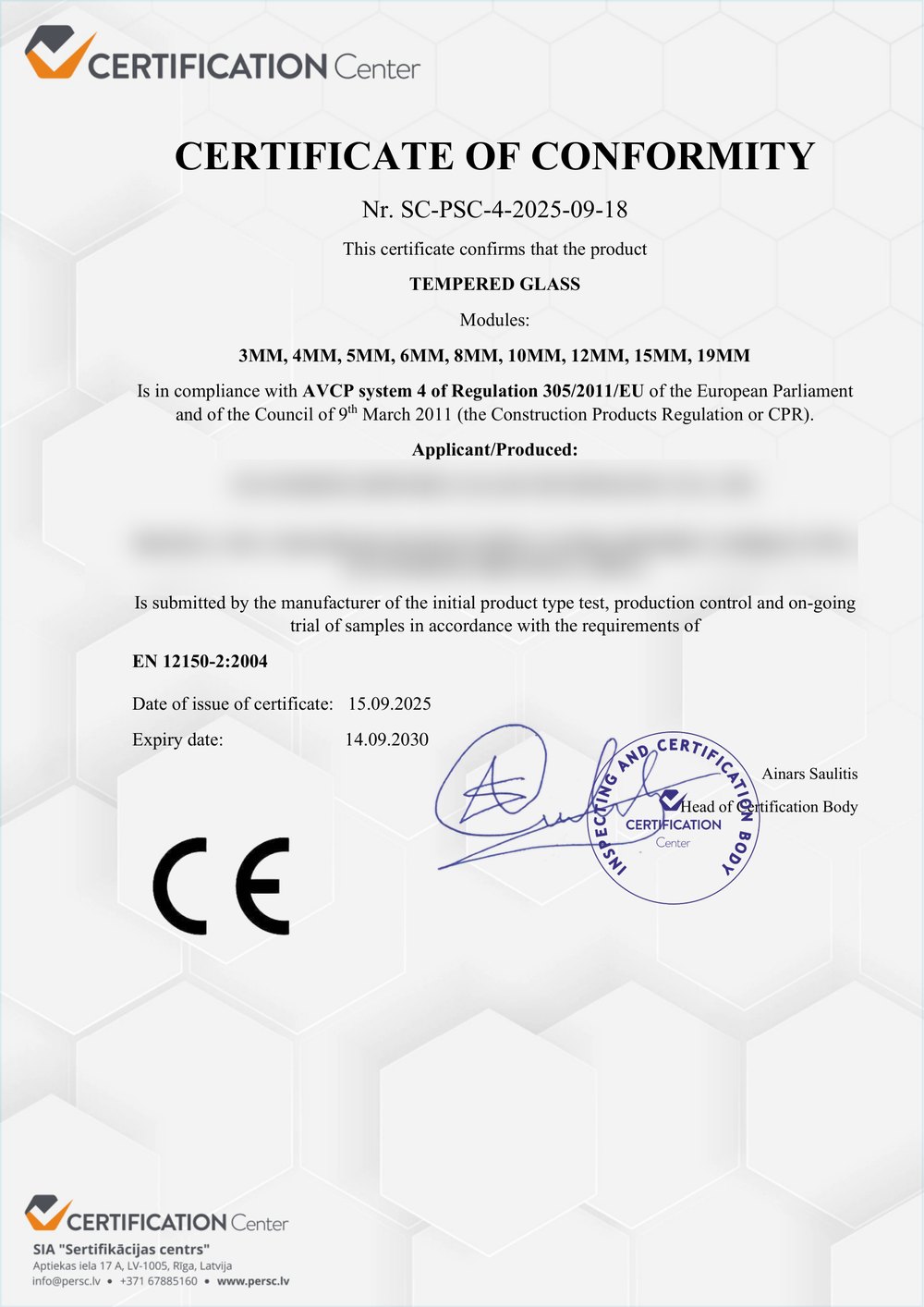
- Europe (CE Mark): EN 12150 standard compliance for thermally toughened soda lime silicate safety glass.
- North America (US SGCC): Safety Glazing Certification Council compliance for high-impact structural glass facades.
- Australia & New Zealand: SAI Global StandardsMark for AS 2208 and CSi PAS-Mark for AS/NZS 2208 (Single Pane and Laminated Safety Glazing).
- Southeast Asia: Thailand TISI 965-2560 & 1231-2560 standards, alongside Malaysia CIDB PPS certification (Licence 2-03250048 / 0049).
Selected Global Project Portfolio
Our commitment to precision engineering has positioned KARON as the preferred fenestration supplier for luxury private estates, commercial office hubs, and large-scale multi-unit resort developments worldwide:
| Project Name |
Location |
Building Type |
Project Scope & Volume |
| Kora Beach Resort |
Phuket, Thailand |
Luxury Resort Hotel |
672 Units across 9 low-rise hotel structures |
| Texas Estate Residence |
Texas, USA |
Private Luxury Villa |
Full customized thermal break window & door package |
| Azure Blue Residence |
Greece |
Coastal Residential |
Corrosion-resistant anodized aluminum sub-structure glazed windows |
| Les Jardins de la Mer |
France |
High-End Villa Complex |
Slim-frame sliding doors & low-sill thermal casements |
| Vinhomes Ocean Park Villa |
Vietnam |
Gated Community Villa |
Integrated insect screen casement units & sunrooms |
| TIP Group Logistics Hub |
Commercial Site |
Industrial Office Park |
200 m² high-span structural curtain storefronts |
Future Procurement Trends in the Global Aluminum Window Market (2025–2030)
As the international construction sector transitions toward zero-carbon building mandates and intelligent envelope designs, the procurement criteria for wholesale aluminum windows are undergoing a rapid paradigm shift. B2B buyers must align their supply chains with these macro developments to ensure project compliance and asset value retention.
1. Transition to Low-Carbon Recycled Aluminum Billets
Driven by the European Union's Carbon Border Adjustment Mechanism (CBAM) and global Environmental Product Declarations (EPD), tier-one factories in China are increasing the usage of green aluminum extruded from hydro-powered smelters and post-consumer recycled alloys. Utilizing low-carbon aluminum cuts embedded carbon emissions by up to 70% per metric ton compared to coal-fired primary aluminum extrusion, enabling developers to achieve LEED Platinum and BREEAM Outstanding ratings.
2. Integration of Smart Automation & Concealed Motorization
Lower windows, particularly high-level lower wall awnings and subterranean ventilation panels, are increasingly specified with embedded 24V DC linear electric actuators. Modern smart lower windows seamlessly integrate into Building Management Systems (BMS), utilizing rain sensors, wind gauges, and indoor air quality ($CO_2$) monitors to trigger automated opening and hermetic closing sequences.
3. Ultra-Slim Sightline Minimalist Aesthetics
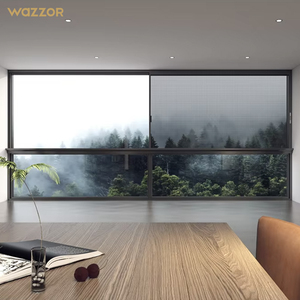
Contemporary architectural design demands maximum natural light transmission ($\tau_v \ge 75\%$) with minimal frame visibility. Advanced lower sliding and casement profiles now feature structural interlocking mullions as narrow as 18mm to 25mm. By shifting the structural load to high-modulus structural silicone sealants and toughened laminated double IGUs, architects achieve expansive floor-to-ceiling glass expanses without compromising wind load or water infiltration resistance.