China Wholesale Aluminum Security Doors: B2B Market Analysis & Specification Guide
As international architectural safety regulations evolve alongside thermal efficiency mandates, sourcing heavy-duty, high-performance security doors from China has transformed from a pure cost-reduction play into a strategic supply chain advantage. Modern B2B buyers—ranging from general contractors and real estate developers in North America to luxury resort builders across Southeast Asia and Europe—demand more than structural security. They require certified thermal resistance (U-factor compliance), sound attenuation (STC ratings), extreme wind-load resistance, and seamlessly integrated smart access control.
Information Gain Insight for B2B Buyers: Standard steel security doors often suffer from exterior condensation, thermal bridging, and severe corrosion in coastal salt-spray conditions. Advanced Thermal Break Aluminum Security Doors constructed from extruded 6063-T5 alloy with Polyamide PA66 nylon thermal strips solve these vulnerabilities, providing up to WK3/RC3 security ratings while cutting building operational heating/cooling loss by up to 42%.
At Karon Window & Door Co., Ltd., based in Foshan, China—the epicenter of global aluminum profile extrusion manufacturing—we bridge the gap between heavy structural defense and modern architectural aesthetics. Our engineering department operates under standardized ISO 9001 protocols, ensuring every security entrance door, armored cast-aluminum villa gate, and thermal-break sliding system complies with international testing metrics, including US SGCC safety glazing, Australian AS 2208, European CE EN 12150, and Southeast Asian TISI / CIDB standards.
Engineering Trends Driving Next-Generation Aluminum Security Doors (2025–2030)
The global security door industry is undergoing a structural transition driven by advancements in metal alloy science, thermal insulation technology, and smart home automation systems. When sourcing wholesale security doors from Chinese manufacturers, technical procurement managers should evaluate suppliers based on five critical engineering trends:
1. Biometric Smart Access & Multi-Point Hook Locking
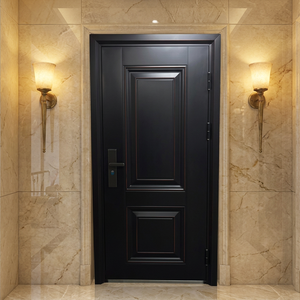
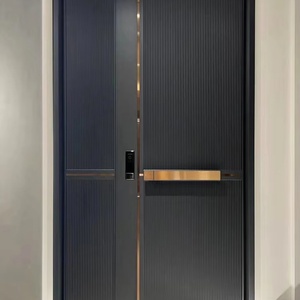
Traditional mechanical single-latch systems are rapidly being replaced by motor-driven 3D biometric smart locks integrated into the door sash. Advanced aluminum security entry doors now incorporate 5-point to 9-point stainless steel claw/hook locking mechanisms that automatically engage upon closure, preventing crowbar insertion and frame deformation under force.
2. Polyamide PA66 Thermal Isolation Cores
In cold climate regions or high-sun exposed tropical environments, solid metal doors suffer from rapid energy loss and structural warping due to differential thermal expansion. Integrating 24mm to 34mm glass-fiber reinforced Polyamide (PA66GF25) strips thermally isolates the exterior aluminum skin from the interior, preventing condensation while boosting structural stability.
3. Fluorocarbon (PVDF) Surface Weatherability
To resist coastal salt mist, ultraviolet oxidation, and extreme weather, export-grade aluminum security doors utilize 3-coat fluorocarbon (PVDF) powder coating systems (minimum film thickness ≥ 40μm). This treatment guarantees color retention and surface corrosion resistance for over 20–25 years, far surpassing standard electrostatic spray paint.
4. Laminated Blast & Impact Safety Glazing
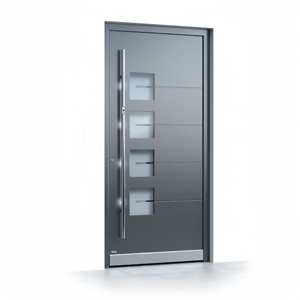
For modern entry doors featuring architectural glass sidelights or vision panels, standard single tempered glass is insufficient. Leading wholesale suppliers now utilize SGP (SentryGlas®) interlay laminated glass. SGP laminates provide 5 times the tear strength of traditional PVB, ensuring that even if the outer glass breaks under high-velocity impact, the panel maintains structural integrity to prevent forced entry.
Future Procurement Trends in B2B Aluminum Door Manufacturing
As real estate development projects move toward compressed construction schedules and standardized modular components, foreign buyers are changing how they specify and procure aluminum security doors from Chinese exporters:
1. One-Stop Whole-House System Specification
Rather than fragmentation—sourcing security entry doors from one factory, sliding windows from another, and glass railings from a third—developers prefer integrated systems. Sourcing an entire window and door package from a single specialized manufacturer guarantees matching frame surface finishes (anodized, powder-coated, or timber grain), consistent glass color tones, unified warranty coverage, and consolidated sea container logistics.
2. Custom Engineering CAD/BIM Integration Prior to Tooling
Leading Chinese exporters are no longer basic manufacturing job shops; they operate as technical solution providers. Professional B2B procurement now requires early-stage 3D shop drawing reviews, structural wind-load calculation modeling, and BIM object creation. This pre-production engineering validation eliminates on-site installation misalignments and costly structural adjustments.
3. Stringent Environmental & Energy Code Compliance (Decarbonization)
With international green building standards such as LEED, BREEAM, and national energy codes enforcing strict building envelope U-values, security entry doors must submit certified thermal performance test reports. Precision-machined aluminum thermal breaks combined with low-emissivity argon-filled glass units are now mandatory line items in major international contract tenders.
Why Partner with Karon Window & Door Co., Ltd.?
Situated in Songxia Industrial Park, Nanhai District, Foshan City, Karon Window & Door Co., Ltd. operates a 10,000 square meter standardized production facility dedicated to manufacturing premium architectural aluminum windows, custom security doors, sunrooms, and frameless glass railings.
Our core manufacturing competitiveness rests on four operational pillars:
- 15+ Years of Export Expertise: Over a decade of hands-on experience shipping custom-engineered systems to high-end villa projects, resort developments, and commercial buildings across the USA, France, Greece, Vietnam, Thailand, and the Middle East.
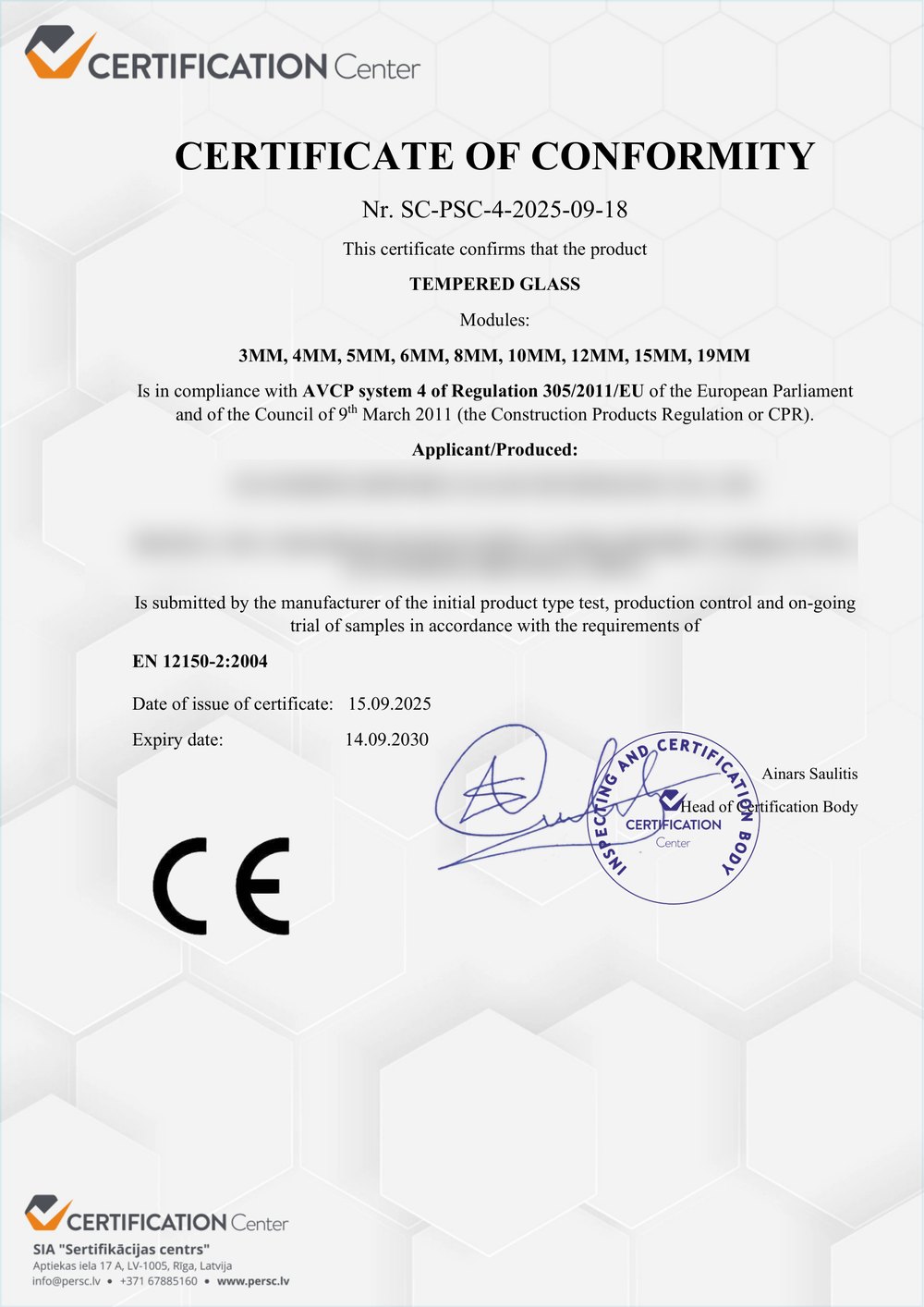
- Comprehensive Global Certifications: Production runs under a strict ISO 9001 Quality Management System. Our products possess international certifications including European CE (EN 12150), US SGCC safety glazing, Australia AS 2208, New Zealand AS/NZS 2208 (single and laminated), Thailand TISI (965-2560 & 1231-2560), and Malaysia CIDB PPS certification.
- Precision CNC Fabrication & Corner Crimping: Equipped with heavy-duty automatic double-head cutting saws, multi-axis CNC machining centers, and hydraulic corner crimping equipment, ensuring frame assembly tolerances within ±0.5mm for exceptional water-tightness and structural rigidity.
- Rigorous 100% Full-Process Inspection: From raw aluminum extrusion ingot verification and coating thickness tests to glass seal inspection and complete pre-shipment trial assembly, every door leaving our factory floor is fully traceable.
What is the structural difference between aluminum security doors and traditional steel security doors?
+
Aluminum security doors utilize heavy-wall extruded 6063-T5 or 6061-T6 aluminum alloys, offering superior corrosion resistance and zero rust risk compared to standard steel doors, making them ideal for coastal environments. Furthermore, aluminum doors allow for precision thermal break integration (PA66 nylon strips) to prevent condensation and energy transfer, whereas traditional steel doors are prone to severe thermal bridging and rust over time.
Which international safety and quality certifications do KARON products carry?
+
Our products carry comprehensive third-party testing credentials, including European CE (EN 12150), US SGCC safety glazing certification, Australia AS 2208, New Zealand AS/NZS 2208 for both toughened single glass and laminated safety glass, Thailand TISI (965-2560 & 1231-2560), and Malaysia CIDB PPS quality certificates. Factory operations follow ISO 9001 certified guidelines.
Can you manufacture custom aluminum security doors based on custom architectural CAD drawings?
+
Yes. 100% of our orders are engineered to custom project specifications. Our in-house engineering team reviews your architect's CAD drawings or door schedules, verifies opening dimensions, structural wind-load requirements, hardware lock specifications, and glass build-up. We issue detailed 2D/3D shop drawings for formal client sign-off before raw material cutting begins.
What is the minimum order quantity (MOQ) and production lead time for wholesale exports?
+
For custom project orders, our typical MOQ starts at 30 square meters or 5 full door units, supporting both full container loads (FCL) and LCL crate shipments. Standard manufacturing lead time is 25 to 35 working days following final shop drawing approval and deposit receipt, depending on profile powder-coating finishes and glass customization specifications.
How do you ensure safe ocean freight packaging for heavy cast-aluminum security doors and large glass panels?
+
We implement a 5-layer heavy-duty export packaging protocol: 1) Protective PE film on frame surfaces; 2) Corner guard protectors; 3) Bubble wrap cushioning; 4) Waterproof cardboard wrap; and 5) Fully enclosed fumigation-free plywood crates with steel strapping. This prevents frame scratches, glass breakage, or moisture penetration during transoceanic transit.
What hardware options and locking brands can be integrated into your aluminum security doors?
+
We offer flexible hardware configurations ranging from top-tier international brands (German GU, Siegenia, HOPPE, ROTO) to high-grade domestic hardware systems (HOPO, KIN LONG). Our security doors can be retrofitted with multi-point stainless steel deadbolt locks, heavy-duty hidden 3D adjustable hinges, automatic drop-down bottom seals, and smart electronic access systems (fingerprint, facial recognition, keypad, and mobile app controls).
What surface treatments are available for extreme salt mist or high UV regions?
+
For harsh coastal environments, we recommend our PVDF (fluorocarbon) 3-coat paint finish or high-durability AkzoNobel powder coating. These surface treatments offer superior resistance against salt spray, chemical corrosion, fading, and chalking under severe sunlight exposure, meeting AAMA 2605 performance specifications.
How do I initiate a formal request for quotation (RFQ) with KARON?
+
Simply click the inquiry button below or contact our export engineering department directly. Please send your door schedule, project location, elevation drawings, quantities, and target performance requirements. Our technical sales engineers will analyze your scope and return a comprehensive quotation with profile cross-sections within 24 hours.
 Cast Aluminum