Executive Sourcing Whitepaper: Engineering Custom OEM Aluminum Crank Out Windows
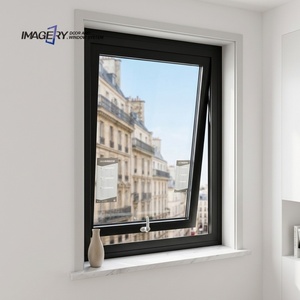
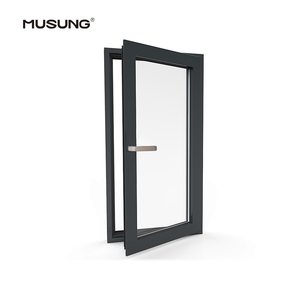
In modern commercial and high-end residential architecture, aluminum crank out windows—encompassing both outward-swing awning windows hinged at the top and side-hinged casement windows operated via rotary crank gear mechanisms—represent the benchmark for atmospheric sealing, operational convenience, and structural integrity. As global building codes enforce increasingly stringent energy performance standards (such as NFRC specs in North America and Eurocodes EN 14351-1), specifying the correct OEM aluminum extrusion profiles, glass build-ups, and mechanical operator hardware has become a crucial engineering responsibility for project architects, facade consultants, and procurement heads.
Unlike conventional sliding systems where sashes ride along horizontal tracks—creating inherent air filtration points at weather-strip interfaces—crank out window assemblies utilize continuous compression seals. When the rotary crank handle activates the multi-point locking arm, the perimeter EPDM (Ethylene Propylene Diene Monomer) gasket compresses uniformly against the frame rebate. This structural mechanics yields superior performance metrics: air infiltration rates below 0.01 cfm/ft², water resistance thresholds exceeding 720 Pa (DP60 to DP90 ratings), and sound transmission class (STC) ratings up to 45 dB when configured with acoustic laminated double or triple insulating glass units (IGUs).
Standard sliding window seals suffer from friction degradation over 3–5 years of use, lowering thermal performance. High-specification OEM crank out windows utilize dual or triple continuous EPDM weather-stripping combined with PA66 polyamide thermal break struts. The mechanical leverage of the rotary crank mechanism exerts positive mechanical force onto the gasket, maintaining seal pressure across decades of operation without thermal bridging.
Technical Matrix: Comparative Engineering Specifications for OEM Crank Out Windows
| Performance Parameter | Standard Non-Thermal Crank Window | Architectural Thermal Break Crank Window | Heavy-Duty Hurricane Impact Crank Window |
|---|---|---|---|
| Profile Alloy & Wall Thickness | 6063-T5 (1.4mm - 1.6mm) | 6063-T5 / 6060-T66 (1.8mm - 2.2mm) | 6005A-T6 / 6063-T6 (2.5mm - 3.0mm) |
| Thermal Break Insulation | None (Solid Aluminum) | 24mm - 34mm PA66GF25 Polyamide Strip | Multicavity PA66 + Aerogel Insulation Fill |
| U-Factor Range (Btu/h·ft²·°F) | 0.65 – 0.85 | 0.24 – 0.35 (Double Glazed Low-E) | 0.14 – 0.22 (Triple Glazed Argon/Krypton) |
| Air Infiltration (ASTM E283) | < 0.30 cfm/ft² | < 0.05 cfm/ft² | < 0.01 cfm/ft² (Super Airtight) |
| Water Resistance (ASTM E331) | 300 Pa (6.27 psf) | 600 Pa (12.5 psf) | 750 Pa – 1200 Pa (15.7 – 25 psf) |
| Acoustic STC / OITC Rating | STC 28 / OITC 24 | STC 38 / OITC 32 | STC 45 / OITC 38 (PVB/SGP Interlayer) |
| Hardware & Gearbox | Single-point zinc alloy operator | Truth / Roto Multi-Point Stainless Steel | Heavy-Duty Dual-Arm Operator & SGP Locks |
1. Ultra-Low U-Value & Decarbonization Mandates
Global net-zero mandates are pushing commercial real estate developers toward windows with U-factors ≤ 0.18. Future OEM procurement centers around multi-cavity PA66 GF25 thermal breaks, warm-edge composite spacers, and triple Low-E coating combinations (such as double-silver or triple-silver magnetron sputtering). Buyers are migrating from standard 6063 aluminum to low-carbon recycled aluminum profiles to minimize Scope 3 embodied carbon.
2. Concealed Automation & Smart Actuators
Manual rotary cranks are evolving into motorized, smart-home-integrated hidden actuators. Modern OEM crank out windows feature 24V DC concealed chain drives seamlessly concealed within the aluminum frame profile. Integrated rain, wind, and air quality sensors automatically open or close awning windows for natural cross-ventilation while feeding real-time building management system (BMS) telemetry.
3. Extreme Weather & Hurricane Impact Resilience
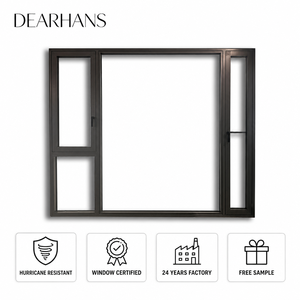
With climate volatility producing higher frequency storm events, procurement specifications are demanding compliance with ASTM E1886 / E1996 Large Missile Impact standards and Florida Building Code (FBC) High Velocity Hurricane Zone (HVHZ) requirements. OEM factories are increasingly integrating SentryGlas (SGP) ionoplast interlayers and reinforced corner-crimping aluminum brackets to withstand wind pressures over +100/-100 psf.
4. Slim Sightline Minimalist Aesthetics
Architectural demand for maximum natural daylighting has led to narrow-frame profile evolution. Frame face widths have compressed from traditional 75mm+ down to 38mm–48mm slim sightlines without compromising wind load deflection. Achieving structural rigidity requires high-tensile 6060-T66 aluminum alloys combined with structural silicone structural glazing (SSG) bonding techniques.
5. Direct-to-Factory OEM DFM Collaboration
Leading international buyers are bypassing multi-tier regional distributors in favor of Direct-to-Factory OEM/ODM partnerships. Engaging factories with in-house Design for Manufacturability (DFM) engineering teams ensures window schedules are optimized for mass extrusion, precise corner-crimping assembly, and containerized export packaging, reducing overall procurement costs by 25% to 40%.
Factory Capability Profile: Karon Window & Door Co., Ltd.
Based in Nanhai District, Foshan, Guangdong—the epicenter of China's premium architectural aluminum industry—Karon Window & Door Co., Ltd. (KARON) operates as a premier OEM/ODM manufacturer specializing in custom thermal break aluminum windows, doors, sunrooms, and structural glass railing systems. Operating out of a 10,000 m² standardized manufacturing plant with over 15 years of continuous operational excellence, KARON delivers project-grade fenestration systems tailored to strict international building codes.
Global Compliance & Verification Matrix
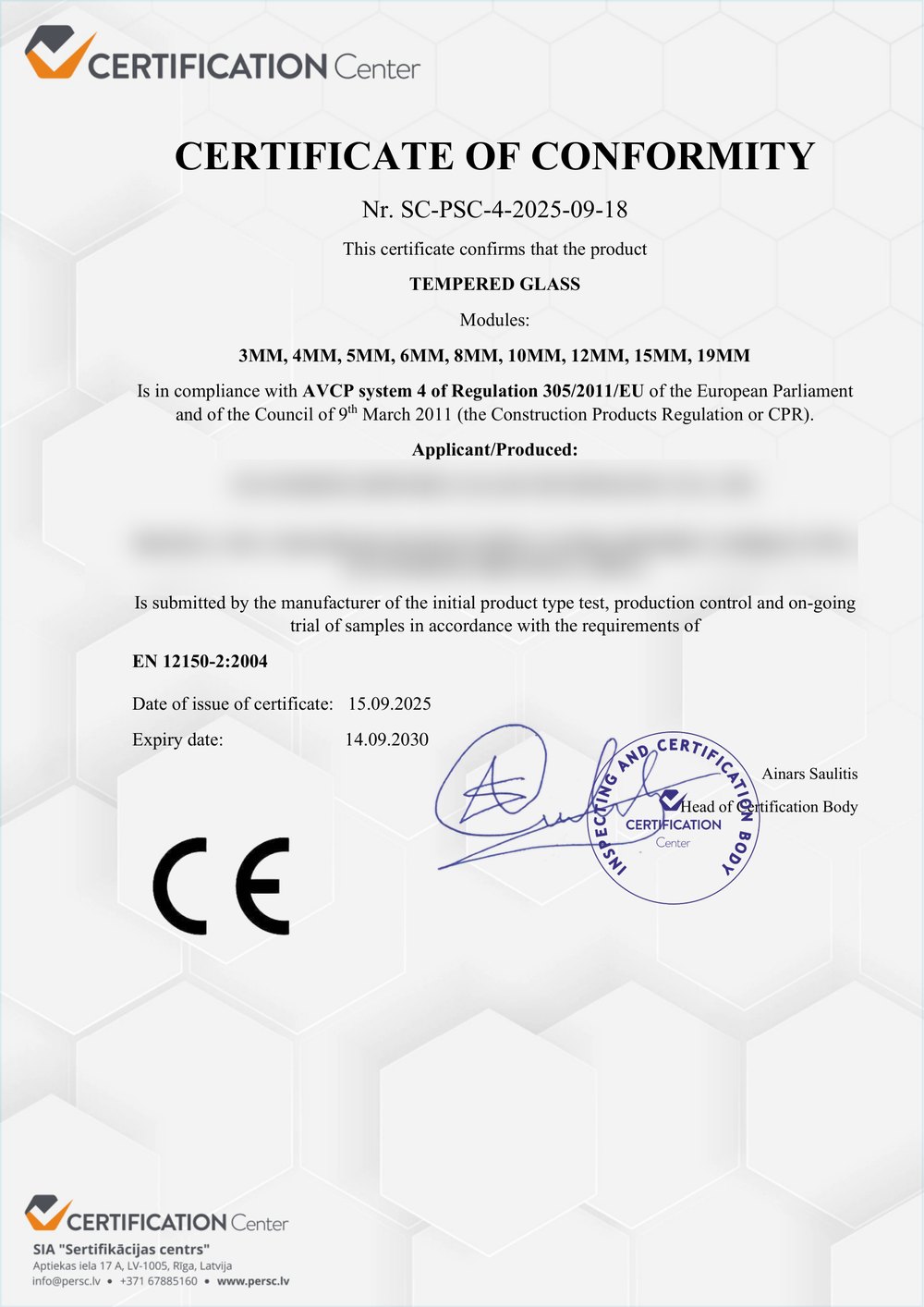
KARON’s production infrastructure operates under a certified ISO 9001 Quality Management System. Products undergo full-process quality inspection—from raw profile tension tests and powder coating micron thickness checks to water submersion and air-tightness pressure chamber verifications.
Proven International Project Track Record
Our engineering team works directly from architectural CAD drawings and BIM models to supply custom window and door schedules for high-profile developments globally. Key landmark projects include:
- Kora Beach Resort (Phuket, Thailand): Full supply of 672 luxury units across 9 low-rise resort buildings utilizing custom thermal break casement and sliding systems (Delivered 2025).
- Texas Luxury Residence (USA): Complete villa package incorporating heavy-duty hurricane impact crank out windows with multi-point stainless locks.
- Azure Blue Residence (Greece): Coastal residential development engineered for high salinity air using 30-micron marine-grade anodized profiles.
- Les Jardins de la Mer (France): Premium villa project with custom ultra-slim thermal break bifold doors and awning windows.
- Vinhomes Ocean Park (Vietnam): High-density villa community outfitted with soundproof double-glazed casement assemblies.
- TIP Group Logistics Park: Commercial office fenestration package spanning 200 m² of high-span curtain wall and window units.
What makes aluminum crank out windows superior to conventional sliding windows for high-end projects? +
Can KARON manufacture crank out windows customized to specific architectural CAD drawings and window schedules? +
What hardware systems and rotary gear mechanisms are integrated into your OEM crank windows? +
What is the standard glass configuration for your soundproof and thermal break crank out windows? +
How does KARON ensure corrosion protection for coastal or high-salinity installation sites? +
What are the minimum order quantities (MOQ), production lead times, and export packaging procedures? +
Ready to Upgrade Your Window & Door Supply Chain?
Partner with Foshan's leading OEM/ODM aluminum window manufacturer. Send us your architectural drawings or project window schedule for an immediate engineering evaluation and competitive factory-direct quote.