Featured OEM Commercial Glazing & Storefront Window Systems
Our OEM manufacturing line delivers project-grade aluminum storefront assemblies, double-tempered acoustic glass units, and heavy-duty commercial entrance doors configured directly to your architectural blueprints.
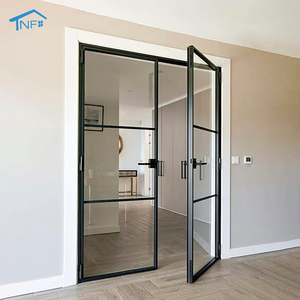
French Design Commercial Swing Soundproof Waterproof Aluminum Double Tempered Glass Casement French Door
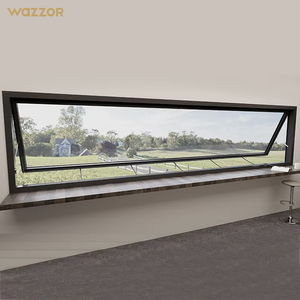
Wazzor Top-Out Awning Window Australia Standard Aluminum Glass Gas Strut Window Awning Type Building Material
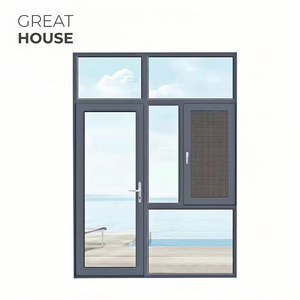
Versatile Hopper Window for House Hotel Villa or Farmhouse-for Bathroom Entry Outdoor Exterior or Bedroom
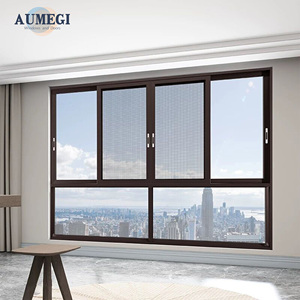
Aumegi Tempered Glass Aluminum Aluminium Frame Sliding Glass Window Metal Sliding Windows
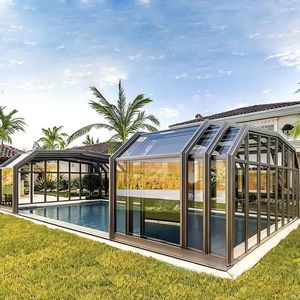
Custom Contemporary Eco-Friendly Thermal Break Aluminum Arc Roof Sunroom with Large Curved Picture Window
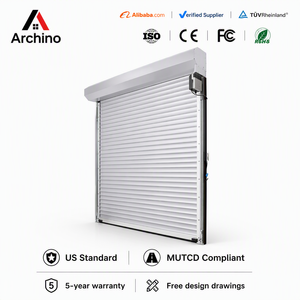
Heavy Duty Aluminum Rolling Shutter Door for Commercial Shop Front Security Extruded Alloy Roller Doors Factory Price
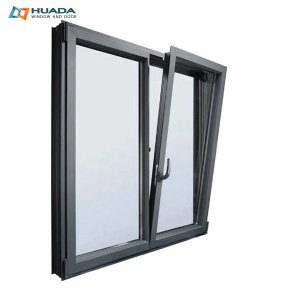
CSA Certification Canada Standard Energy Star Tilt and Turn Window Inswing Window Casement Window Aluminum Windows
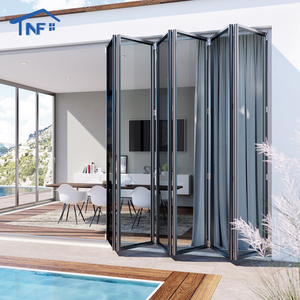
Custom NF Aluminium Folding NFRC Thermal Break Waterproof Double Low-e Tempered Glass Exterior Accordion Bi-fold Doors
Architectural Whitepaper: Structural Metallurgy & Thermal Engineering in Commercial Storefront Manufacturing
In modern commercial architectural design, custom OEM aluminum storefront windows serve as both the primary structural envelope and the definitive aesthetic facade for retail plazas, corporate centers, luxury hotels, and high-density residential developments. Selecting an original equipment manufacturer (OEM) demands a technical evaluation that extends far beyond initial material costs—requiring rigorous analysis of structural deflection, thermal break dynamics, frame metallurgy, and long-term acoustic mitigation.
1. Extruded Aluminum Alloy Metrics: 6063-T5 vs. 6063-T6 Precision Engineering
The structural backbone of any high-span commercial storefront system lies in its extrusions. At our Foshan manufacturing hub, KARON utilizes premier-grade primary aluminum billets (purified to >99.7% Al), strictly avoiding secondary recycled scrap that compromises structural integrity.
Alloy Selection & Heat Treatment: For standard commercial glass facades, 6063-T5 aluminum alloy provides optimal surface finish quality, superior anodizing response, and balanced tensile strength (yield strength ≥ 110 MPa). For high-wind load coastal storefronts and structural mullions exceeding 4.5 meters in unsupported height, we employ 6063-T6 temper thermal aging (yield strength ≥ 170 MPa, ultimate tensile strength ≥ 205 MPa). This process elevates the structural modulus to withstand severe negative wind pressures (wind load resistance designed up to 5.0 kPa per ASTM E330 testing standards).
2. Thermal Barrier Technology: PA66-GF25 Polyamide Strips vs. Pour-and-Debridge
Commercial storefronts are massive thermal bridges if not properly isolated. OEM thermal break window framing isolates indoor and outdoor temperatures by inserting a low-conductive structural barrier between the interior and exterior aluminum profiles.
KARON utilizes precision-crimped PA66-GF25 (Polyamide 66 reinforced with 25% glass fiber) structural thermal strips. Glass fiber reinforcement ensures the thermal break matches the coefficient of thermal expansion of the aluminum frame (2.3 × 10⁻⁵ /K), preventing profile delamination or seal failure during extreme temperature fluctuations (-30°C freezing winters to +70°C scorching facade exposures).
Compared to polyurethane pour-and-debridge methods, PA66-GF25 mechanical crimping maintains structural shear strength under heavy double- and triple-glazed Low-E unit loads, reducing whole-window U-factors down to 1.4 W/m²·K (U-value 0.25 BTU/hr·ft²·°F).
Structural Wind Load
Engineered to meet ASTM E330 standards. Profile wall thicknesses range from 2.0mm to 3.0mm to withstand extreme lateral deflection limits (L/175 or L/240 design ratios).
Acoustic Insulation
Double/Triple Low-E glass units with PVB/SGP acoustic laminated interlayers achieve STC (Sound Transmission Class) ratings from STC 38 up to STC 45 for urban environments.
Air & Water Tightness
Multi-channel EPDM gasket seals paired with concealed drainage sub-frames prevent water penetration at dynamic pressures over 700 Pa (ASTM E331 test passed).
OEM Storefront Framing Specification Matrix: System Comparison
Architects and general contractors must balance visual sightlines, structural capacity, and envelope energy efficiency. Review our technical engineering matrix below to select the ideal OEM extrusion configuration for your commercial project scope.
| System Classification | Profile Wall Thickness | Thermal Isolation | Acoustic Rating (STC) | Target Applications | Glass Build-Up Compatibility |
|---|---|---|---|---|---|
| Non-Thermal Flush Glazed | 1.8mm – 2.2mm 6063-T5 | Un-insulated Monolithic Frame | STC 28 – STC 32 | Interior Mall Fronts, Partition Walls, Mild Climates | 6mm - 12mm Single Tempered Glass |
| Thermal Break Storefront (Standard) | 2.0mm – 2.5mm 6063-T5 | 14.8mm PA66-GF25 Polyamide | STC 35 – STC 38 | Ground Level Retail, Office Entryways, Urban Plazas | 6mm + 12Ar + 6mm Double Low-E Toughened |
| Heavy-Duty Commercial Ribbon Frame | 2.5mm – 3.0mm 6063-T6 | 24mm Multi-Cavity Thermal Strip | STC 40 – STC 44 | High-Traffic Main Entrances, Hotels, Educational Complexes | 8mm Low-E + 16Ar + 6mm+1.52PVB+6mm Laminated |
| Structural Silicone Glazing (SSG) | 2.5mm – 3.2mm 6063-T6 | Continuous Polyamide + Foam Spacer | STC 42 – STC 46+ | Seamless Glass Facades, Luxury Car Dealerships, Towers | 10mm Low-E + 16Ar + 8mm Triple Silver Low-E IGUs |
Future Sourcing Trends: 2025–2030 Commercial Storefront Window Manufacturing
Global commercial construction is undergoing a rapid paradigm shift driven by stringent municipal decarbonization policies, energy code revisions (such as ASHRAE 90.1, California Title 24, and the EU Energy Performance of Buildings Directive), and rising labor costs for on-site installation. As a vanguard Foshan OEM window manufacturer, KARON highlights four pivotal trends redefining B2B commercial procurement:
1. Low-Carbon Billet Sourcing & EPD Transparency
Institutional developers increasingly require Environmental Product Declarations (EPDs). OEM manufacturing is transitioning to hydro-powered primary aluminum smelters to reduce embodied carbon below 4.0 kg CO₂e per kg of aluminum, earning valuable LEED v4.1 credits.
2. Prefabricated Unitized & Knock-Down (KD) Shipping
To mitigate job-site labor inflation in North America, Australia, and Europe, buyers are shifting toward pre-glazed, ladder-assembled storefront framing and precision CNC knock-down kits that accelerate structural installation by up to 40%.
3. Smart Dynamic & Electrochromic OEM Integration
Modern store fronts are incorporating OEM wiring raceways within the aluminum sub-frame to power switchable dynamic smart glass (PDLC) and integrated motorized natural ventilation actuators linked directly to Building Management Systems (BMS).
Enterprise OEM Manufacturing Capabilities: Why Global Contractors Partner with KARON
Headquartered in Songxia Industrial Park, Nanhai District, Foshan City—the recognized epicenter of China's high-end aluminum extrusion industry—Karon Window & Door Co., Ltd. operates a modern 10,000 square meter standardized production complex dedicated to project-grade custom architectural glazing systems.
End-to-End Production & CNC Machining Precision
Our factory is outfitted with 4-axis CNC machining centers, automated double-head precision cutting saws capable of 0.1mm dimensional tolerance, automatic corner-crimping machines, and specialized structural silicone glazing stations. We maintain full in-house control over profile extrusion design, powder coating (PVDF fluorocarbon & AkzoNobel architectural coatings), hardware fitting assembly, and rigorous pre-shipment mock-up testing.
Global Testing & International Certification Portfolio
Overseas building codes demand strict compliance documentation. KARON products carry fully verifiable international safety glass and window system certifications:
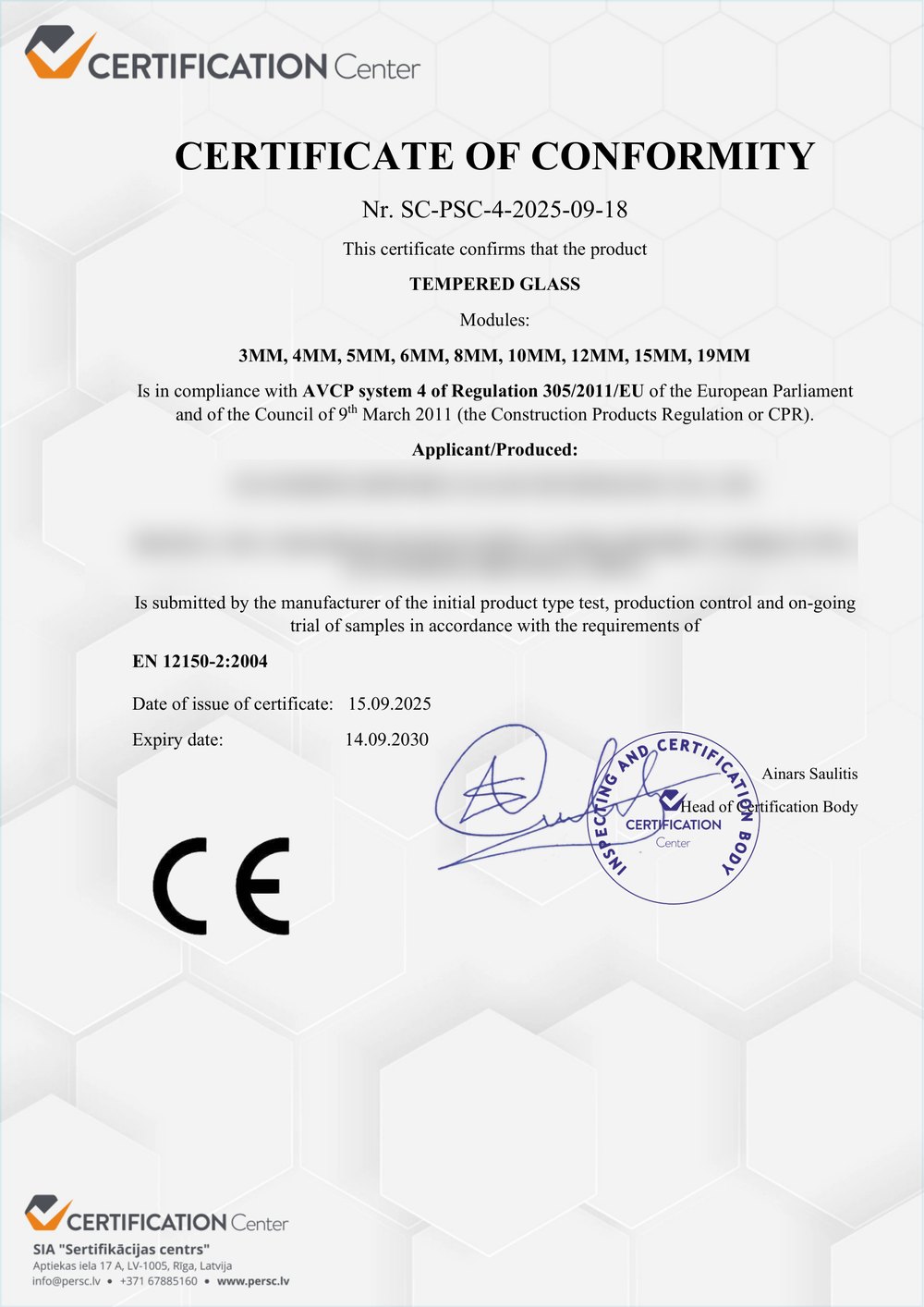
- Europe: CE Certification under standard EN 12150 safety glass performance specifications.
- United States: SGCC (Safety Glazing Certification Council) certified toughened & laminated IGUs.
- Australia & New Zealand: AS/NZS 2208 StandardsMark approval for single-pane and laminated structural glass; AS 2047 window testing compliance.
- Southeast Asia: Thailand TISI (TISI 965-2560 & 1231-2560) and Malaysia CIDB PPS certification (Certification 2-03250048 / 2-03250049).
Frequently Asked Sourcing Questions (Commercial Procurement FAQ)
Essential technical and commercial solutions for project engineers, procurement managers, and commercial real estate developers when importing custom OEM aluminum storefront systems from China.
1. Architectural Powder Coating (Qualicoat Class 2 / AkzoNobel): Standard 15-20 year weatherability warranty against fading and chalking.
2. PVDF Fluorocarbon Paint (Kynar 500 2-coat or 3-coat): Recommended for coastal environments; carries up to a 25-year warranty against harsh salt-spray corrosion.
3. Anodizing (Class I - 18-25 microns): Clear, bronze, champagne, or black anodized finishes for sleek metallic aesthetics with high abrasion resistance.
OEM Execution Framework: From Blueprint Review to On-Site Installation
Our standardized 4-stage engineering collaboration workflow ensures absolute precision, transparent communication, and zero on-site fitting errors for international building projects:
Stage 1: Drawing Analysis
Client submits CAD drawings or window schedules. Our engineers analyze rough opening sizes, wind loads, thermal goals, and local code specs.
Stage 2: Shop Drawings
KARON issues comprehensive 2D/3D shop drawings detailing mullion cross-sections, anchor details, glass build-ups, and hardware for final sign-off.
Stage 3: Precision Crafting
Extrusions are CNC machined, crimped, glazed, and subjected to strict double-pass quality control checks, including water seal testing.
Stage 4: Crate Logistics
Products are packed into steel/wooden A-frame crates and loaded with ocean-freight securing, accompanied by installation guide manuals.
Ready to Engineer Your Next Commercial Storefront Project?
Consult directly with KARON’s senior facade engineers for expert system selection, detailed CAD shop drawings, and competitive factory-direct pricing for your project schedules.