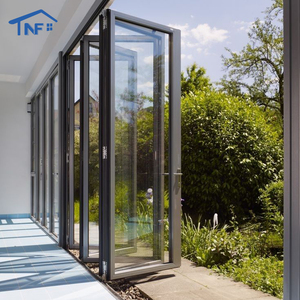
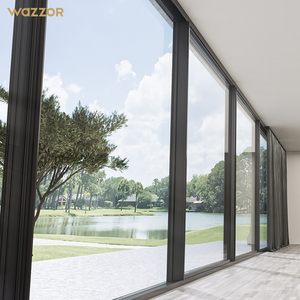
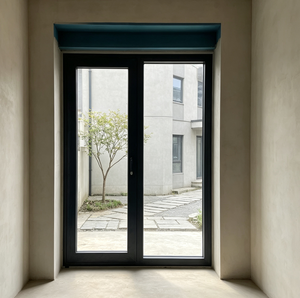
Information Gain Executive Summary: Modern residential and commercial kitchen design has shifted from rigid spatial enclosure toward open-plan connectivity, daylight maximization, and acoustic containment of cooking fumes. Aluminum glass kitchen doors have become the dominant specification choice over traditional wooden or uPVC profiles due to their superior structural strength, resistance to high humidity and grease, slim sightline capabilities, and long-term dimensional stability.
1. The Architectural Shift Toward Aluminium Glass Kitchen Doors
In contemporary architectural engineering, the kitchen door is no longer treated as a simple partition; it serves as a critical environmental separator and visual bridge between cooking zones, dining areas, and outdoor living space. Commercial procurement specs now demand frame profiles capable of supporting large-format insulated glass units (IGUs) while maintaining structural deflection tolerances below L/175 under dynamic pressure loadings.
Aluminum profiles—specifically extruded 6063-T5 and 6063-T6 alloys—provide the structural tensile strength (exceeding 160 MPa) necessary to carry triple-glazed safety glass while keeping vertical frame sightlines as narrow as 16mm to 38mm. In addition, the non-porous nature of anodized or powder-coated aluminum eliminates moisture absorption issues, paint peeling, and frame warping commonly observed in solid wood or wood composite doors exposed to steam, oils, and ambient kitchen humidity.
Material Performance Comparison Matrix for Kitchen Doors
| Material Benchmark |
Thermal Break Aluminium |
Standard Aluminium |
Solid Timber / Wood |
uPVC Vinyl Profile |
| Structural Integrity |
Exceptional (High Load Capacity) |
High (Flex Rigid) |
Moderate (Prone to Warp) |
Low (Requires Steel Reinforcement) |
| Frame Sightlines |
Ultra-Narrow (16mm–45mm) |
Narrow (30mm–60mm) |
Wide (>75mm) |
Very Wide (>80mm) |
| Humidity & Oil Resistance |
100% Waterproof / Grease Proof |
100% Waterproof / Grease Proof |
Absorbs Oils / Moisture Decay |
Stains easily / Discolors over time |
| Thermal U-Value Range |
1.2 – 1.8 W/m²K |
2.8 – 3.8 W/m²K |
1.4 – 2.0 W/m²K |
1.3 – 1.9 W/m²K |
| Life Expectancy |
35+ Years (Maintenance Free) |
30+ Years |
15-20 Years (Requires Painting) |
15-20 Years (UV Degradation) |
B2B Sourcing Guide
Top 10 Aluminium Glass Kitchen Doors Suppliers & Exporters
Evaluated on manufacturing scale, engineering customization, thermal break technological patents, international certifications, and global export compliance.
Factory Scale & Engineering Strengths: Based in Songxia Industrial Park, Nanhai District, Foshan—the hub of Chinese aluminum extrusion—Karon operates a 10,000 m² standardized production facility with over 15 years of technical expertise. KARON specializes in custom thermal break aluminum sliding doors, minimalist ultra-slim frame kitchen doors, heavy-duty folding doors, and whole-house glass systems.
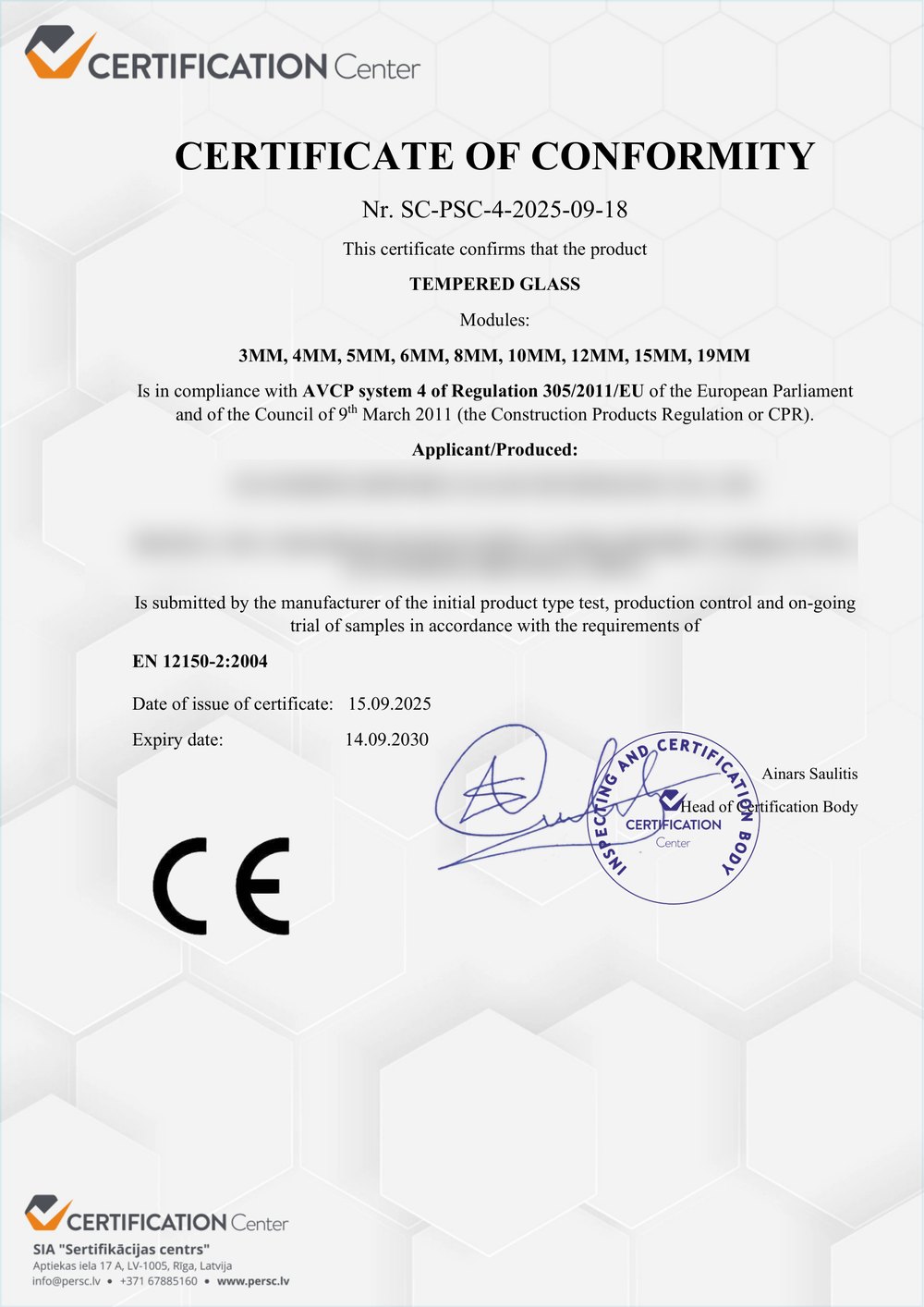
Certifications & Export Compliance: Fully accredited with European Union CE (EN 12150), US SGCC Safety Glazing Certification, Australia AS 2208, New Zealand AS/NZS 2208, Thailand TISI 965-2560 & 1231-2560, and Malaysia CIDB PPS certification under an ISO 9001 certified quality framework.
Key Competitive Advantage: Direct OEM/ODM engineering support, low-profile flush track designs, custom hardware integration (HOPPE, Siegenia, GU, CORTIZO), and high structural rigidity engineered specifically for real estate developers, hotel contractors, and custom residential architects.
Overview: Renowned for high-end German engineering, Schüco manufactures premier aluminum window and door systems with emphasis on thermal insulation, smart home automation, and passivhaus standards. Their interior sliding and pocket doors are widely specified in ultra-luxury penthouses.
Overview: Specializing in architectural aluminum solutions, Reynaers provides slim-line sliding kitchen doors (Hi-Finity series) capable of carrying massive glass loads up to 750 kg with automated motorization systems and seamless floor integration.
Overview: A leader in residential and commercial architectural products across Asia and North America, YKK AP delivers standardized high-tightness aluminum sliding kitchen doors with advanced anodizing surface treatments and earthquake-resistant framing profiles.
Overview: CORTIZO is a major European designer and manufacturer of aluminum systems for architecture. Their COR Vision sliding series is famous for slim interlocking vertical profiles of just 20mm width, maximizing daylight penetration into kitchen spaces.
Overview: Catering to luxury coastal estates in North America, Fleetwood focuses on large-scale sliding patio and kitchen partition doors engineered to meet strict Miami-Dade hurricane impact standards while maintaining modern minimal sightlines.
Overview: A brand under Hydro Extrusions, Technal emphasizes eco-designed recycled aluminum door systems (CIRCAL low-carbon aluminum), targeting LEED-certified commercial developments and high-performance green residential projects.
Overview: Famous for Multi-Slide and Bi-Folding aluminum glass door systems designed to connect indoor kitchens with outdoor outdoor dining spaces in dry, sun-rich climates across the American Sunbelt.
Overview: Origin is a prominent UK manufacturer of bespoke aluminum bifold and sliding doors, known for short manufacturing lead times, vibrant RAL color selection, and safety-finger-cushion gasket designs for residential kitchens.
Overview: Operating global distribution networks, JELD-WEN supplies commercial building projects with composite and aluminum-clad glass kitchen doors that comply with high energy efficiency codes and multi-family residential specifications.
2. Future Sourcing & Architectural Trends in Aluminium Glass Kitchen Doors
Procurement teams, developers, and architects must look beyond simple unit cost and consider emerging technological and structural shifts shaping the next decade of fenestration engineering:
A. Micro-Sightlines & Concealed Outer Frames
The push for maximal spatial continuity has driven visible vertical frame widths from traditional 50mm profiles down to ultra-minimalist 16mm-20mm profiles. Advanced systems embed outer frames completely within floor-to-ceiling drywalls, leaving only pure glass visual planes. To maintain structural rigidity, suppliers utilize polyamide thermal strips reinforced with structural glass bonding adhesives (Dow Corning 983 structural silicone).
B. Flush Floor Tracks with Hidden Drainage Channels
Tripping hazards at the kitchen threshold are eliminated via continuous flush-bottom tracks. Next-generation drainage channels incorporate sub-surface water management grids capable of draining up to 100 liters of water per minute, preventing water ingress from outdoor patios while maintaining smooth roller movement across stainless steel running rails.
C. Smart Glass Technology Integration (Switchable Privacy Glass)
Modern kitchen doors increasingly incorporate Electrochromic Polymer Dispersed Liquid Crystal (PDLC) laminated glass. With a single click or smart home command, the door glass transforms instantly from 90% visual clarity to completely opaque, offering instant privacy during cooking sessions without requiring curtains or blinds that absorb food oil and grease.
D. Advanced Thermal Barriers & Polyamide Insulating Strips
With global energy codes tightening (e.g., European EPBD and US Title 24), non-thermal break profiles are rapidly being restricted to non-conditioned interior spaces. Multi-chambered polyamide thermal break strips (PA66-GF25 reinforced with 25% fiberglass) prevent condensation buildup on the interior aluminum frame caused by kitchen cooking heat meeting cold external air.