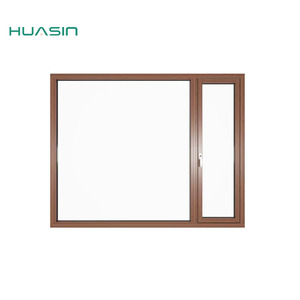
Featured Product Portfolio
Architectural Window & Door Systems Showcase
Precision-engineered thermal break casement doors, ultra-narrow patio sliders, hurricane-rated entryways, and commercial glazing systems manufactured in Foshan, China.
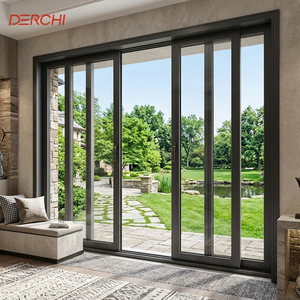
DERCHI Multi Panel Aluminum Sliding Door Security Hurricane Proof Sliding Patio Door Modern Home Doors
Contact Us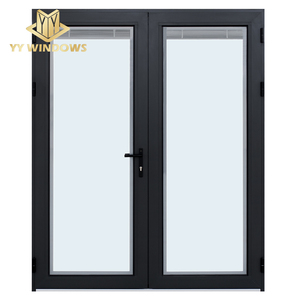
Double Glass California Architectural Industrial Aluminum French Doors Exterior/aluminum Hinged Door with Screen
Contact Us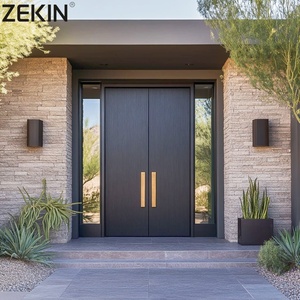
ZEKIN Aluminum Double House Front Entry Luxury Glass Door Anti-theft Front Entry Double Exterior Doors Double Entry Door
Contact Us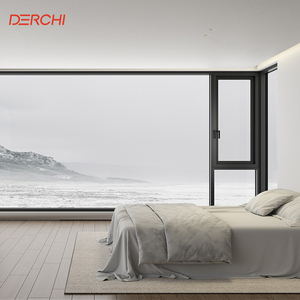
DERCHI AS2047 Aluminum Awning Windows Double Glazed Soundproof Aluminum Frame Windows for House
Contact Us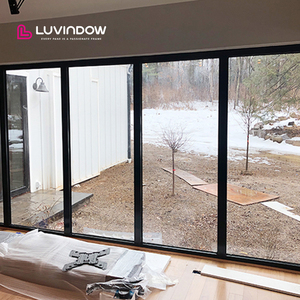
Big View Extra Large Window House Glass Floor to Ceiling Custom Size Windows
Contact Us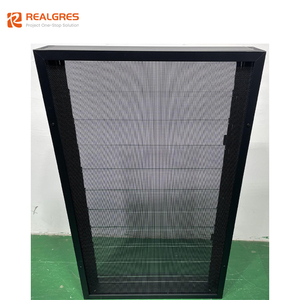
Realgres H-120cm X 60cm-W Aluminum Jalouplus Window Vertical 12 Blades
Contact Us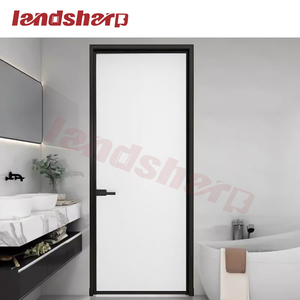
Landsharp New Design Bathroom Narrow Frame Casement Aluminium Interior Glass Door Aluminium Toilet Metal Entry Door
Contact Us
Strategic Sourcing Analysis
1. The Global Fenestration Shift: Why Top China Aluminium Casement Door Manufacturers Lead B2B Procurement
The global construction and architectural sector is undergoing a profound structural evolution. Modern building envelope designs increasingly demand high-performance fenestration systems that balance maximum daylighting, structural integrity, acoustic isolation, and stringent thermal energy compliance. At the epicenter of this global procurement transition is Foshan, China—specifically the Nanhai District industrial cluster—which stands as the undisputed global hub for architectural aluminum extrusion, powder coating, and specialized door fabrication.
As international developers, facade consultants, commercial contractors, and luxury residential homebuilders look to optimize supply chain economics without sacrificing engineering rigor, China aluminium casement door manufacturers have emerged as the primary strategic partners. Unlike standard off-the-shelf catalog hardware, specialized OEM/ODM factories like Karon Window & Door Co., Ltd. (KARON) offer fully customized, project-grade architectural systems engineered directly from architectural CAD drawings and Building Information Modeling (BIM) files.
Aluminium casement doors represent the gold standard in operable exterior opening systems. By pivoting outward or inward on heavy-duty friction hinges or continuous pivot pins, casement systems utilize structural compression weather-sealing along the entire frame perimeter. When locked under multi-point security hardware, the sash is pulled tightly against EPDM gasket barriers, yielding air infiltration and water resistance ratings that significantly surpass traditional sliding or bypass door configurations. This engineering reality makes thermal break aluminium casement doors the preferred choice for hurricane-prone coastal villas, high-altitude alpine residences, high-noise urban developments, and energy-conscious commercial installations worldwide.
Key Structural Advantage of Compression-Sealed Casement Systems
Unlike horizontal sliding doors—which rely on brush seals that degrade over time due to friction—casement doors employ continuous, multi-chambered EPDM (Ethylene Propylene Diene Monomer) synthetic rubber gaskets. Upon engagement of the gear-driven multi-point locking mechanism, uniform mechanical pressure compresses the gasket across all four sides of the sash perimeter. This creates a hermetic seal against wind-driven rain, acoustic atmospheric noise, and thermal heat exchange.
| Performance Parameter | Standard Non-Thermal Casement Door | High-Spec Thermal Break Casement Door | International Standard Benchmark |
|---|---|---|---|
| Thermal Transmittance (U-Value) | 5.0 – 5.8 W/m²·K | 1.2 – 1.8 W/m²·K (Low-E + Argon) | ENERGY STAR / EU NBR 10821 |
| Air Infiltration Tightness | Class 3 (m³/m²·h ≤ 1.5) | Class 4 High-Precision (≤ 0.5) | ASTM E283 / EN 12207 |
| Water Penetration Resistance | 300 Pa - 450 Pa | 750 Pa - 1050 Pa (Static/Dynamic) | ASTM E331 / AS 2047 / EN 12208 |
| Acoustic Insulation (Rw) | 25 - 30 dB | 40 - 48 dB (Laminated IGU) | ISO 10140-2 Sound Proof Rating |
| Structural Wind Load (P3) | 2.5 kPa | Up to 6.0 kPa (Hurricane Grade) | ASTM E330 / AS/NZS 1170.2 |
2. Technical Deep-Dive: Material Science & Manufacturing Metallurgy
Achieving structural longevity in architectural fenestration requires total control over primary material selection and manufacturing tolerances. Reputable China suppliers utilize primary 6063 aluminum alloy extruded profiles, engineered specifically to T5 or T6 heat-treatment temper specs. Understanding these metallurgical properties is critical for architectural specifiers and import distributors evaluating supplier capabilities.
2.1 Aluminum Alloy Composition & Temper Dynamics
Primary 6063-T5 / T6 architectural aluminium provides an optimal strength-to-weight ratio, exceptional corrosion resistance, and superb surface responsiveness to anodizing and architectural-grade fluorocarbon (PVDF) electrostatic powder coating. The T5 temper status (chilled after extrusion and artificially aged) delivers a tensile strength exceeding 160 MPa and a yield strength exceeding 110 MPa, ensuring frame sashes maintain structural flatness across multi-panel entry systems spanning up to 3.2 meters in vertical height.
Polyamide PA66 GF25 Thermal Break Barriers
In thermal break casement doors, the exterior aluminum profile is physically separated from the interior profile via a high-density, structural insulating bridge. Top-tier manufacturers specify PA66 GF25 (Polyamide 66 reinforced with 25% glass fiber). The inclusion of glass fiber ensures the thermal strip possesses the identical coefficient of thermal expansion as the adjacent aluminum profile. This prevents structural delamination, frame warping, or thermal shear stress during extreme ambient temperature fluctuations between summer sun exposure and winter freezing conditions.
2.2 Architectural Surface Finishing & Coating Technologies
External casement doors are continuously subjected to solar ultraviolet radiation, atmospheric moisture, airborne pollutants, and salt-mist corrosion in ocean-front microclimates. Modern Chinese export factories apply advanced surface passivation before powder coating:
- Qualicoat Class 2 & 3 Powder Coatings: Utilizing AkzoNobel or PPG thermosetting architectural polyester powders, providing color retention and chalking resistance guaranteed for 15 to 25 years in high-UV regions (e.g., Middle East, Australia, Southeast Asia).
- PVDF (Fluorocarbon) Spray Systems: Applied in 2-coat, 3-coat, or 4-coat continuous baking operations, PVDF finishes resist chemical oxidation, industrial acid rain, and coastal saline spray, exceeding AAMA 2605 specifications.
- Sublimation Wood-Grain Transfer: Combines the structural decay-proof longevity of heavy-gauge extruded aluminum with the warm aesthetic of real timber (Oak, Teak, Walnut), popular for high-end residential villa entryways.
2.3 Insulated Glass Units (IGU) & Glazing Safety Compliance
The glass build-up constitutes approximately 80% of a casement door's physical surface area and is the primary factor determining solar heat gain coefficient (SHGC) and acoustic performance. B2B buyers must ensure their chosen Chinese manufacturer maintains third-party safety glazing certifications matching destination country building codes.
Standard export configuration includes double-pane tempered glass (e.g., 6mm Low-E + 12Ar + 6mm Clear) or laminated safety glass (e.g., 5mm + 1.52PVB + 5mm). For extreme thermal performance, warm-edge composite spacers (such as Technoform or Swisspacer) replace conventional hollow aluminum spacers to eliminate thermal bridging around the glass perimeter.
Manufacturing Integrity
Enterprise Strengths & Manufacturing Capabilities
Why leading international construction groups partner with KARON (Foshan, China) for OEM & ODM project delivery.
10,000 m² Standardized Plant
Situated in Songxia Industrial Park, Nanhai District, Foshan. Equipped with multi-axis CNC machining centers, automatic corner-crimping machines, and digital profile cutting saws.
Global Accredited Testing
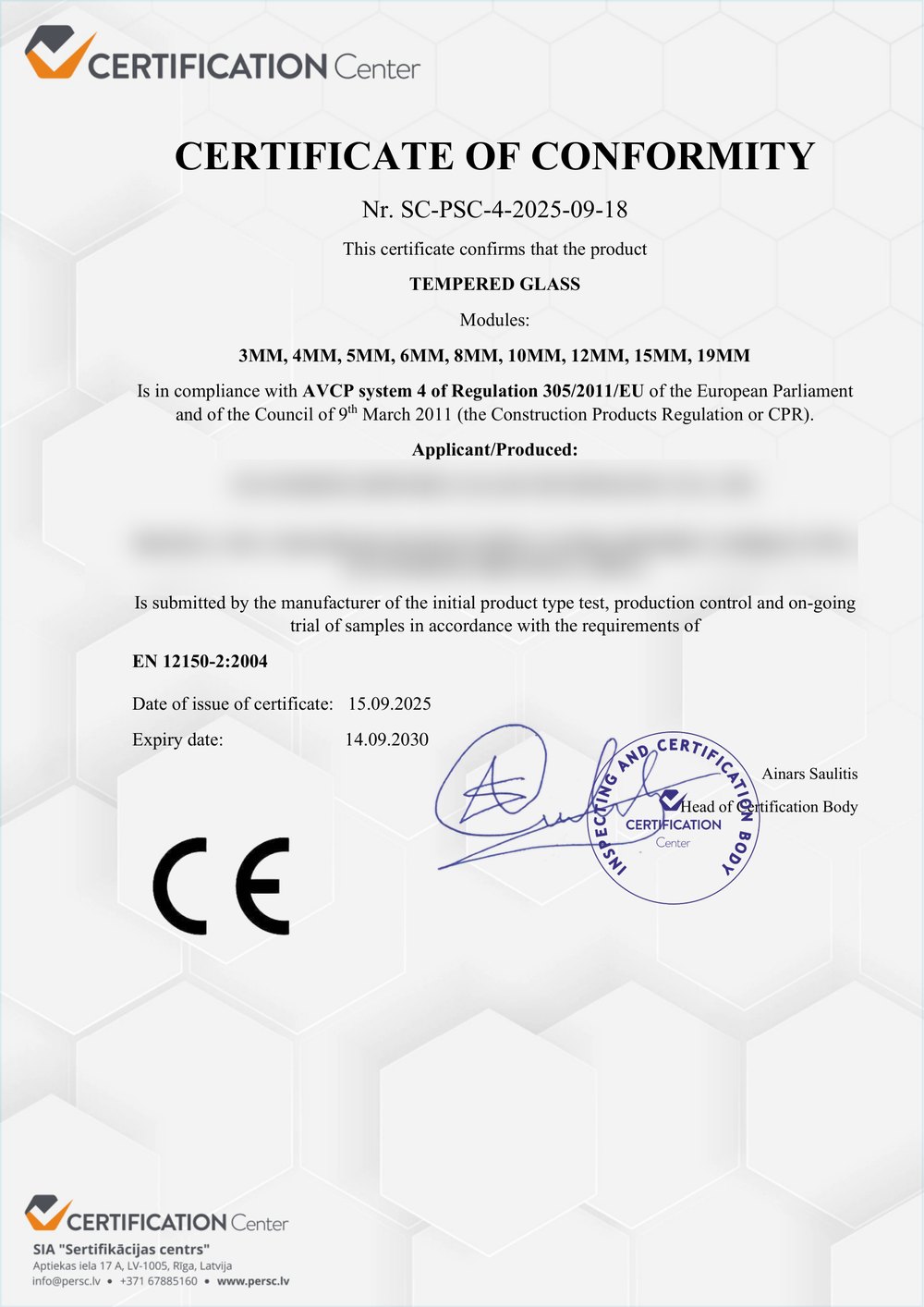
Full-process quality control running under ISO 9001. Certified for EU CE (EN 12150), US SGCC, Australia AS 2208, NZ AS/NZS 2208, Thailand TISI, and Malaysia CIDB PPS.
Bespoke Architectural Engineering
Dedicated shop-drawing engine team capable of converting client CAD, Revit, or structural blue-prints into millimetric manufacturing schedules with 3D hardware detailing.
Export Export Packaging & Logistics
Heavy-duty protective film wrapping, corner corner guards, fully enclosed fumigated plywood crates, and specialized steel A-frame glass rack loading for containerized ocean freight.
3. Global Sourcing Trends & Future Outlook (2025–2030 Whitepaper Forecast)
As carbon neutral building directives come into force across North America, Europe, and Asia-Pacific, procurement trends for aluminium fenestration are rapidly shifting. Below are the key engineering macro-trends shaping future purchasing orders:
Trend 1: Ultra-Narrow Sightline Minimalist Casement Systems
Contemporary modern architecture favors maximized glass visual areas and minimal visible aluminum framing. Ultra-narrow frame casement doors feature visible sash frame profiles under 30mm width, paired with concealed heavy-duty friction hinges capable of supporting sash weights exceeding 180kg. European hardware integration (such as Siegenia, Hoppe, or Sobinco) allows multi-locking points to operate seamlessly within narrow profile grooves.
Trend 2: Integrated Stainless Steel Mesh Security & Flyscreen Systems
Export markets in tropical, sub-tropical, and coastal regions require insect protection alongside physical security. Leading China manufacturers now design dual-track or integrated inner-casement systems featuring 304 marine-grade high-tensile stainless steel wire mesh screens (0.8mm wire diameter). This allows windows and casement doors to remain open for natural ventilation while providing anti-burglary resistance and insect exclusion.
Trend 3: Smart Motorized Actuation & Home Automation Integration
Commercial entrance doors and high-level architectural casements are increasingly equipped with hidden electric actuator drives, magnetic sensor locks, and biometric access controls (fingerprint, keypad, RFID, and Apple HomeKit / Tuya smart integration). Motorized multi-point latching ensures that even ultra-tall casement doors pull completely flush against weather gaskets upon closing.
Trend 4: Circular Economy & Recycled Low-Carbon Aluminum
International developers seeking LEED (Leadership in Energy and Environmental Design) or BREEAM environmental certification now require verification of recycled aluminum content. Premier Chinese manufacturers are implementing scrap-recovery melting loops and sourcing low-carbon hydroelectric-smelted aluminum extrusions, lowering the embedded carbon footprint of exported fenestration by up to 65%.
Procurement FAQ
Frequently Asked Questions for International B2B Buyers
Expert answers addressing quality control, certifications, logistics, thermal specs, and custom OEM manufacturing processes.
Where is the KARON manufacturing facility located and what product categories are produced? ▼
Karon Window & Door Co., Ltd. operates a 10,000 square meter standardized production facility located in Songxia Industrial Park, Nanhai District, Foshan City, Guangdong Province, China. Foshan is world-renowned as the premier hub for aluminum extrusion and fenestration technology. Our plant specializes in engineering and manufacturing custom thermal break aluminium casement doors, ultra-narrow sliding doors, bi-folding patio doors, tilt-and-turn windows, structural glass sunrooms, frameless glass balustrades, and high-end glass shower enclosures.
What international quality certifications do KARON aluminium doors and windows hold? ▼
Our complete product portfolio operates under a rigorous ISO 9001 certified Quality Management System. Specific regional compliance credentials include:
- Europe: CE Certification (EN 12150 safety glass and fenestration structural standards).
- United States: SGCC (Safety Glazing Certification Council) compliance.
- Australia & New Zealand: SAI Global AS 2208 StandardsMark, plus CSi PAS-Mark AS/NZS 2208 certification for both monolithic single pane and laminated safety glass.
- Thailand: TISI 965-2560 and TISI 1231-2560 industrial standards certification.
- Malaysia: CIDB PPS Certification (Cert Nos. 2-03250048 & 2-03250049).
Can KARON manufacture custom casement doors according to architectural drawings and window schedules? ▼
Yes, 100% of our production is customized to client-provided drawings, architectural specifications, or elevation schedules. Our senior fenestration engineering team converts project blueprints into detailed 2D/3D shop drawings detailing exact frame wall thickness, PA66 thermal break locations, drainage channels, glass build-up, and hardware brand selections. We do not begin extrusion cutting until shop drawings are officially stamped and approved by your project architects or facade consultants.
What is the structural difference between Thermal Break and Non-Thermal Break aluminium casement doors? ▼
A non-thermal break profile is a continuous aluminum extrusion. Because aluminum is a highly conductive metal (thermal conductivity ~200 W/m·K), ambient heat or cold rapidly transfers from outside to inside, causing energy loss and interior frame condensation. A thermal break profile physically splits the inner and outer aluminum frames using a low-conductivity Polyamide (PA66 GF25) strip (thermal conductivity ~0.3 W/m·K). This insulated thermal barrier dramatically improves building thermal insulation (lowering U-values below 1.5 W/m²·K) and is essential for energy-code compliance, cold climates, and air-conditioned tropical environments.
What project types are included in KARON's international track record? ▼
KARON has successfully supplied high-profile commercial and residential projects across North America, Europe, Australia, and Southeast Asia. Benchmark installations include:
- Kora Beach Resort (Phuket, Thailand): 672 luxury units spread across 9 low-rise resort buildings (Completed 2025).
- Texas Private Villa Residence (USA): Full high-load structural aluminum window & door package (2025).
- Azure Blue Residence (Greece): Coastal villa multi-panel casement and sliding systems.
- Les Jardins de la Mer (France): High-end architectural villa renovation package.
- Pearl Hotel Patong & Pirak Villa Cherngtalay: Commercial resort & villa multi-unit supply.
What is the typical manufacturing lead time and packaging procedure for sea freight transport? ▼
Standard manufacturing lead time is 30 to 45 calendar days following shop-drawing sign-off and color sample approval. For export packaging, products undergo a 4-layer protection workflow: (1) Protective surface film on profiles; (2) Custom high-density foam corner protectors; (3) Waterproof PE shrink wrapping around frames; and (4) Fumigated fully enclosed plywood wooden crates or heavy-duty steel A-frame transport racks designed specifically for safe forklift handling and ocean container shipping.
How do B2B clients submit project inquiries or request custom engineering quotes? ▼
Clients can directly transmit architectural floor plans, elevation drawings, window/door schedules, or bill of quantities (BOQ) to our engineering division via email at [email protected] or by using our interactive chat channel. Please specify project location, target performance requirements (U-value, wind pressure class, acoustic rating), and desired surface finish (powder coat color code or anodized finish). Our engineering desk will deliver a comprehensive proposal with shop drawing details within 24 to 48 business hours.
Ready to Engineering Your Next Architectural Project?
Connect directly with KARON fenestration engineers in Foshan, China. Send us your project drawings or window schedule for technical evaluation, thermal calculation, and factory-direct pricing.