Certified Commercial & Residential Glass Door Solutions
Explore project-grade thermal break casement, heavy-duty sliding, hurricane-impact French, and specialized architectural door systems direct from Foshan's premier manufacturing ecosystem.
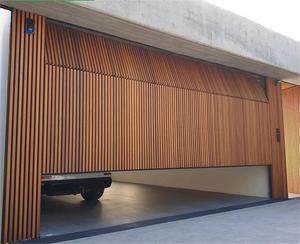
LongTai Modern Aluminum Grille Garage Door (Powder Coated Commercial Use)
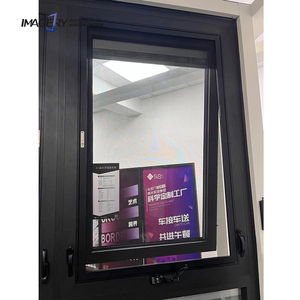
Custom Thermal Break Awning Fenestration (Hand Crank Double Glazed Tempered Glass)
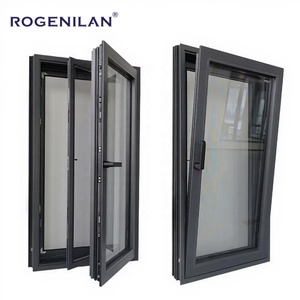
CE Certified Slim Narrow Frame Casement & Tilt-Turn Door System (Hurricane Rated)
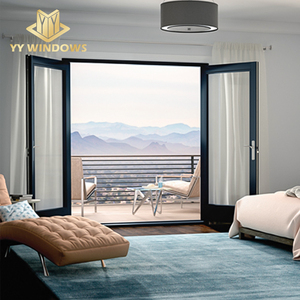
Modern Thermal Break Aluminium Casement Entry Door with Integrated Fiberglass Mesh
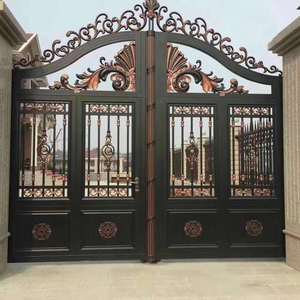
European Style Customized Villa Art Double Swing Aluminium Entrance Gate
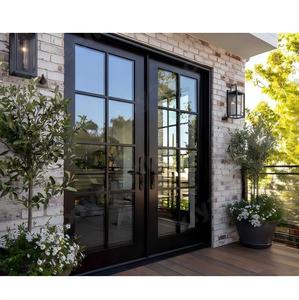
XIYATECH Heavy-Duty Waterproof Hurricane Impact Thermal Break French Glass Door
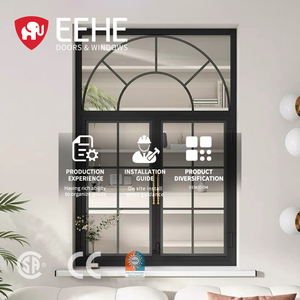
EEHE 135 Series Luxury 2.0mm Profile Triple Glazed NFRC Certified Villa System
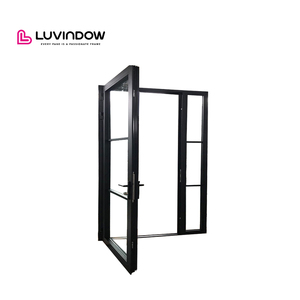
Soundproof Thermal Break Swing Door Engineerd for North American Residential Standards
1. Global Procurement Overview: Why China Leads Architectural Aluminum Door Manufacturing
The global architectural fenestration market is undergoing a structural transition toward high-performance energy conservation, ultra-minimalist aesthetics, and verified structural integrity. As property developers, architectural firms, and general contractors seek to optimize building envelope performance, selecting qualified China aluminum framed glass doors factories and suppliers has evolved into a strategic procurement decision. China—specifically the specialized industrial cluster centered in Foshan, Guangdong Province—controls over 50% of the world's precision aluminum extrusion and structural fenestration production capacity.
The strategic advantage of sourcing architectural glass doors from top-tier Chinese manufacturers resides not merely in cost efficiency, but in complete supply chain integration. Leading factories maintain direct control over alloy billet casting, precision extrusion die creation, automated anodizing and PVDF (Polyvinylidene Fluoride) powder coating lines, thermal break insertion, insulated glass unit (IGU) assembly, and custom hardware integration under a single quality management system (QMS).
Key Metallurgical & Architectural Specifications Matrix
| Performance Standard | Technical Baseline | Top-Tier Supplier Capability | Application Target |
|---|---|---|---|
| Alloy Composition | 6063-T5 Commercial Grade | Primary Virgin 6063-T6 High-Tensile Alloy | Structural framing, high wind load resistance |
| Wall Thickness | 1.4mm – 1.6mm Standard | 2.0mm – 3.0mm Heavy-Duty Architectural Profiles | High-rise commercial, wide-span sliding doors |
| Thermal Insulation | Non-Thermal or PVC Strips | Polyamide PA66GF25 (25% Fiberglass Reinforced) | Passive house construction, low U-factor compliance |
| Surface Treatment | Basic Powder Coating (< 40 microns) | Qualicoat Class 2 PVDF / Fluorocarbon (> 80 microns) | Coastal environments, extreme UV exposure zones |
| Glass Build-up | 5mm + 12A + 5mm Tempered Glass | Triple Glazed Low-E + Argon Gas + PVB Laminated | Hurricane impact protection, STC > 45dB acoustics |
2. Future Architectural & Design Trends (2025–2030)
Architects and structural engineers are redefining modern living spaces by specifying fenestration systems that blur the line between interior sanctuaries and outdoor landscapes. When evaluating top aluminum glass door suppliers, procurement executives must align with manufacturers investing in next-generation design paradigms:
Ultra-Narrow Sightlines & Concealed Frames
The demand for sightlines below 20mm has driven structural glazing innovations. Advanced slim-frame sliding and casement doors utilize structural silicone bonding where the glass pane bears wind loads, allowing hyper-minimalist profile reveals.
Smart Motorization & BMS Integration
Modern commercial and luxury villa doors incorporate concealed motor drives, smart sensor safety edges, and protocol integration (KNX, Zigbee, Crestron) allowing automated ventilation and smart access control.
Biophilic & High Acoustic Performance
Combining thermal break aluminum profiles with multi-layered acoustic PVB interlayers enables noise isolation exceeding 42 decibels, vital for urban luxury developments and resort hotels located in noise-sensitive corridors.
Furthermore, sustainability standards such as LEED, BREEAM, and ESG mandates are pushing manufacturers toward low-carbon recycled aluminum billets. Top Chinese suppliers now utilize hydroelectricity-smelted primary aluminum, cutting embedded carbon footprints by up to 60% compared to traditional coal-powered smelting routes.
3. Evaluating Manufacturing Rigor: Enterprise Advantages of Leading Foshan Factories
Not all fenestration suppliers operating out of China maintain identical standards of craftsmanship or regulatory compliance. When establishing an OEM/ODM supply partnership, enterprise buyers must audit the manufacturer's operational capabilities across six essential benchmarks:
A. 10,000m² Standardized Industrial Footprint
Premier suppliers like Karon Window & Door Co., Ltd. (operating out of Songxia Industrial Park, Nanhai District, Foshan) utilize modern 10,000 m² facilities equipped with multi-head CNC machining centers, automated corner-crimping rigs, dynamic water tightness testing chambers, and controlled cleanroom glazing lines. This scale ensures dimensional tolerances within ±0.5mm across high-volume commercial production runs.
B. International Certification Portfolio & Testing Traceability
Architects and project engineers should never rely solely on factory self-declarations. Reputable China suppliers carry third-party audited compliance certifications for target export regions:
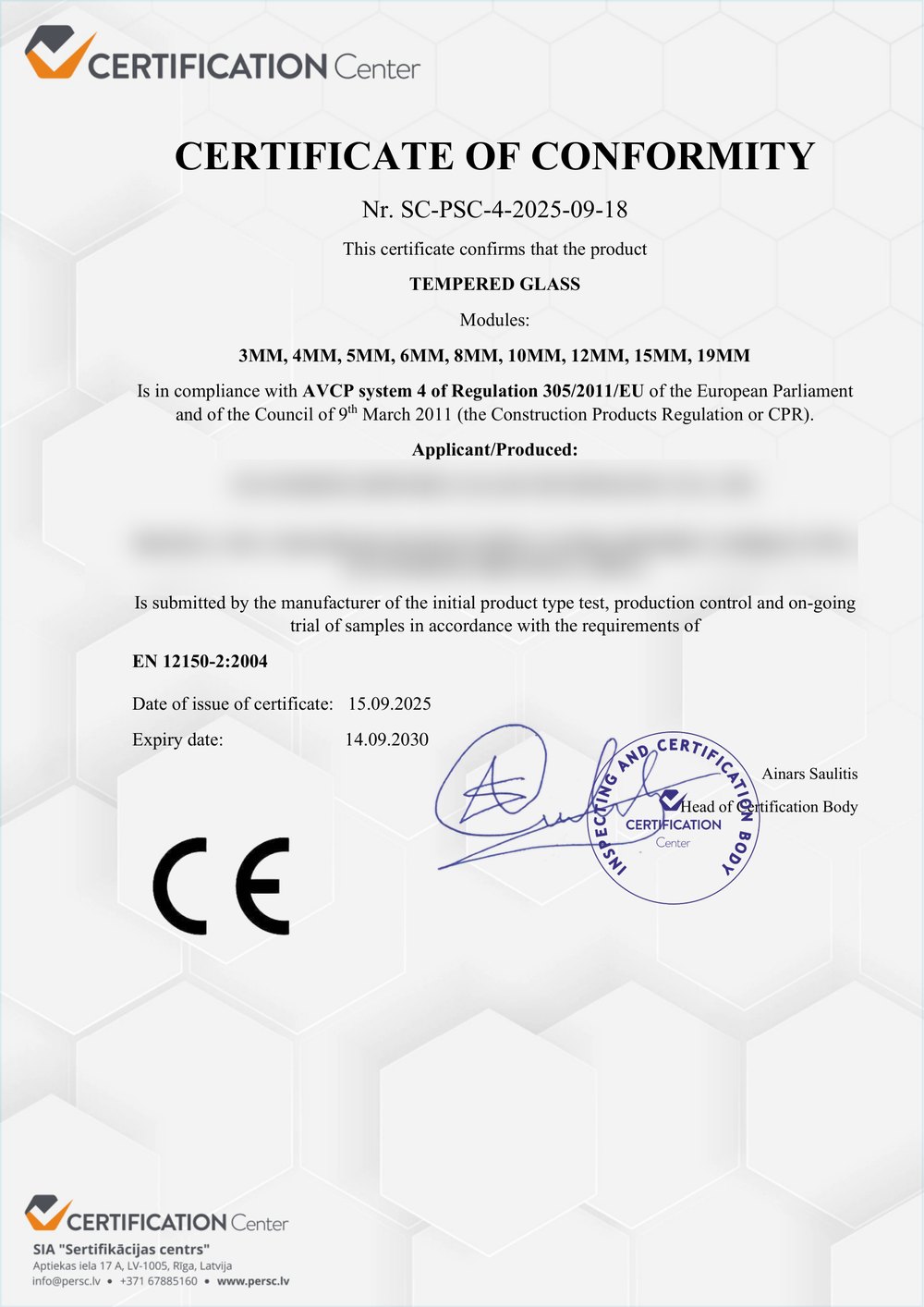
European Market (CE EN 12150)
Verified impact resistance, structural safety, and thermal performance standards for European building codes.
North American Market (US SGCC)
Safety Glazing Certification Council approval ensuring safety tempered glass meets ANSI Z97.1 and CPSC 16 CFR 1201 standards.
Oceania & SE Asia (AS/NZS 2208, TISI, CIDB)
Full compliance with Australian Standards Mark AS 2208, New Zealand PAS-Mark, Thailand TISI 965-2560, and Malaysian CIDB PPS requirements.
C. Turnkey Shop Drawing & Engineering Support
High-end villa developments and hospitality projects demand custom fenestration schedules. A qualified supplier acts as an engineering extension of your team—converting CAD drawings and BIM models into structural shop drawings, validating wind load resistance (KPa rating), calculation of Solar Heat Gain Coefficients (SHGC), and engineering thermal break barrier layouts before full-scale manufacturing commences.
4. Comprehensive Architectural Procurement FAQ
Direct engineering answers to the critical technical and supply chain questions posed by architects, importers, and project developers.
What is the exact structural difference between thermal break and standard aluminum profiles? +
How do China factories test for water-tightness and hurricane wind-load resistance? +
What hardware brands are typically integrated into high-end aluminum glass door systems? +
Can custom doors be fabricated directly from client architectural CAD/BIM files? +
What surface treatment finish options provide maximum corrosion resistance in coastal environments? +
How are oversized glass doors packed to prevent transit damage during sea freight shipping? +
What lead times should buyers expect for bespoke commercial fenestration orders? +
Accelerate Your Project Fenestration Procurement
Connect directly with our engineering team for technical shop drawing reviews, system U-factor estimations, and competitive factory-direct pricing for your upcoming commercial or villa development.
Get a Quote