Factory Product Showcase
Precision-Engineered Architectural Entrance Systems & Glazing Solutions
Manufactured to European CE Standards for Residential, Coastal Villa, and Commercial Projects in Portugal
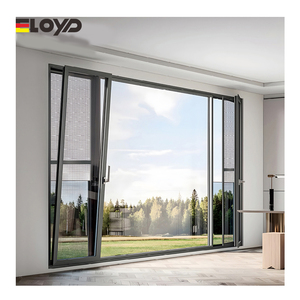
Eloyd Double Glazed Aluminum Tilt & Turn Window with German Hardware
Get a Quote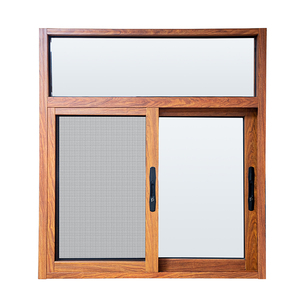
Waterproof Aluminium Alloy Wood Grain Horizontal Sliding Casement Window
Get a Quote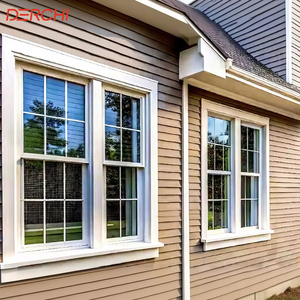
Modern Double Hung Aluminium Alloy Window Vertical Slide Design
Get a Quote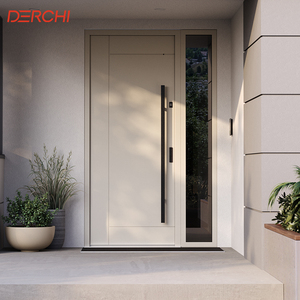
Custom Size Aluminum Entry Front Door Exterior Security Door
Get a Quote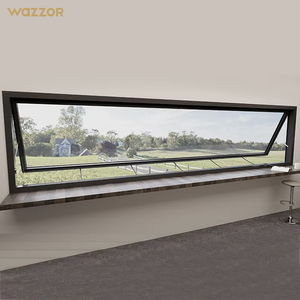
Wazzor Top-Out Awning Window Gas Strut Architectural System
Get a Quote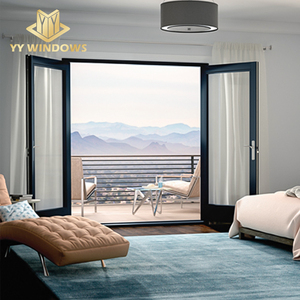
Thermal Break Insulation Aluminium Casement Door with Mesh Screen
Get a Quote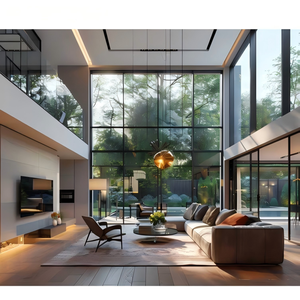
Sunnysky Floor-to-Ceiling Panoramic Picture Window Fixed Glazing
Get a Quote15+
Years OEM Manufacturing
10,000m²
Standardized Plant
U ≤ 0.8
W/m²K Thermal Rating
C5-M
Coastal Marine Resistance
100%
CE & ISO Compliance
Architectural Sourcing Guide: Direct Factory Manufacturing of Aluminium Entrance Doors for Portugal Projects
In the contemporary European architectural landscape, Portugal represents one of the most dynamic and demanding markets for high-performance building envelopes. From luxury coastal villa developments along the Algarve to high-density urban infill and historic renovations in Lisbon and Porto, the choice of modern entry systems is governed by a strict matrix of thermal performance, atmospheric durability, acoustic damping, and architectural aesthetics. Sourcing **aluminium entrance doors manufacturer and factory solutions tailored for Portugal** directly from world-leading extrusion and fabrication hubs such as Foshan, China, provides Portuguese developers, architects, and general contractors with an unassailable competitive advantage: project-grade customization at scale without compromising European regulatory compliance.
Information Gain Insight: Sourcing high-performance entry doors directly from verified manufacturing facilities allows Portuguese procurement directors to achieve complete material traceability, custom extruded profile profiles with PA66 thermal breaks, and Qualicoat-certified coastal powder coatings at a fraction of local distribution markups—all while satisfying Portuguese REH (Regulamento dos Desempenhos Energéticos dos Edifícios de Habitação) regulations.
As a specialized manufacturer operating a 10,000 m² integrated production plant in Nanhai District, Foshan, our engineering team manufactures heavy-duty architectural entrance doors, thermal break pivot doors, minimal frame casements, and specialized glazed security doors engineered specifically to withstand Portugal’s distinct microclimates—ranging from harsh Atlantic salt-spray exposure to scorching interior Mediterranean summers.
Localized Trends & Regulatory Framework in Portugal
Building standards in Portugal have undergone significant tightening under European Union directives for Nearly Zero-Energy Buildings (nZEB). Portuguese energy performance legislation—specifically Decreto-Lei n.º 101-D/2020 (REH)—dictates stringent maximum U-value thresholds for external envelope openings. Entrance doors are no longer evaluated merely as static decorative barriers; they function as primary thermal and security barriers.
nZEB & REH Thermal Compliance
Portuguese building codes require overall thermal transmittance (Ud values) often below 1.3 W/m²K for modern residential projects, and as low as 0.8 W/m²K for passive solar designs. Our thermal break profiles feature multi-cavity polyamide (PA66GF25) insulation strips that eliminate thermal bridging effectively.
Qualicoat Seaside Anti-Corrosion Finish
Portugal’s extensive Atlantic coast exposes door frames to severe marine salt fog (C5-M atmospheric corrosivity class). Standard powder coatings degrade within seasons. We apply Qualicoat Class 2 / Seaside pre-treatment anodizing to prevent filiform corrosion completely.
Acoustic Attenuation (Rw ≥ 42 dB)
Urban revitalization in historic centers like Lisbon (Chiado, Baixa) and Porto (Ribeira) demands heavy acoustic isolation against street traffic noise. Our aluminum honeycomb core infill paired with perimeter EPDM gaskets achieves sound reduction ratings up to 45 dB.
Localized Application Scenarios Across Portugal Regional Microclimates
Architectural entrance door engineering must adapt dynamically to Portugal’s geographical variance. Sourcing customized aluminium entrance doors allows project managers to specify precise technical configurations tailored to exact installation conditions:
Algarve Luxury Coastal Villas (South Portugal)
Scenario Demands: Oversized pivot entry systems up to 3.5 meters in height, maximum solar heat control (Low-E glass coatings), and marine-grade corrosion resistance against salt mist.
Engineering Configuration: 90mm system depth thermal break profiles, heavy-duty hidden floor pivots supporting up to 500 kg sashes, motor-driven smart biometric locks, and PVDF marine coatings.
Lisbon & Porto Urban Historic Restorations
Scenario Demands: Strict municipal aesthetic compliance retaining traditional panel designs or ultra-sleek minimalist frameless flush doors with high intruder resistance (RC3 security class).
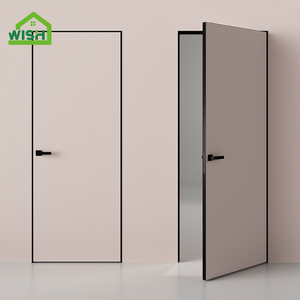
Engineering Configuration: Frameless aluminum flush doors with interior aluminum honeycomb insulation, wood-grain sub-limination finishes matching historical timber tones, and multi-point German security locks.
Northern Portugal & Serra da Estrela Mountain Resorts
Scenario Demands: Severe cold resistance, heavy rain-tightness (Class 9A under EN 12208), high wind pressure resistance (Class C5 under EN 12210), and condensation prevention.
Engineering Configuration: Ultra-insulated 100mm profile series with triple poly-urethane thermal infill, triple-glazed argon gas glass units, and continuous triple EPDM weather-stripping seals.
Technical Performance & Specification Matrix
To assist architectural consultants and technical procurement officers in specifying entrance door schedules for Portuguese tender documents, our direct-factory engineering benchmarks are outlined in the data visualization matrix below:
| Technical Parameter | Standard Entry Door Series | Thermal Break High-Performance Series | Ultra-Luxury Grand Pivot Series |
|---|---|---|---|
| Profile Frame Depth | 65 mm - 75 mm | 85 mm - 100 mm | 100 mm - 120 mm Heavy Duty |
| Thermal Insulation (Ud) | 1.8 - 2.2 W/m²K | 0.8 - 1.2 W/m²K (REH Passivhaus Ready) | 1.0 - 1.4 W/m²K |
| Thermal Break Material | Polyamide Strip PA66 20mm | Polyamide PA66GF25 34mm + Aero-Gel | Multi-Cavity PA66 Structural Insulator |
| Infill Panel Construction | Double Glazed Safety Glass | Aluminum Skin + Honeycomb + PU Foam | Architectural Ceramic / Composite + Honeycomb |
| Air Permeability (EN 12207) | Class 3 | Class 4 (Highest EU Rating) | Class 4 |
| Watertightness (EN 12208) | Class 7A | Class E1050 (Extreme Storm Rated) | Class 9A |
| Security Classification | RC2 (EN 1627) | RC3 / RC4 Multi-Point Locking | RC3 Biometric Keyless Access |
| Surface Treatment Finish | Powder Coating (60-80μm) | Qualicoat Seaside Class 2 / Anodized 25μm | PVDF Fluorocarbon 3-Coat Marine Finish |
Why Partner with Karon Window & Door Co., Ltd. for Portugal Direct Sourcing
Headquartered in Nanhai District, Foshan City—the recognized world capital of aluminum extrusion and fenestration technology—Karon Window & Door Co., Ltd. operates a 10,000 m² modern manufacturing complex dedicated to serving international project clients. With over 15 years of specialized export experience, we bridge the gap between high-capacity manufacturing efficiency and strict European architectural standards.
International Certification Rigor
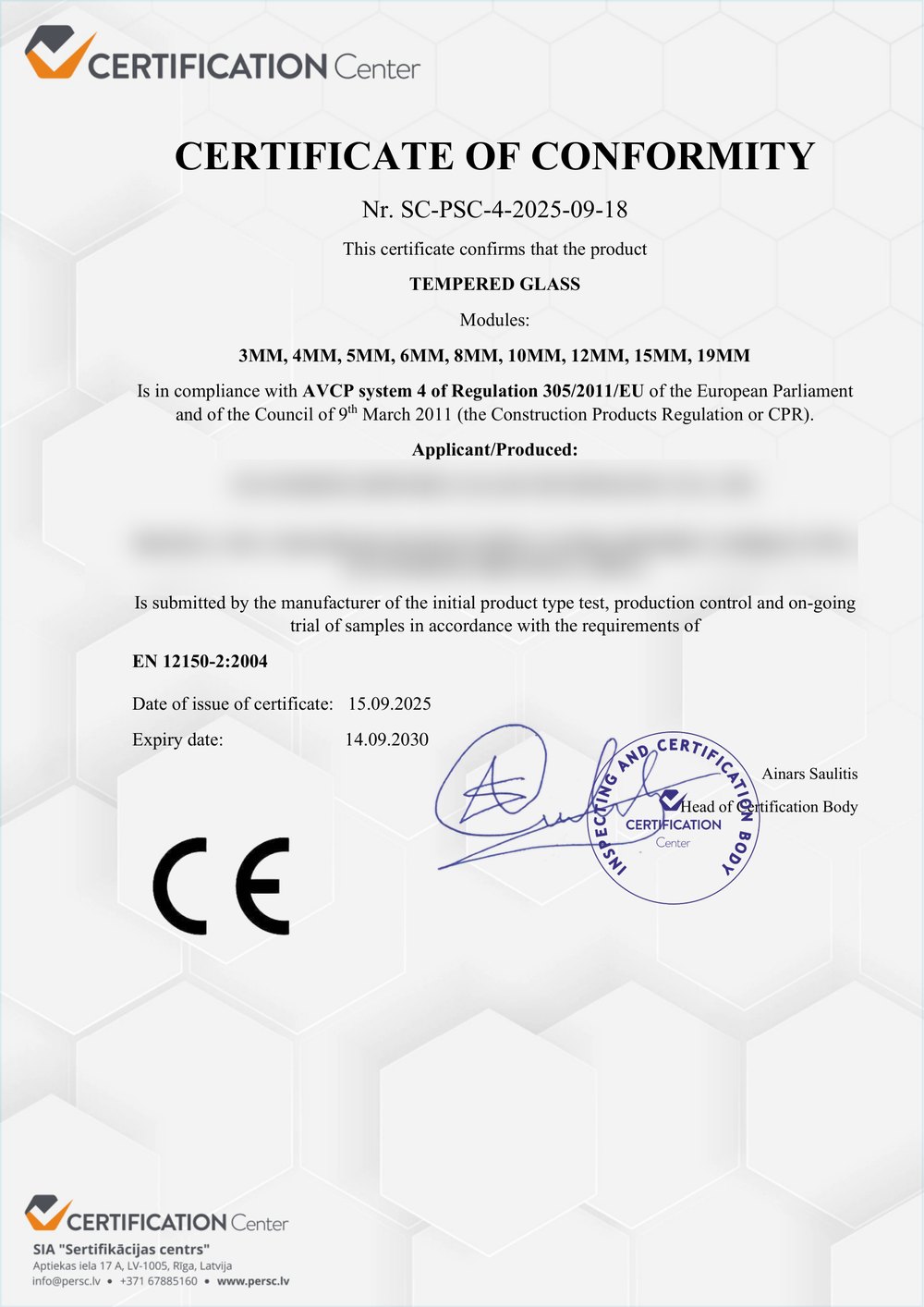
Our complete line of entrance doors, glass assemblies, and window systems holds recognized global credentials including European CE (EN 12150), US SGCC safety glazing, Australia AS 2208, and ISO 9001 quality management control. We provide full documentation for Portuguese municipal approval.
Bespoke Technical CAD/BIM Shop Drawings
Every Portuguese project undergoes rigorous engineering evaluation before production. Our dedicated technical drawing team translates architectural layouts into detailed CAD/BIM shop drawings, confirming opening dimensions, threshold drain details, and hardware cutouts.
Export-Grade Protective Packaging & Freight Integration
Direct ocean freight shipping to primary Portuguese container ports (Port of Leixões/Porto, Port of Lisbon, Port of Sines) requires robust protection. Our entrance doors are wrapped in multi-layer protective film, corner-guarded, and crated in fully sealed fumigated plywood boxes.
Direct B2B Procurement Workflow for Portuguese Buyers
Ordering factory-direct custom aluminium entrance doors from our Foshan facility is streamlined through a transparent 5-stage engineering workflow designed to eliminate risk for overseas importers:
1
1. Schedule & Drawing Review
Submit your architectural drawings or door schedules. Our engineers analyze opening dimensions, wind load specifications, and target U-values for your specific location in Portugal.
2
2. Technical Proposal & Quote
We issue a comprehensive commercial proposal detailing profile series, glass build-ups, hardware systems (e.g., German Siegenia/GU/ROTO or custom handles), surface treatments, and DDP/FOB pricing.
3
3. CAD Approval & Mockup Sign-Off
Final shop CAD drawings are provided for architect sign-off. For multi-unit developments, physical sample mockups or video factory inspections are completed before bulk mass production.
4
4. CNC Fabrication & QC Inspection
Extrusions are CNC machined, corner-crimped, glazed, and 100% factory assembled for air/water testing. Full photo and video quality inspection reports are shared with your team.
5
5. Shipping & On-Site Support
Crated units are packed into dedicated containers and dispatched to Portugal. Complete installation guides, structural fixing detail diagrams, and replacement spare hardware are included.
Frequently Asked Questions (FAQ) for Portugal Buyers & Importers
Clear, direct answers to common questions asked by developers, contractors, and architects in Portugal evaluating direct-factory procurement:
Do your aluminium entrance doors comply with Portuguese REH building regulations? ▼
Yes, absolutely. Our thermal break entrance door series features multi-cavity polyamide PA66 thermal strips and can be configured with triple insulated glass units (Low-E with Argon gas fill) or thermal aluminum honeycomb panels. This enables overall Ud thermal transmittance values down to 0.8 - 1.2 W/m²K, comfortably satisfying or exceeding REH (Decreto-Lei n.º 101-D/2020) and nZEB energy standards across all Portuguese thermal zones.
How do you protect entrance doors against Atlantic marine coastal corrosion in places like Algarve or Cascais? ▼
For projects installed within 5 km of the ocean coast in Portugal, we apply a specialized Qualicoat Class 2 / Seaside-grade surface pre-treatment. Profiles undergo deep chemical etching followed by premium architectural fluorocarbon (PVDF) coating or anodizing (up to 25 microns). This prevents filiform corrosion, salt degradation, and chalking under severe C5-M marine exposure conditions.
Can you manufacture custom-sized pivot and security entry doors to architectural drawings? ▼
Yes. Every single entrance door order is engineered and manufactured 100% custom to your project's architectural drawings. We manufacture grand single-panel pivot doors up to 3.5m high and 2.0m wide, frameless flush doors, side-light integrated entrance portals, and RC3/RC4 burglar-resistant security doors with multi-point locking mechanisms and biometric smart access systems.
What is the typical shipping lead time and customs process from your factory to Portuguese ports? ▼
Standard factory manufacturing time is 25 to 35 days from CAD shop drawing confirmation. Ocean transit time from Shenzhen/Guangzhou/Foshan ports to Portuguese ports (Leixões/Porto or Lisbon) is approximately 28 to 35 days. We provide full shipping documentation including Commercial Invoices, Packing Lists, Bills of Lading, CE Conformity Declarations, and Certificates of Origin (Form A/CO) to facilitate smooth EU customs clearance.
Can we order sample units or mockups before placing a volume order for a villa project? ▼
Yes. We regularly produce corner cut-away samples (showing thermal break construction, EPDM gaskets, and profile cross-sections) as well as full-scale prototype mockups for architect review and job-site testing in Portugal. Contact our engineering desk to arrange sample production and express air shipping.